
Crazy Horse vs Bridle Leather: Which Briefcase Actually Ages Better (2026)

Material comparison · briefcases
Crazy horse and bridle are not two leathers. They are two processes.
One is a chrome-tanned hide finished with wax so the surface moves when you press it. The other is a vegetable-tanned hide stuffed with tallow until it is firm enough to hold a shape for decades. They look similar in a photograph and behave nothing alike in a bag you carry every day.
- What each process actually does to the hide, in the order it happens
- Abrasion, scuffing and patina compared on the same six points, with no "both are premium" hedging
- What fails first on a leather briefcase — and why it is almost never the leather
- An honest note on what we stock, what we do not, and when you should buy the other one
The processes
One is a finish. The other is a tannage plus a currying.
Most comparison articles treat these as two brands of leather. They are not the same kind of thing at all, which is why the arguments about them go nowhere.
Crazy horse
Crazy horse is a finish, not a species and not a tannage. Despite the name, the hide is cowhide. The base is normally a full-grain hide that has been chrome-tanned — a process measured in a day or two — then buffed smooth and treated with waxes and oils. That treatment is what gives the leather its defining behaviour: pull-up. Push a thumb into the surface and the colour lightens where the oils move away from the pressure. Fold the bag and a paler line appears along the crease. Scratches read light against the surrounding leather rather than dark.
None of that is damage. It is the finish doing what it was designed to do, and it is why the material is popular for bags that are supposed to look carried rather than new.
Bridle
Bridle leather is a tannage plus a currying tradition. The hide is vegetable-tanned — a process of weeks, using tannins from bark and wood rather than chromium salts — then drum-dyed, fat-liquored, and hot-stuffed: hard tallows, greases and waxes are melted and worked into the warmed hide so they penetrate through its thickness instead of sitting on the surface. The name comes from horse tack: English bridle leather grew up around the saddlery trade, and had to survive weather, sweat and the strain of a working animal.
The result is a firm, dense, quietly lustrous leather with a reserve of fat built into it. It does not slouch. It does not lighten when you press it. It arrives slightly stiff and spends its first month teaching you how it wants to be carried.
| Stage | Crazy horse | Bridle |
|---|---|---|
| Tannage | Chrome, 1–2 days | Vegetable, several weeks |
| Dyeing | Surface or drum, varies by maker | Drum-dyed through the hide |
| Dressing | Wax and oil applied to the surface | Fat-liquored, then hot-stuffed through the hide |
| What you feel | Soft, waxy, immediately pliable | Firm, dry-ish to the touch, dense |
| What it is for | Bags that should look worn in from week one | Straps, cases and tack that must hold shape |
| Where it comes from | A finish applied by the bag maker or the tannery | A saddlery craft tradition — Walsall in England is the reference |
If a listing says "bridle" without a tannery name and a vegetable-tan claim, treat the word as marketing. The process is what makes the leather, and the process leaves traces.
Abrasion
Which one survives a concrete floor, and in what way
Abrasion is where the two diverge most, and where most reviews get it wrong by declaring one the winner outright.
Bridle wins on the hard, repeated contact. The fibre structure is denser and the hide is lubricated through its thickness, so a briefcase dragged across a car boot or rested on a rough wall abrades slowly and the wear looks like a smoothed patch rather than a scuff. The edges, which is where a briefcase actually takes its punishment, hold up better than almost any other leather because they burnish rather than fray.
Crazy horse wins on the scuff you notice. Its abrasion resistance is lower in the absolute sense — the wax layer is sacrificial and wears through on corners that see constant friction. But a scuff that would be a permanent grey mark on a pigmented leather can often be blended back into crazy horse by rubbing it with a thumb, because you are redistributing the oils rather than trying to replace lost pigment. For a bag that lives in and out of a car, that forgiving quality matters more than the raw abrasion figure.
| What happens | Crazy horse | Bridle |
|---|---|---|
| Light surface scratch | Blends back with thumb friction | Mostly invisible; compresses |
| Corner wear over 5 years | Wax layer wears, colour lightens | Burnishes to a smooth sheen |
| Deep gouge | Shows as a pale line; part of the look | Shows as a dark compressed mark |
| Edge wear | Edges soften, may need edge paint | Edges burnish and hold |
| Water spotting | Can leave pale rings; rewax to even out | Rarely spots; buff the bloom |
Judgements are relative between these two leathers, not against nylon or coated canvas.
One caveat that belongs here rather than in a care section: both leathers fail at the stitches before they fail at the hide. A briefcase carried 250 days a year puts its stress on the handle anchors and the zip ends, where the thread takes a point load. Bonded nylon thread in a lock stitch is what you want; the leather underneath will outlive it comfortably.
Patina
They age in opposite directions
This is the part buyers underestimate, because both are sold as "ages beautifully" and the two versions of that are not interchangeable.
Crazy horse ages into contrast. The areas you touch — the top of the flap, the handle, the corner your hand rests on — darken and take a sheen. The areas that flex lighten. Over two or three years the bag ends up with a map of how you carried it: uneven, high-contrast, unmistakably used. If you like the idea of a bag that looks like a 1970s field jacket, this is the leather that does it.
Bridle ages into uniformity. It darkens fairly evenly, especially in sunlight, and develops a deep gloss where it is handled rather than pale creases. Heavily stuffed bridle also throws a wax bloom — a fine pale film that rises to the surface, most readily in cold weather, as fats migrate and crystallise. It is not mould and it is not a defect. Buff it with a soft cloth or a horsehair brush and it goes back into the leather, where it was always meant to be.
The six decisions
A side-by-side you can actually act on
| Question | Crazy horse | Bridle | Who should care |
|---|---|---|---|
| Does it need breaking in? | No — pliable from day one | Yes — 2 to 6 weeks of stiffness | Anyone buying a gift that must be usable immediately |
| Will it hold a shape? | Softer; slumps over time | Firm; holds the case upright | Briefcases that stand on a desk |
| How heavy is it? | Lighter per square metre | Heavier; the stuffing adds mass | Anyone carrying it a mile a day |
| How much care? | Wax or oil sparingly; avoid over-oiling | Rarely; it contains its own fat | People who will not maintain anything |
| Wet weather | Repels rain; can spot if soaked | Strongly resistant; buff after rain | Commuters in a wet city |
| Cost at equal size | Lower | Higher — longer tanning, tighter hide selection | Anyone comparing two bags at the same price |
Both columns are honest about the trade. A bag that is firm enough to stand up is a bag that is heavier and stiffer to carry.
The cost row deserves a sentence of its own. Bridle is expensive because the process is slow and the raw material forgiving of nothing: a hide destined for bridle cannot have the scars and brands that a waxed crazy horse finish will happily disguise. That is not marketing — it is why a bridle briefcase of the same size routinely costs more than a crazy horse one, and why a cheap "bridle" bag usually is not bridle.
What we stock
We sell crazy horse. We do not sell bridle, and here is why.
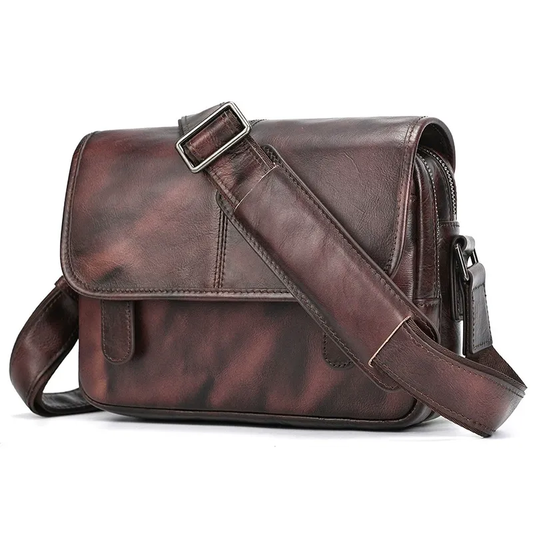
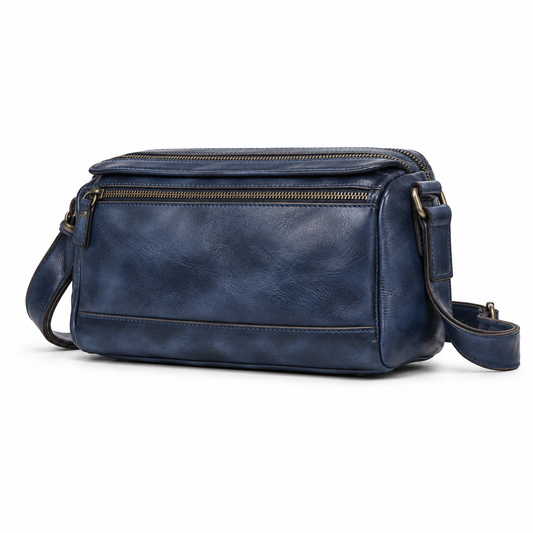
This is the part most guides leave out, so we will be direct about it. Most leather briefcases and messenger bags on this site are crazy horse on a full-grain cowhide base. A handful are top-grain, and the listing says so rather than hiding it. Some of our sling and duffle pieces are vegetable-tanned, and one crossbody is vegetable-tanned full-grain cowhide. What none of them is, is bridle — and the reasons are practical rather than aesthetic:
- Weight. A hot-stuffed bridle briefcase of the size our customers buy lands noticeably heavier than the same case in crazy horse. For a bag that already holds a laptop and a charger, that is the wrong direction.
- Break-in. Most people buy a work bag to use on Monday. A bridle case is stiff for the first month, and a customer who did not expect that reads it as "bad leather" rather than as the process working.
- Supply. Genuine hot-stuffed bridle comes from a small number of tanneries. Sourcing it at our price band would mean either raising prices sharply or buying something that is only called bridle.
When you should buy bridle instead of ours: if you want a case that stands open on a desk unaided, if you like the idea of a bag that will be recognisably the same object in fifteen years, and if you are willing to carry the extra weight and wait out the break-in. That is a real set of preferences, and a crazy horse bag will not satisfy them. Buy it from a maker who names the tannery and states vegetable-tanned and hot-stuffed — those two words are the whole product.
Care
Two routines, both shorter than you expect
Wax, sparingly, when it looks dry
Dust with a dry cloth. Rub light scratches with a thumb before reaching for a product. When the leather genuinely looks dry — usually after a year or two of daily use — apply a thin coat of neutral wax or oil conditioner, buff, and stop. Over-conditioning kills the pull-up contrast that makes the leather worth having.
Almost nothing, and never soap
Brush off dust, buff the bloom, keep it out of prolonged soaking. It carries its own fat, so a tallow-based conditioner once every few years is plenty. Never use saddle soap on a frequent schedule — it strips the very stuffing the leather was built around.
One warning that applies to both: do not use cooking oils. Coconut, olive and sunflower oil are food-grade fats that go rancid in a leather matrix, clog the pores and attract insects. This advice circulates widely online and it damages bags. Use a product made for leather, or use nothing.
Shop the range
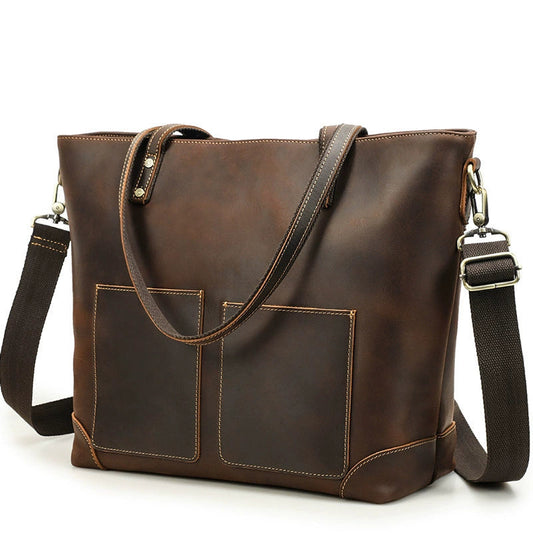
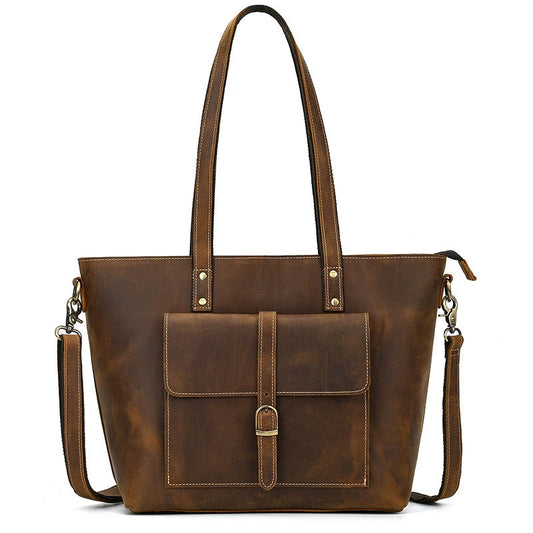
Crazy horse leather briefcases
Full-grain cowhide with a crazy horse finish, sized from 14-inch to 16-inch laptops. Sizes below are the shell dimensions from each listing.


Prices, colours and stock reflect live product data at the time this guide was published.
Questions buyers actually ask
Frequently asked questions
Is crazy horse leather real horsehide?
No. Crazy horse is cowhide. The name refers to the waxed, pull-up finish, not to the animal. Any listing that implies horse hide is either confused or hoping you are.
Which is more durable, crazy horse or bridle?
Bridle resists abrasion better and holds its shape longer; crazy horse hides the everyday scuffs better and needs less break-in. Over ten years of hard use, a well-made bridle case will look less worn. Over two years of office commuting, most people prefer how the crazy horse looks.
Does bridle leather crack?
Not if it is genuine hot-stuffed bridle stored sensibly. Cracking comes from leather that has dried out — usually chrome-tanned leather kept in a hot car for years, or bridle that was stripped with soap and never re-fed. Bridle carries a reserve of fat precisely to avoid this.
Why does my bridle bag have a white film on it?
Fatty bloom — waxes and tallows migrating to the surface and crystallising, most often in cold weather. It is a sign of thorough stuffing, not mould, and it buffs off with a soft cloth. Mould is patchy, fuzzy and smells damp; bloom is even and faint.
Can I condition crazy horse leather with mink oil?
You can, but it will darken the leather and reduce the pull-up contrast. If you want the patina to stay high-contrast, use a neutral wax and apply it rarely. If you want an even, darker, more water-resistant finish, mink oil will get you there — just know that is a one-way change.
Is crazy horse leather waterproof?
Water-repellent, not waterproof. Rain beads and runs off the waxed surface; a soaked bag can develop pale water spots, which even out with a light rewax. It is not a material to take into a storm without a cover.
Which leather is better for a laptop briefcase?
For daily commuting with a 2 kg machine, crazy horse is the more practical choice: lighter, softer against the laptop, and it does not need a break-in period. Bridle suits a case that must stand open on a desk and be carried mostly by car.
How can I tell if a "bridle leather" bag is genuine?
Ask for two words: vegetable-tanned and hot-stuffed, plus the tannery name. Genuine bridle is firm, nearly rigid at the edges, has a faint waxy smell and will not lighten when you press a thumbnail into it. A soft, pliable bag sold as bridle is usually a bridle-coloured chrome tan.
Related guides
Keep reading
Choosing between two cases?
Send us the sizes and we will tell you which one holds a laptop upright and which one slouches — before you pay for the wrong one.
Shop leather briefcasesShop messenger bags