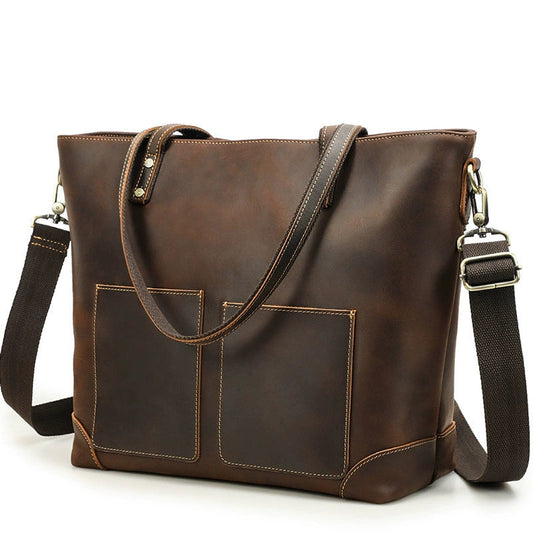
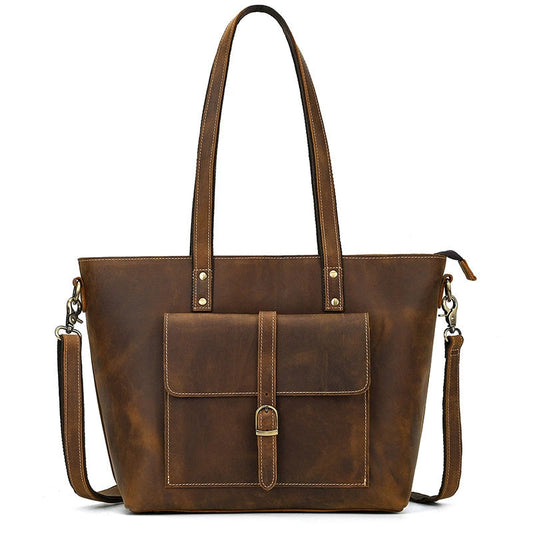
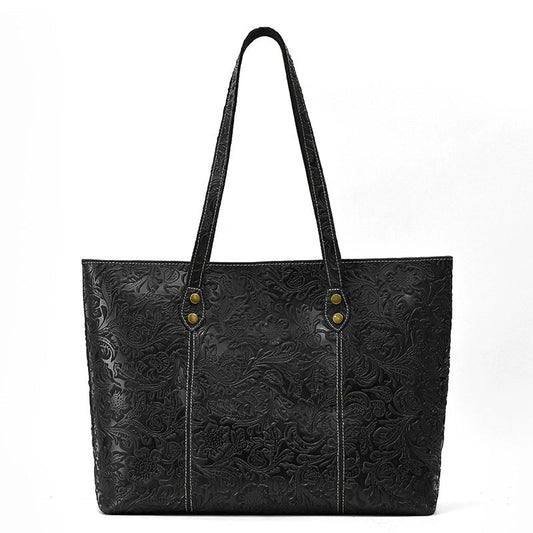
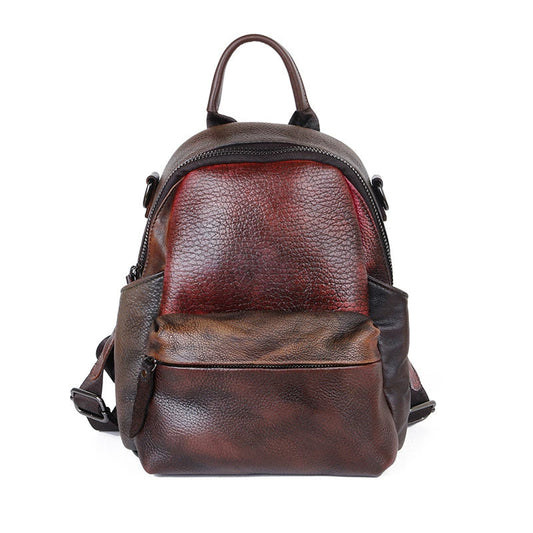

Full-Grain vs Top-Grain Leather Briefcases: How to Spot Real Quality in 2026

Full-grain and top-grain leather briefcases can both be excellent professional bags, but the labels describe different relationships to the hide surface. The useful buying decision comes from combining grain, finish, construction, device protection, and the way the briefcase will be carried every workday.
This 2026 guide explains what the two terms can and cannot tell you. Surface quality matters, yet a briefcase with weak stitching, an unsupported laptop sleeve, or uncomfortable handles will not become a good work bag simply because its leather grade sounds premium.
What the two grain terms mean
Full-grain leather keeps the outer surface of the hide, including its natural grain and visible character. Small marks can remain, and the surface may develop a pronounced patina. Top-grain leather is also taken from the outer portion but is commonly corrected, sanded, or finished to create a more uniform appearance.
Neither term alone tells you the exact tanning process, thickness, country of origin, or construction quality. Use the label as a starting point, then inspect the surface, edge finishing, lining, hardware, and the briefcase's load-bearing points.
Surface character versus uniform finish
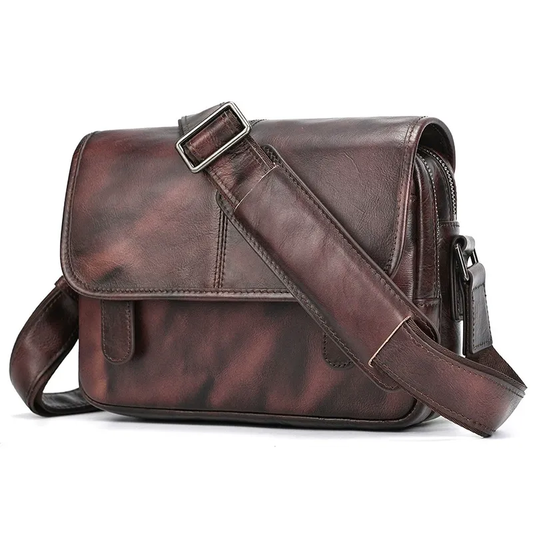
Full-grain surfaces often show natural variation that becomes more visible with use. That can suit a professional who wants a distinctive briefcase that records its history. It can also make a new bag look less uniform, so buyers who prefer a consistent finish may prefer corrected top-grain leather.
Top-grain finishing can create a smoother, more predictable appearance and may make light marks easier to blend. The finish should still feel like a quality surface rather than a plastic film. Look at edges, folds, and the transition around pockets to see how consistently the finish is applied.
Strength depends on more than grain
The retained outer surface can contribute to durability, but strength is distributed across the complete build. A briefcase's handles, strap anchors, gussets, seams, zipper or flap, and bottom corners experience more practical stress than the center panel.
Open and close the bag several times, lift it by the handles, and inspect whether the stitching pulls. A well-designed top-grain briefcase can outlast a poorly constructed full-grain one if its pattern, reinforcement, and hardware are better matched to the work load.
Laptop and document protection
Measure the laptop with its sleeve or case and compare the actual compartment dimensions. The device should not rub against a metal closure or sit directly on a hard base. A suspended sleeve, padded divider, and supported bottom matter more to daily protection than a grain label.
Keep papers flat in a folder and place the charger in its own pouch. A full briefcase should close without compressing the laptop or bending documents. If the workday includes trains or cycling, test the shoulder strap and stability with the complete load.
Finish, care, and patina
Full-grain leather can respond visibly to handling, sunlight, and conditioning, while a finished top-grain surface may retain a more consistent look. Both should be kept away from prolonged moisture and stored with enough support to prevent sharp folds.
Blot water, allow the leather to dry naturally, and follow the maker's care guidance before applying any product. Avoid over-conditioning, which can soften structure or darken the finish unevenly. Periodically inspect handle stitching and edge paint, where small damage can spread.
Professional style and daily comfort
A full-grain briefcase often communicates material character and can pair well with a formal wardrobe. A top-grain option may provide a cleaner, more uniform appearance for offices where consistency matters. Style should follow the environment, but comfort still decides whether the bag is usable.
Compare empty weight, handle drop, strap padding, and the distance the bag hangs from the body. A beautiful briefcase that makes the shoulder or wrist compensate for its weight is a poor daily choice. Carry it with the load you expect, not an empty showroom sample.
A practical quality checklist
- Treat full-grain or top-grain as one data point, not the whole quality verdict.
- Inspect stitching, gussets, edge finishing, lining, and handle anchors.
- Measure the laptop compartment with the protective case included.
- Match finish, patina, and care requirements to your working routine.
- Test handles and shoulder strap with the full professional load.


A briefcase quality check should also include the moments between meetings. Set it on a floor, place it under a desk, lift it by one handle, and carry it through a doorway with the full work load. These ordinary actions reveal whether the base collapses, the flap catches, or the handle anchors twist. Full-grain character can be a reason to choose one briefcase, while a smoother top-grain finish can be easier to coordinate and maintain in a formal office. Neither choice removes the need to inspect construction. Ask whether the lining protects the device, whether papers remain flat, and whether the strap is comfortable enough for the longest commute. If the bag is intended for daily use, write down the care routine and storage space before buying. The right leather grade is the one that fits the work pattern and that the owner can maintain consistently.
Before making a final choice, compare the briefcase in the condition it will spend most of its time: partly full, carried at the side, and placed on a desk several times a day. That test exposes whether the structure remains useful without turning the bag into an unnecessary burden.
Related Woosir resources
Use these related Woosir pages to compare current materials, dimensions, care details, and available variants before making a final decision.