
Tailles des sacs de voyage polochons expliquées : comment choisir la capacité idéale en 2026

Acheter un sac de voyage semble simple jusqu'à ce que vous soyez confronté aux chiffres : 30 litres, 45 litres, 60, 90, 120. Choisissez un sac de voyage trop petit et vous serez assis sur la fermeture éclair la veille d'un vol ; choisissez-en un trop grand et vous emballerez trop, dépasserez les limites de poids des compagnies aériennes et trimballerez un sac à moitié vide à travers trois gares. Ce guide explique les tailles des sacs de voyage en termes simples – ce que chaque capacité contient réellement, comment les tailles correspondent aux règles des compagnies aériennes en Europe, en Asie et dans les Amériques, et comment assortir un sac à dos aux voyages que vous ferez réellement en 2026. À la fin, vous connaîtrez votre fourchette de litres idéale avec confiance.
Tailles des sacs de voyage : la répartition complète des capacités
La capacité d'un sac de voyage est mesurée en litres de volume interne, mais les litres sont abstraits tant que vous ne les traduisez pas en jours de voyage. Voici la conversion honnête, en supposant un emballeur modéré utilisant des vêtements roulés :
- 20–30 litres (mini sac de voyage) : séances de sport, séjours d'une nuit, un changement complet de vêtements plus articles de toilette. Se glisse sous la plupart des sièges d'avion.
- 35–45 litres (sac de week-end) : 2 à 4 jours de vêtements, une paire de chaussures de rechange, une trousse de toilette et un ordinateur portable de 15 pouces. C'est la taille idéale pour les bagages à main dans le monde entier et la taille unique la plus polyvalente que vous puissiez posséder.
- 50–60 litres (sac de voyage d'une semaine) : 5 à 8 jours sans lessive, ou deux semaines avec un lavage à mi-parcours. Doit généralement être enregistré sur les compagnies aériennes low-cost strictes, bien que certaines compagnies aériennes à service complet acceptent les sacs souples de 50 L dans les compartiments supérieurs s'ils ne sont pas entièrement remplis.
- 70–90 litres (expédition/bagage enregistré) : équipement volumineux, vêtements d'hiver, équipement sportif ou consolidation familiale. Toujours un bagage enregistré.
- 100+ litres (sac de transport) : déménagements entre villes, séjours au ski, équipement de plongée. Surveillez les plafonds de poids des compagnies aériennes – un sac de 120 L trop rempli peut facilement dépasser 23 kg.
Une règle utile : environ 8 à 10 litres par jour de voyage pour les climats chauds, 12 à 15 litres par jour pour les climats froids où les vêtements sont plus volumineux – le premier jour coûtant plus cher pour les articles de toilette, l'électronique et les chaussures.
Adapter la taille du sac de voyage aux règles des compagnies aériennes en 2026
L'erreur la plus coûteuse en matière de sac de voyage est d'en acheter un dont la taille est incompatible avec vos compagnies aériennes préférées. Les franchises cabine diffèrent considérablement selon les régions, et la compressibilité d'un sac souple ne vous offre que quelques centimètres de marge.
Europe : la compression à faible coût
Les compagnies aériennes à bas prix européennes appliquent les règles les plus strictes. La franchise gratuite de Ryanair est un petit sac sous le siège de 40 x 20 x 25 cm – soit l'équivalent d'un mini sac de 20 L – le sac cabine plus grand de 55 x 40 x 20 cm étant une option payante. EasyJet et Wizz Air suivent des structures similaires. Un sac souple de 35 à 40 L, non surchargé, passe généralement la franchise cabine payante ; un sac rigide de 45 L pourrait ne pas passer. Si votre mode de voyage consiste en des escapades d'un week-end de Londres à Lisbonne ou de Berlin à Budapest, un sac de week-end compressible de 35 à 40 L est l'achat rationnel.
Asie : le poids, pas seulement les dimensions
Les compagnies aériennes asiatiques à service complet telles que Singapore Airlines, Cathay Pacific et ANA sont généreuses en termes de dimensions (généralement 55 x 40 x 25 cm) mais appliquent strictement des limites de poids de 7 kg en cabine, pesant les bagages à la porte plus souvent que les compagnies aériennes européennes ou américaines. Un sac de voyage léger en toile ou avec des garnitures en cuir préserve davantage de ce budget de 7 kg pour vos affaires qu'une valise à roulettes à cadre lourd – un sac en toile de 40 L pesant 1,2 kg vous laisse 5,8 kg de bagages, tandis qu'une valise rigide de 4 kg ne vous laisse que 3 kg.
Les Amériques : des compartiments généreux, de longues distances
Les principales compagnies nord-américaines autorisent les bagages cabine de 56 x 36 x 23 cm sans limite de poids formelle dans la plupart des cas, de sorte qu'un sac de 45 L voyage confortablement. La mise en garde régionale concerne les tarifs en classe économique de base sur certains transporteurs, qui vous limitent à un article personnel sous le siège – encore une fois le territoire du mini sac de 20 à 30 L. En Amérique latine, les franchises reflètent celles de l'Amérique du Nord sur les grandes compagnies aériennes mais se resserrent sur les compagnies aériennes régionales à bas prix, de sorte que l'avantage du sac compressible revient.
Taille du sac en fonction du type de voyage : six scénarios réels
Le séjour de 3 jours en ville (35-45 L)
Deux ou trois chemises, un pantalon de rechange, des sous-vêtements, une couche légère, des articles de toilette et une tablette ou un ordinateur portable se rangent confortablement dans un sac de week-end de 40 L, avec de la place pour les souvenirs. Cette taille respecte les règles des bagages à main des compagnies aériennes à service complet dans les trois régions et se glisse sous les seuils de cabine payante de la plupart des compagnies aériennes à bas prix européennes.
Le voyage d'affaires d'une semaine (45–55 L)
Ajoutez une deuxième paire de chaussures, cinq chemises et une veste ajustée, et vous passez au sommet de la gamme des bagages à main. Recherchez un sac avec une pochette intérieure pleine longueur pour vêtements ou emballez un dossier séparé pour garder la veste présentable. Un sac en cuir structuré a également l'air professionnel dans les halls d'hôtel et les bureaux des clients.
Le voyage de deux semaines avec lessive (50–60 L)
Les voyageurs chevronnés emportent une semaine de vêtements et les lavent à mi-parcours, quelle que soit la durée du voyage. Un sac de 55 L contient une semaine de vêtements plus les extras que les longs voyages exigent – adaptateurs, médicaments, une deuxième paire de chaussures, cadeaux. Attendez-vous à devoir l'enregistrer sur les compagnies aériennes à bas prix.
Le quotidien de la salle de sport au bureau (25-35 L)
Baskets, serviette, vêtements de rechange et trousse de toilette tiennent dans un sac de 30 L sans déformer. Privilégiez un compartiment à chaussures ventilé et une doublure lavable. Pour des options en toile et cuir qui ne ressemblent pas à du matériel de sport, consultez la collection dédiée de sacs de sport.
Le voyage hivernal ou d'équipement (70-90 L)
L'isolation volumineuse change tout : une semaine de vêtements d'hiver occupe environ le double du volume d'un kit d'été. Les chaussures de ski à elles seules consomment 12 à 15 litres. C'est le territoire des bagages enregistrés, alors choisissez un sac doté de fermetures éclair verrouillables et d'une base renforcée.
Le road trip (toutes tailles – mais pensez à l'accès)
Lorsque le sac est transporté dans un coffre de voiture plutôt que dans un compartiment supérieur, les limites de taille disparaissent et le mode d'accès devient prédominant. Un sac à large ouverture de 60 à 90 L qui s'ouvre comme une coquille est préférable à un modèle à chargement par le haut lorsque vous vivez dans le coffre pendant une semaine à travers les Highlands écossais ou la Route 66.

La taille interagit avec le matériau : toile, cuir et structure
Le même nombre de litres se comporte différemment selon la construction. Un sac souple en toile cirée se comprime lorsqu'il est à moitié plein et s'étire aux coutures lorsqu'il est surchargé – pardonnant dans les deux sens. Un sac en cuir structuré conserve sa silhouette, protège mieux son contenu et présente magnifiquement, mais son cadre fixe signifie que ses dimensions indiquées sont ses dimensions réelles aux gabarits des compagnies aériennes : impossible de faire entrer un 50 L rigide dans un emplacement de 45 L.
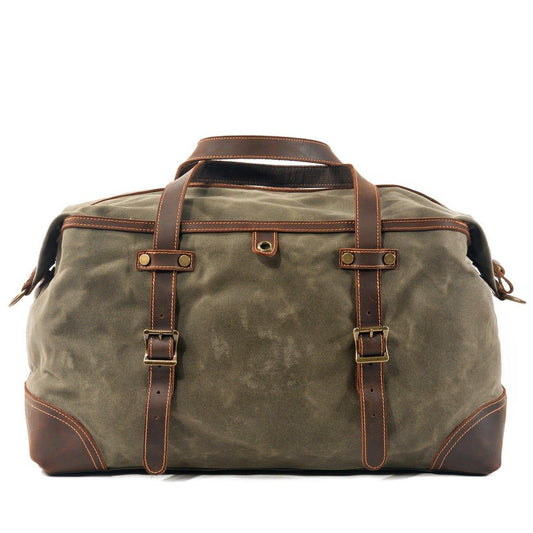
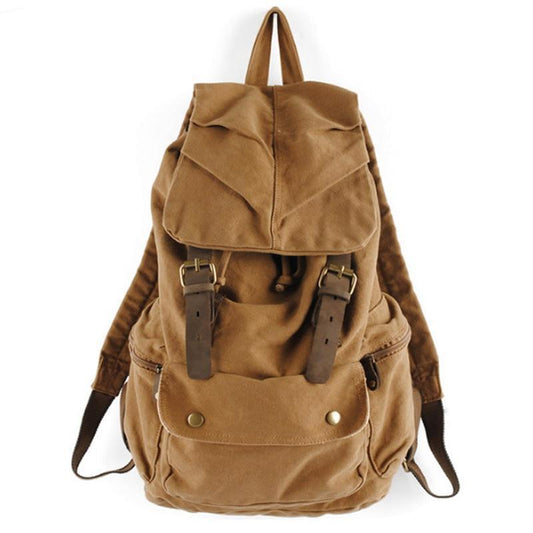
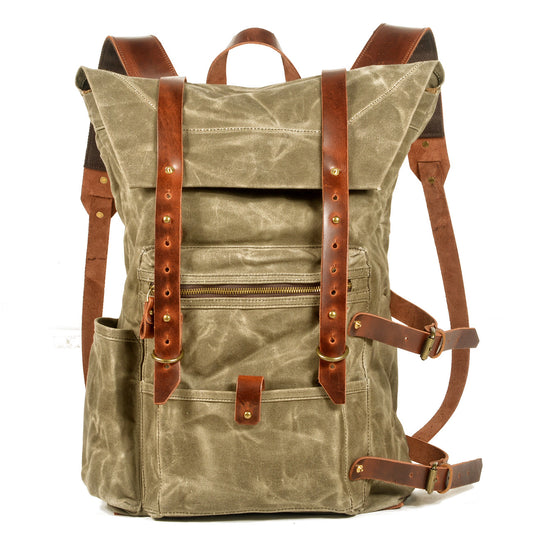
- Toile cirée : la plus légère par litre, résistante aux intempéries, compressible – idéale pour les bagages à main de 35 à 45 L et les compagnies aériennes à bas prix.
- Cuir pleine fleur : la plus lourde par litre mais inégalée en durabilité et en apparence ; meilleure dans les tailles 40 à 55 L où le poids reste gérable. Un sac entièrement en cuir de 90 L est un objet à soulever à deux personnes lorsqu'il est rempli.
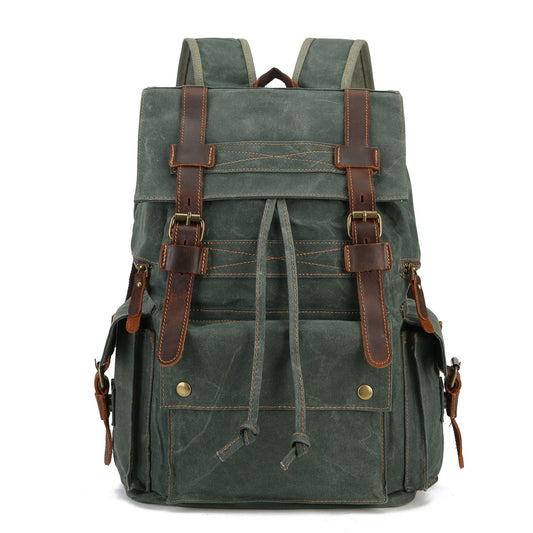
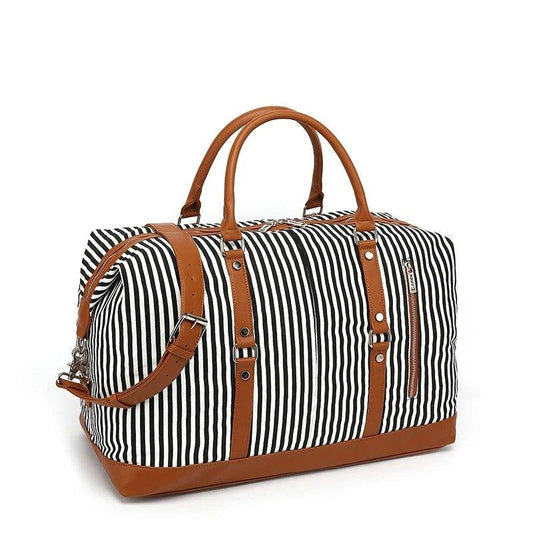
- Corps en toile avec garniture en cuir : le juste milieu pragmatique – du cuir aux points de tension (poignées, coins, base) avec de la toile pour maintenir le poids bas.
Si la longévité est la priorité et que vos voyages typiques se situent entre 3 et 7 jours, une option pleine fleur de 45 à 50 L de la collection de sacs de voyage en cuir véritable atteint le point idéal de durabilité – assez lourd pour protéger, assez léger pour transporter et assez beau pour s'améliorer avec une décennie de patine.
Les fonctionnalités qui comptent davantage à mesure que la taille augmente
Les petits sacs de voyage pardonnent les raccourcis de conception ; les grands les punissent. À mesure que vous montez en gamme, insistez sur :
- Une bandoulière amovible et rembourrée – au-delà de 45 L, le portage à la main seul devient une épreuve dans les longs terminaux.
- Des bretelles de type sac à dos ou des roulettes au-delà de 70 L – un sac de 90 L pesant 20 kg nécessite soit une répartition sur les épaules, soit un contact avec le sol. Les modèles à roulettes de la collection de sacs à roulettes résolvent le kilomètre entre l'aéroport et l'hôtel sans sacrifier la forme flexible du sac.
- Des panneaux de base renforcés – les sacs plus grands sont constamment posés sur des trottoirs mouillés, des chariots à bagages et des tapis roulants.
- Des sangles de compression – elles maintiennent un grand sac à moitié plein et empêchent le contenu de bouger.
- Des tirettes de fermeture éclair verrouillables – non négociables une fois que le sac quitte votre vue en tant que bagage enregistré.
- Des poches aux extrémités pour les chaussures – isolez les semelles des vêtements sans qu'un sac à chaussures séparé ne prenne du volume.
Erreurs courantes de taille de sac à éviter
Après avoir observé des milliers de voyageurs faire un mauvais choix, les mêmes cinq erreurs se répètent :
- Acheter pour le voyage rare, et non pour le fréquent. Si vous faites douze week-ends et un voyage annuel de deux semaines, achetez le 40 L et louez ou empruntez pour l'exception — et non l'inverse.
- Ignorer le poids à vide. Deux sacs de volume identique peuvent différer de 2 kg à vide — un tiers de la franchise cabine stricte d'une compagnie aérienne asiatique.
- Faire confiance aux litres indiqués. Les fabricants mesurent différemment ; certains citent les dimensions externes. Lisez les mesures internes et calculez longueur x largeur x hauteur en centimètres, divisé par 1 000, pour une vérification.
- Oublier le voyage de retour. Si vous faites du shopping pendant votre voyage, laissez 15 à 20 % du volume vide au départ.
- Supposer que plus grand est plus sûr. Un volume inutilisé invite au surremplissage ; la plupart des voyageurs remplissent tout ce qu'ils transportent. La discipline d'un sac plus petit est une caractéristique, pas un défaut.
La stratégie d'emballage change avec la taille du sac
Un sac de voyage récompense des techniques d'emballage différentes d'une valise à coque, et la bonne technique évolue à mesure que la capacité augmente. Maîtrisez-les et chaque taille de votre collection fonctionnera au-delà de sa capacité nominale.
Rouler mieux que plier dans des sacs souples
Les vêtements roulés épousent les parois incurvées d'un sac, remplissant les coins qu'une pile pliée laisserait vides. Dans un sac de week-end de 40 L, le roulage récupère environ 15 à 20 % de l'espace utilisable par rapport au pliage à plat, et il réduit considérablement les plis marqués dans le coton et le lin. Les vestes ajustées sont l'exception : pliez-les une fois, épaules inversées, et étalez-les sur le dessus de la charge – ou utilisez un sac avec une pochette à vêtements dédiée.
Les sacs de rangement transforment une seule chambre en plusieurs
La conception à cavité unique du sac de voyage est sa plus grande force (flexibilité) et sa plus grande nuisance (tout migre). Deux ou trois cubes de rangement fins rétablissent l'ordre : un pour les hauts, un pour les bas et les sous-vêtements, un pour le linge sale au fur et à mesure du voyage. Dans les sacs de 60 L et plus, les cubes sont presque obligatoires – sans eux, récupérer une chemise signifie déterrer tout le sac sur le sol d'un hôtel à Osaka ou Oslo.
Les objets lourds vont au centre-bas
Chaussures, trousses de toilette et chargeurs doivent être placés au centre de la base, directement sous l'axe de la poignée. Le poids aux extrémités fait balancer le sac porté à chaque enjambée ; le poids centré maintient le sac équilibré contre votre hanche et ménage votre prise. Dans les sacs à roulettes, inversez légèrement la logique : les objets lourds vont vers l'extrémité à roulettes afin que la charge repose sur l'essieu plutôt que sur votre bras tirant.
La règle des 80 %
Remplissez n'importe quel sac à plus de 90 % et les fermetures éclair forceront, les coutures s'étireront et les gabarits des compagnies aériennes ne coopéreront plus. Visez 80 % de remplissage au départ. Le mou restant absorbe les souvenirs, maintient la silhouette conforme et prolonge la durée de vie utile du sac de plusieurs années – la plupart des défaillances de fermeture éclair proviennent d'un sur-remplissage chronique plutôt que d'un matériel défectueux.
Taille du sac de voyage et sécurité sur la route
Les décisions concernant la capacité ont des conséquences sur la sécurité que peu de guides de taille mentionnent. Un sac de 40 à 45 L, de la taille d'un bagage à main, ne quitte jamais votre garde : pas de bagagistes, pas d'attente au carrousel, pas de formulaires de bagages perdus en langue étrangère. Dès que vous passez à une taille enregistrée de 70 L et plus, prévoyez que le sac voyagera sans surveillance.
- Choisissez des doubles fermetures éclair verrouillables et utilisez un cadenas reconnu par la TSA pour les vols à travers les États-Unis, où la sécurité peut ouvrir les bagages enregistrés.
- Passez les tirettes de fermeture éclair dans un mousqueton dans les salons de transit et dans les trains – cela déjoue l'ouverture et le vol occasionnels sans vous ralentir beaucoup.
- Gardez l'électronique et les documents en cabine quelle que soit la taille du sac de voyage ; un sac de voyage enregistré ne devrait contenir rien que vous ne puissiez vous permettre de perdre pendant 48 heures.
- Évitez la tentation des poches extérieures : sur les quais bondés de Rome à Bangkok, les poches extérieures ne devraient contenir rien de plus précieux qu'un parapluie.
- Distinctif vaut mieux que de marque : un sac en cuir patiné ou en toile cirée est facile à repérer sur un carrousel et moins susceptible d'être pris par erreur que le cinquantième trolley noir identique.
Un seul sac ou une garde-robe de sacs ? Construire une collection sensée
La plupart des voyageurs possèdent finalement deux sacs de voyage, et la combinaison qui couvre la plus large gamme de voyages est un sac de week-end de 40 à 45 L pour cabine et un sac de transport de 70 à 90 L pour bagage enregistré. Le sac de week-end gère les douze courts voyages par an ; le sac de transport sort de l'armoire pour les vacances d'hiver, les voyages sportifs et les déménagements. Acheter les deux en même temps a rarement du sens – commencez par le sac de week-end, apprenez vos véritables habitudes d'emballage pendant six mois, puis dimensionnez le deuxième sac en fonction de l'écart que vous rencontrez réellement plutôt que de l'écart que vous imaginez.
Si vos voyages mélangent les vols avec de longs trajets terrestres – l'Eurostar pour Paris, un bus de nuit au Vietnam, une voiture de location à travers la Patagonie – envisagez de faire du deuxième sac un hybride sac à dos-sac de voyage avec des bretelles escamotables. Et si la plupart des trajets commencent depuis votre propre allée, augmentez la taille librement : l'espace du coffre est le seul gabarit qu'un voyageur sur la route a besoin de satisfaire.

Budgets de poids : les chiffres qui décident à la porte d'embarquement
Les dimensions vous permettent d'entrer dans le gabarit ; le poids vous permet de monter dans l'avion. Construisez vos calculs de sac en fonction de ces réalités de 2026 :
- Plafonds de poids en cabine : 7 kg sur la plupart des compagnies aériennes asiatiques à service complet, 8 à 10 kg sur de nombreuses compagnies européennes, rarement appliqués en Amérique du Nord mais officiellement autour de 10 kg lorsqu'indiqué.
- Franchise bagages enregistrés : généralement 23 kg par bagage en classe économique dans le monde entier ; des frais d'excédent de poids de 75 à 200 USD s'appliquent rapidement au-delà.
- Objectifs de poids du sac vide : moins de 1,5 kg pour un sac en toile de 40 L, moins de 2,5 kg pour un sac en cuir garni de 45 à 55 L, moins de 3,5 kg pour un sac d'expédition de 90 L. Chaque gramme de sac est un gramme d'affaires que vous abandonnez.
Pesez votre sac de voyage à la maison avec une balance à bagages à 15 dollars avant chaque vol. C'est l'assurance voyage la moins chère que vous achèterez jamais, et elle transforme la limite de poids de la compagnie aérienne d'une embuscade à la porte d'embarquement en un simple paramètre d'emballage.
Foire aux questions
Quelle taille de sac de voyage puis-je emporter en cabine ?
Pour les compagnies aériennes à service complet dans le monde entier, un sac de 40 à 45 L d'environ 55 x 40 x 23 cm passe en tant que bagage cabine. Sur les compagnies aériennes européennes à bas prix, la franchise gratuite n'est souvent qu'un sac de 20 L sous le siège, avec 40 L acceptés dans les options de cabine payantes. Les sacs souples bénéficient d'une petite tolérance car ils se compriment dans les gabarits.
Un sac de 60 L est-il trop grand pour être transporté en cabine ?
Presque toujours oui. Même souple, un sac de 60 L rempli dépasse les dimensions standard de la cabine. Considérez 60 L comme un bagage enregistré ou un équipement de road-trip, et descendez à 45 L si l'objectif est de voyager en compartiment supérieur.
Quelle taille de sac de voyage me faut-il pour un voyage d'une semaine ?
50 à 60 litres pour une semaine sans lessive dans un climat chaud ; 60 à 80 litres pour les vêtements d'hiver. Si vous êtes prêt à faire une lessive à mi-parcours, un sac de week-end de 45 L couvre une semaine complète et vous permet de rester dans la catégorie des bagages à main.
Les sacs de voyage sont-ils meilleurs que les valises pour voyager ?
Les sacs de voyage l'emportent sur le poids, la flexibilité et la capacité à se glisser dans les coffres de voiture, les porte-bagages de train et les petites chambres d'hôtel ; les valises l'emportent sur la commodité des roulettes sur les sols lisses des aéroports et la protection rigide des articles fragiles. De nombreux voyageurs optent pour un sac de voyage pour les voyages de moins d'une semaine et une valise pour les longs trajets – ou font le compromis avec un sac de voyage à roulettes.
Comment mesurer la capacité réelle d'un sac de voyage ?
Multipliez la longueur interne x largeur x hauteur en centimètres et divisez par 1 000 pour obtenir les litres. Pour un sac cylindrique, utilisez pi x rayon au carré x longueur, divisé par 1 000. Si les litres marketing d'un sac dépassent votre calcul de plus de 15 %, le fabricant est optimiste.
Conclusion : votre formule de taille de sac de voyage
Choisir un sac de voyage se résume à une question honnête : quel voyage faites-vous le plus souvent ? Comptez vos jours de voyage typiques, multipliez par 8 à 10 litres pour les destinations chaudes ou 12 à 15 pour les froides, puis comparez le résultat avec les compagnies aériennes que vous utilisez réellement. Pour la plupart des gens en 2026, cette arithmétique aboutit à un sac de week-end de 40 à 45 L comme premier sac – légal en cabine en Europe, en Asie et dans les Amériques, assez grand pour quatre jours, assez discipliné pour éviter le sur-emballage. Ajoutez un sac de transport de 70 à 90 L plus tard si les voyages d'équipement l'exigent. Bien choisie, un sac de qualité cesse d'être un bagage et devient le sac que vous prenez sans réfléchir – chaque week-end, chaque aéroport, pendant des décennies.