
Caractéristiques du sac de voyage polochon expliquées : Ce qu'il faut rechercher avant d'acheter en 2026

Caractéristiques des sacs de voyage polochons expliquées pour les voyageurs de 2026
Un sac de voyage polochon semble simple jusqu'à ce que vous en cherchiez un, puis chaque modèle prétend soudainement être "le bon". La vérité réside dans les détails de construction que la plupart des descriptions omettent. Ce guide explique les caractéristiques qui déterminent réellement si un sac de voyage polochon survit à des années de voyages : les fermetures éclair, les sangles, la protection de la base, l'agencement des poches et la décision roues ou pas de roues. Lisez-le avant d'acheter et vous choisirez un sac qui est performant, pas seulement un qui rend bien en photo.
Ce qui fait un excellent sac de voyage polochon en 2026
Le meilleur polochon équilibre le confort de transport, l'accès et la robustesse. Un bon sac se porte comme un cabas, s'accroche comme un sac à bandoulière et survit à être jeté dans le compartiment à bagages d'un train. Les caractéristiques ci-dessous sont ce qui distingue les marques, et là où un sac bon marché fait discrètement des économies. Concentrez-vous sur celles-ci et vous pourrez ignorer la plupart des discours marketing, car un sac qui maîtrise les détails surpassera un concurrent plus tape-à-l'œil à chaque vrai voyage.
Considérez un polochon comme un système, pas comme un objet unique. La coque, la fermeture, les poignées et la base ont chacune leur propre façon de défaillir, et un excellent sac est simplement un sac dont aucune partie n'est le maillon faible. Une fois que vous avez évalué chaque partie par rapport à la liste de contrôle ici, comparer deux sacs côte à côte devient presque facile.
Analyse approfondie des matériaux : Toile, cuir et nylon
| Matériau | Poids | Durabilité | Entretien | Style |
|---|---|---|---|---|
| Toile cirée | Moyen | Élevée | Recirer à la maison | Héritage, polyvalent |
| Cuir pleine fleur | Lourd | Très élevée | Conditionner trimestriellement | Premium, vieillit bien |
| Nylon (balistique) | Léger | Élevée | Nettoyer avec un chiffon | Technique, moderne |
La toile est le matériau polyvalent pragmatique, le cuir est le choix patrimonial, et le nylon est le plus léger pour les limites strictes des bagages à main. Aucun n'est universellement le meilleur ; le bon revêtement dépend de votre façon de voyager et du poids que vous tolérerez pour le look.
Fermetures éclair et jauge de fermeture éclair : La première chose à défaillir
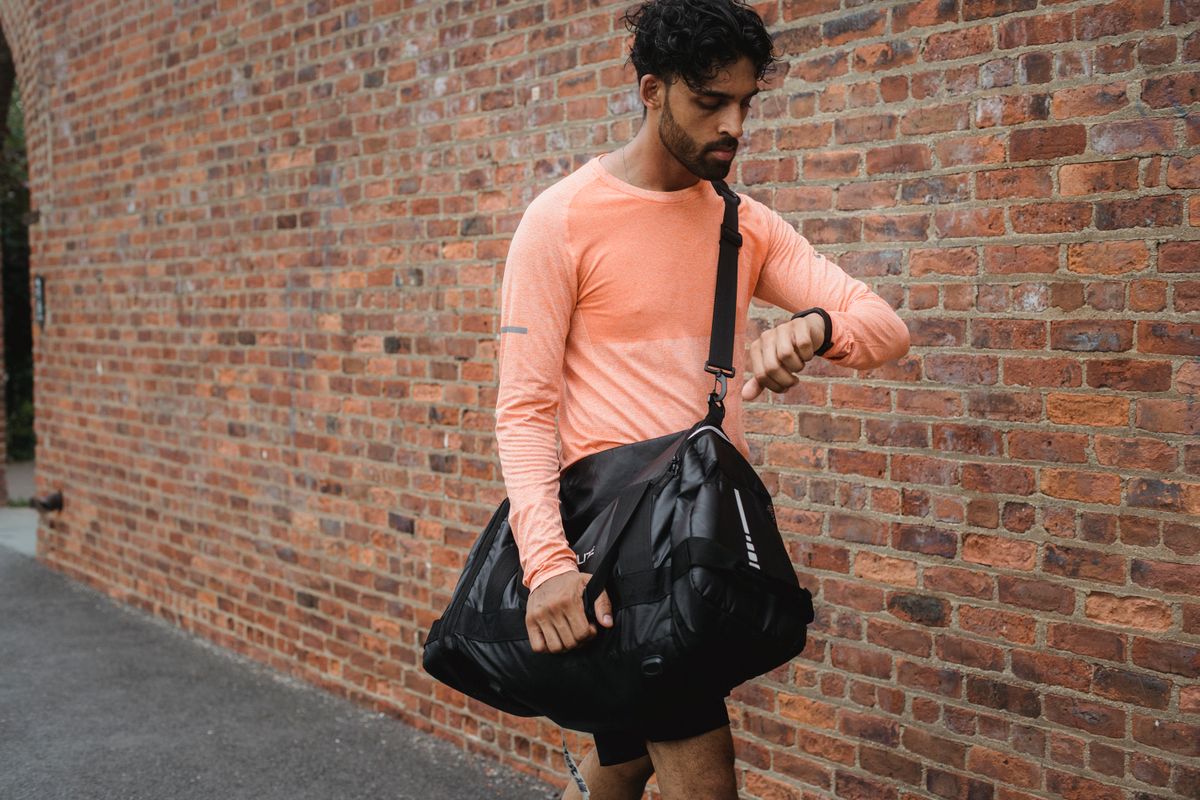
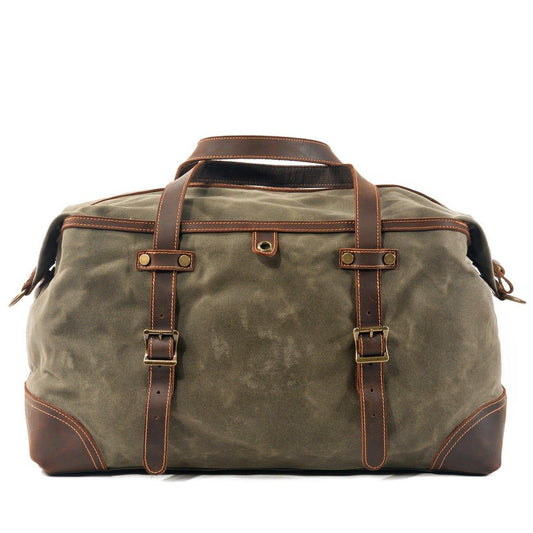
Si un sac polochon cède, c'est au niveau de la fermeture éclair. Recherchez une fermeture éclair métallique de calibre #8 ou #10 sur l'ouverture principale, pas une fine spirale #3. Les dents métalliques résistent bien mieux aux contraintes latérales d'un sac trop rempli que les spirales en plastique. Les doubles fermetures éclair vous permettent de verrouiller les tirettes avec un petit cadenas pour la sécurité pendant le transport. Testez la tirette : elle doit glisser sans accroc, et le curseur ne doit pas séparer les dents lorsque vous tirez. Un sac de voyage polochon de qualité traite la fermeture éclair comme une couture structurelle, pas comme une après-pensée, car une fermeture éclair qui se fend vous laisse en rade au milieu du voyage sans aucune réparation en vue.
Sangles et poignées : Confort pour les longs trajets
Vous porterez le sac de trois manières : par les poignées d'extrémité, sur l'épaule et parfois comme un sac à dos. La bandoulière doit mesurer au moins 5 cm de large avec une section rembourrée et un coussin coulissant qui reste sur votre épaule. Les poignées d'extrémité doivent être renforcées là où elles rejoignent le corps et être affleurantes lorsqu'elles sont abaissées. Les bretelles de sac à dos détachables sont un bonus pour les déplacements dans les terminaux. Les coutures fragiles au niveau de l'ancrage de la sangle sont le deuxième point de défaillance le plus courant après les fermetures éclair, alors inspectez ces coutures en premier et faites confiance à un sac dont les poignées semblent surdimensionnées plutôt que juste adéquates.
Protection de la base : Garder le sac hors du sol
Les sacs polochons passent leur vie sur des sols sales. Une base renforcée, souvent caoutchoutée ou en cuir, résiste à l'abrasion et empêche le tissu d'absorber l'humidité. Certains sacs ajoutent des pieds métalliques aux coins ; d'autres utilisent un panneau d'usure riveté séparé. Les deux approches sont meilleures qu'une base en tissu mince qui se mouille à la première flaque d'eau. Lorsque vous posez votre sac de voyage polochon dans une gare routière, la base est ce qui sauve le contenu, donc un fond protégé est non négociable pour les voyageurs fréquents.
Agencement des poches : Où tout devrait aller
Des poches intelligentes réduisent le chaos. L'agencement idéal comprend une poche d'accès facile à l'extrémité pour une bouteille d'eau ou des chaussures (éloignées des vêtements propres), une poche avant plate pour les documents et un livre, et une poche intérieure zippée pour les objets de valeur. Un compartiment à chaussures séparé change la donne lors des voyages de plusieurs jours. Évitez les modèles à une seule poche où une bouteille de shampoing qui fuit ruine une chemise ; la compartimentation est la caractéristique qui vous manque seulement après qu'elle ait disparu, lorsqu'un seul déversement atteint tout ce que vous avez emballé.
Types de fermeture : Fermeture éclair, enroulable et à cordon
La fermeture détermine la protection contre les intempéries et la vitesse d'accès. Une fermeture éclair est la plus rapide et la plus sûre mais vulnérable si les dents sont de mauvaise qualité. Une fermeture enroulable se plie et se clipse, protégeant de la pluie pour les excursions en kayak ou par temps de mousson, au prix d'un emballage plus lent. Un cordon de serrage avec un rabat est le plus léger et le plus décontracté, mais le moins protecteur. Adaptez la fermeture au climat : fermeture éclair pour les voyages en ville, enroulable pour les aventures humides, cordon de serrage pour la salle de sport et les courts trajets où la vitesse l'emporte sur l'étanchéité.
Roues ou pas de roues : La question du convertible
C'est la plus grande bifurcation sur la route. Un sac polochon sans roues est plus léger, plus compact et n'a jamais de roue cassée. Un sac polochon à roulettes vous épargne le dos dans les grands aéroports mais ajoute du poids et un châssis rigide qui réduit l'espace de rangement. Règle générale : en dessous de 12 kg de charge, les poignées suffisent et les roues sont un poids mort ; au-delà, les roues ont leur place. De nombreux voyageurs choisissent un sac de voyage polochon sans roues pour les week-ends et une version à roulettes pour les longs trajets, plutôt que d'imposer un seul compromis.
Résistance à l'eau et aux intempéries
La toile et le cuir repoussent la pluie légère mais s'imbibent sous une averse. Recherchez un traitement résistant à l'eau, des coutures scellées sur les modèles en nylon, ou une housse de pluie incluse. La toile cirée perle l'eau naturellement et se cire à nouveau à la maison. Pour les régions de mousson ou la gadoue hivernale, une fermeture enroulable surpasse une fermeture éclair. Adaptez la protection à l'endroit où vous voyagez le plus, pas au pire des cas que vous rencontrez une fois tous les dix ans, car la sur-ingénierie ajoute du poids que vous transportez lors de chaque voyage ordinaire.
Dimensionner un sac de voyage polochon en fonction du type de voyage
| Voyage | Capacité | Pourquoi |
|---|---|---|
| Week-end (2 à 3 jours) | 30 à 40 L | Conforme aux bagages à main, contient une tenue par jour plus les articles de toilette |
| Gym ou sports | 25 à 35 L | Chaussures, équipement et rechange sans encombrement |
| Affaires (1 à 2 nuits) | 35 à 45 L | Costume, ordinateur portable et chaussures formelles séparés |
| Aventure (4 à 7 jours) | 50 à 70 L | Couches, équipement et charges plus volumineuses |
Achetez pour votre voyage le plus courant, pas le plus long. Un sac polochon surdimensionné vous tente simplement de trop remplir et de payer des frais d'excédent de poids, tandis qu'un sac de la bonne taille se glisse dans tous les compartiments supérieurs.
Stratégie d'emballage : Comment charger un sac polochon efficacement
- Articles lourds en premier : placez les chaussures et les livres au fond près de la base pour la stabilité.
- Roulez, ne pliez pas : rouler réduit les plis et remplit les coins comme le pliage ne peut pas le faire.
- Utilisez des cubes : les cubes de rangement transforment une coque souple en modules organisés et compressibles.
- Réservez la poche d'extrémité : gardez une bouteille réutilisable ou des tongs séparées des vêtements propres.
Un sac de voyage polochon bien rempli transporte plus que son volume en litres ne le suggère, car les parois souples s'adaptent aux formes irrégulières qu'une valise rigide gaspille.
Considérations pour les voyages régionaux : Europe, Asie et Amériques
La région où vous voyagez détermine les bonnes caractéristiques. En Europe, les limites strictes des bagages à main des compagnies aériennes à bas prix favorisent un sac polochon souple de 30 à 40 litres qui peut être comprimé dans les gabarits. En Asie, l'humidité élevée et les pluies soudaines rendent la résistance à l'eau essentielle, et les trains bondés récompensent un profil mince que vous pouvez garder sur vos genoux. À travers les Amériques, les longs voyages en voiture et les plus grandes voitures de location permettent un sac polochon de 50 à 70 litres avec des roulettes pour faciliter les déplacements dans les halls d'hôtel. Laissez votre région dominante guider la liste de priorités des caractéristiques ci-dessus, puis adaptez-vous pour le voyage exceptionnel occasionnel.
Fonctionnalités de sécurité pour les voyageurs
Un sac de voyage polochon est souple et tentant à lacérer, alors pensez aux fermetures éclair verrouillables, à une sangle anti-lacération et à une poche RFID pour les cartes. Dans les bus de nuit dans certaines régions d'Amérique du Sud ou les trains de nuit en Europe, un sac qui s'attache à votre jambe ou se clipse au cadre du siège prévient le vol classique "saisi à l'arrêt". Aucune de ces mesures ne remplace la vigilance, mais elles augmentent l'effort dont un voleur a besoin, et cette dissuasion seule arrête la plupart des vols opportunistes avant qu'ils ne commencent.
Fourchettes de prix : Économique, milieu de gamme et premium
- 50 à 90 € : nylon ou toile, fermeture éclair basique, convient pour la salle de sport et les courts séjours.
- 120 à 200 € : toile cirée ou garnitures en cuir, meilleure quincaillerie, sangle rembourrée. Le juste milieu pour un usage quotidien.
- 250 € et plus : cuir pleine fleur ou nylon balistique, garantie à vie, pièces remplaçables. Pour des années de voyages intensifs.
Investissez dans la fermeture éclair, la sangle et la base, les trois parties qui défaillent réellement. Une coque premium avec une fermeture éclair bon marché est pire qu'un sac milieu de gamme bien conçu.
Comment entretenir votre sac de voyage polochon
L'entretien est ce qui transforme un bon sac de voyage polochon en un sac qui dure dix ans. Après chaque voyage, videz-le complètement, essuyez la base et les poignées, et laissez-le aérer ouvert quelques heures avant de le ranger. La toile bénéficie d'un spray hydrofuge saisonnier ; le cuir nécessite un conditionneur trimestriel et une protection contre la chaleur directe qui craque le grain. Vérifiez les fermetures éclair pour les fils accrochés et les ancrages des sangles pour les rivets desserrés, en réparant les petits problèmes avant qu'ils ne deviennent des pannes qui mettent fin au voyage sur la route où un atelier de réparation est introuvable.
- Ranger vide et ouvert : ne jamais ranger un sac humide ; les taches de moisissure sont permanentes et l'odeur persiste pendant des mois.
- Alterner le chargement : alterner l'extrémité que vous remplissez prolonge uniformément la durée de vie de la fermeture éclair et des coutures.
- Garder un kit de réparation : une tirette de rechange et une aiguille avec du fil peuvent sauver tout un voyage à l'étranger.
Une remise à zéro de dix minutes après chaque voyage est l'assurance la moins chère qu'un voyageur puisse acheter, et cela permet au sac d'avoir l'air soigné plutôt que battu, ce qui est important lorsque vous entrez dans un hall d'hôtel ou une réunion client directement depuis le terminal.
Achat durable et éthique
Un sac polochon que vous gardez pendant une décennie est le sac polochon le plus écologique qui soit, car le remplacement est le véritable coût environnemental caché derrière un prix d'autocollant bas. Choisissez une construction réparable, du matériel remplaçable et du cuir tanné végétal ou provenant de sources responsables plutôt que des synthétiques de la mode rapide qui libèrent des microplastiques à chaque lavage et se fissurent après deux saisons. Les marques qui publient les détails de leur tannerie et de leur usine sont plus faciles à croire que celles qui se cachent derrière un langage vague "écologique" sans preuve. Achetez une fois, prenez-en soin et réparez-le si nécessaire ; cette seule habitude surpasse n'importe quel badge recyclé imprimé sur un sac que vous remplacerez de toute façon l'année prochaine.
Accessoires de sac de voyage polochon qui valent la peine d'être ajoutés
Quelques petits ajouts multiplient l'utilité d'un sac polochon bien au-delà de leur coût. Les cubes de rangement compressent les vêtements et créent des sections instantanées à l'intérieur d'une coque souple qui, autrement, deviendrait un seul tas non structuré. Une étiquette de bagage avec une adresse couverte protège votre vie privée sur les tapis roulants bondés. Une housse de pluie compacte se range dans la poche de base et sauve les appareils électroniques lors d'orages soudains qui vous surprennent entre les terminaux. Pour les modèles à roulettes, une sangle qui s'enroule autour d'une poignée de valise à roulettes transforme deux sacs encombrants en une seule unité gérable à l'aéroport. Aucun de ces articles ne coûte cher, mais chacun élimine un petit point de friction quotidien qui s'accumule sur une année complète de voyages.
Quand remplacer votre sac de voyage polochon
Même le meilleur sac prend sa retraite un jour. Remplacez-le lorsque la fermeture éclair principale se sépare à plusieurs reprises malgré les réparations, lorsque la base s'use jusqu'à la doublure, ou lorsque l'ancrage de la sangle se déchire sous une charge normale. Les éraflures mineures et la patine ne sont pas des raisons de remplacer ; ce sont des raisons de le garder. Un sac de voyage polochon bien choisi devrait servir cinq à dix ans de voyages réguliers, et atteindre cette durée de vie est un signe que vous avez bien acheté, pas un signe qu'il faut le remplacer. Lorsque la structure cède plutôt que la surface, c'est le moment de racheter en utilisant la même liste de vérification des caractéristiques que la première fois, confiant dans ce qui compte vraiment.
Sac de voyage polochon vs valise : Quand choisir lequel
Le sac polochon n'est pas toujours le bon choix. Une valise rigide protège les objets fragiles et roule sur de longs terminaux sans aucune tension sur les épaules, donc pour les voyages de deux semaines ou les retours chargés de cadeaux, elle l'emporte sur la pure praticité. Un sac de voyage polochon l'emporte sur la flexibilité, le style et la compressibilité en cabine pour les voyages de moins d'une semaine où vous changez souvent d'endroit. De nombreux voyageurs possèdent les deux et décident en fonction de la durée du voyage : sac polochon pour le city-trip de trois nuits, valise pour la visite familiale de deux semaines. Savoir quand chacun brille vous évite de forcer un sac polochon à faire un travail qu'il fait mal, et vice versa, ce qui est la marque d'un voyageur chevronné plutôt que d'un loyaliste du sac qui défend une forme contre chaque voyage.
Foire aux questions
Les roues valent-elles le coup sur un sac de voyage polochon ?
Seulement au-delà d'une charge d'environ 12 kg ou pour les voyageurs ayant des problèmes de dos et de longues marches dans les aéroports. Pour le week-end et la salle de sport, sans roues, c'est plus léger et plus facile à ranger. Choisissez en fonction de votre charge typique, pas de l'étiquette.
Quelle capacité de sac polochon reste de taille cabine ?
La plupart des compagnies aériennes acceptent jusqu'à 40 litres comme bagage à main souple, mais vérifiez toujours les dimensions exactes de votre compagnie aérienne. Un sac polochon flexible qui se comprime en dessous de la limite évite les frais d'enregistrement à la porte.
Toile ou cuir pour un sac de voyage polochon ?
La toile est plus légère, moins chère et plus facile à entretenir ; le cuir est plus résistant et vieillit en un héritage. Pour les grands voyageurs, la toile cirée est le choix pragmatique, tandis que le cuir convient aux voyages plus lents et axés sur le style.
Comment garder la base propre ?
Essuyez une base caoutchoutée ou en cuir après chaque voyage, traitez la toile avec un hydrofuge et ne rangez jamais le sac humide. Une base propre dure beaucoup plus longtemps que le reste du sac et empêche les odeurs de se propager à l'intérieur.
Conclusion
Le bon sac de voyage polochon se définit par les détails : une fermeture éclair de gros calibre, une sangle rembourrée, une base protégée, des poches intelligentes et une décision concernant les roues adaptée à votre charge. Choisissez ces caractéristiques à dessein et le sac survivra aux voyages pour lesquels vous l'avez acheté. Explorez notre collection de sacs polochons, nos sacs polochons en cuir véritable et nos sacs polochons à roulettes pour comparer les constructions, puis choisissez celui conçu pour votre façon de voyager. Un sac polochon bien choisi transforme l'emballage d'une corvée en un rituel.