
Waxed Canvas vs Nylon Backpacks: Which Is Better for Hiking and Adventure Travel in 2026?

If you are planning your next big trek and comparing waxed canvas backpacks against modern nylon packs, you are asking one of the oldest questions in adventure travel. Waxed canvas backpacks have carried explorers, mountaineers, and wandering photographers for more than a century, while nylon has dominated outdoor retail shelves since the 1970s. Both materials can serve you well on the trail — but they behave very differently in rain, under abrasion, over years of use, and in the way they age. This in-depth 2026 guide compares the two fabrics across every factor that matters for hiking and adventure travel, so you can choose the pack that genuinely fits the way you explore.
Why Waxed Canvas Backpacks Still Matter for Adventure Travel in 2026
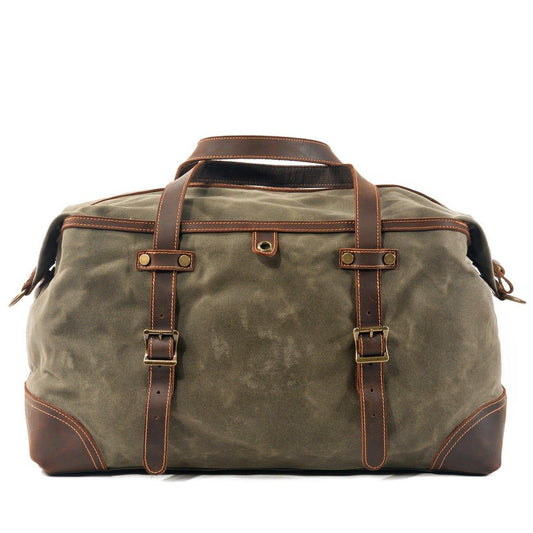
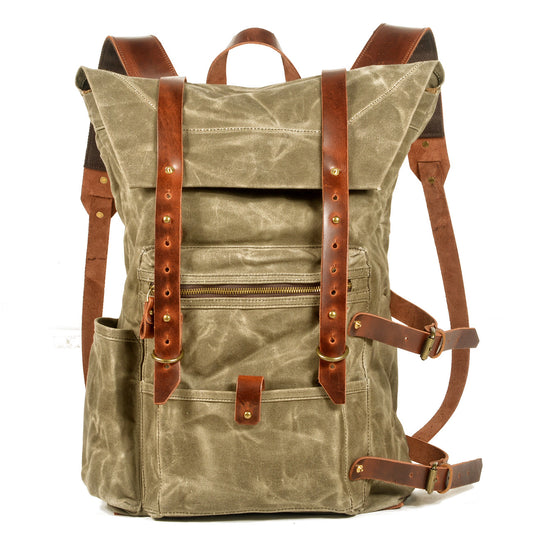
Waxed canvas is cotton duck fabric impregnated with paraffin or a hybrid wax blend. The wax fills the weave, making the fabric water-resistant, wind-blocking, and remarkably resistant to punctures and tears. Long before laminates and coatings existed, sailors waxed their sailcloth to keep spray out, and that same technology migrated into rucksacks, field jackets, and tents.
In 2026, waxed canvas is enjoying a genuine renaissance — and not only for nostalgic reasons. Travelers are increasingly skeptical of plastic-based gear that sheds microplastics and ends up in landfill after a few seasons. A quality waxed canvas pack is repairable, re-waxable, and biodegradable at end of life. It develops a patina — creases, darkened wear points, a story written in fabric — that synthetic materials simply cannot replicate.
- Longevity: a well-made waxed canvas pack routinely lasts 15–30 years with basic care.
- Repairability: canvas can be patched, stitched, and re-waxed at home; torn nylon laminates usually cannot.
- Weather resistance: wax sheds rain and snow while remaining breathable enough to prevent internal condensation.
- Quiet in the field: canvas does not rustle or crinkle — a real advantage for wildlife photographers and hunters.
- Timeless looks: a waxed canvas pack works on the trail, in a cafe in Lisbon, or in a Tokyo train station without screaming "tourist."
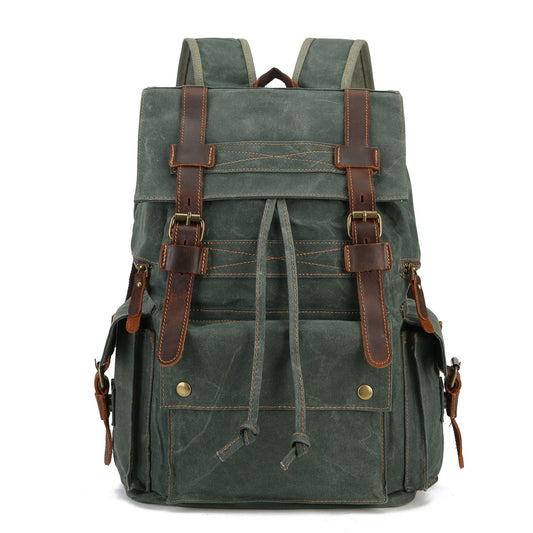
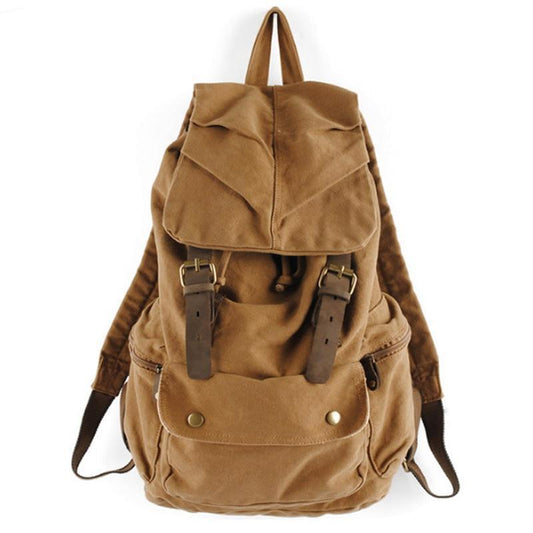
If you want to see what modern waxed cotton construction looks like, browse the waxed canvas bags collection — the range covers rucksacks, messengers, and travel packs built on this heritage fabric.

What Nylon Backpacks Do Well
To make a fair comparison, we have to give nylon its due. Ripstop nylon, Cordura, and modern laminates such as X-Pac and Ultra fabrics are engineering marvels. Gram for gram, high-tenacity nylon is stronger than steel wire, and it absorbs almost no water.
- Weight: a 40-liter nylon pack can weigh under 1 kg; an equivalent waxed canvas pack often weighs 1.5–2.5 kg.
- Dry speed: nylon dries in minutes; soaked canvas can take hours.
- Technical features: ultralight frames, ventilated back panels, and load-lifter systems are mostly built on synthetic platforms.
- Low maintenance: no re-waxing, no conditioning — hose it off and go.
For fast-and-light alpine objectives, multi-day thru-hikes where every gram counts, or expedition mountaineering, nylon remains the rational choice. The question is whether your travel actually looks like that — because for most adventure travelers, it does not.
Waxed Canvas vs Nylon: Head-to-Head Comparison
| Factor | Waxed Canvas | Nylon / Synthetic |
|---|---|---|
| Water resistance | Excellent when waxed; improves with re-waxing | Excellent with DWR/laminate; degrades as coating wears |
| Abrasion resistance | Outstanding — thick weave shrugs off rock and branches | Good (Cordura) to fair (ultralight fabrics) |
| Weight | Heavy: 1.5–2.5 kg typical for 30–40 L | Light: 0.7–1.5 kg for the same volume |
| Lifespan | 15–30 years with care | 3–10 years; coatings delaminate over time |
| Repairability | Patch, stitch, re-wax at home | Limited; taped seams and laminates hard to fix |
| Sustainability | Natural cotton, biodegradable, no microplastics | Petroleum-based, sheds microplastics, rarely recycled |
| Aesthetics | Ages into a rich patina | Looks best on day one, degrades visually |
| Price over lifetime | Lower cost per year of use | Often cheaper upfront, replaced more often |
Weather Resistance in the Real World
A freshly waxed canvas pack will shed a full day of Scottish drizzle or a Pacific Northwest downpour without letting your down jacket get damp. The wax coating is not a laminate that can delaminate — it is embedded in the fibers themselves. When water resistance fades after a year or two of hard use, you simply rub in a fresh bar of wax, warm it with a hair dryer, and the protection is fully restored. Nylon packs rely on polyurethane coatings and DWR treatments that wear away permanently; once a PU coating starts peeling inside your pack, there is no practical fix.
Durability and Abrasion
Drag both fabrics across granite and the difference is immediate. An 18 oz waxed duck canvas resists gouging in a way that only the heaviest ballistic nylons can match. Canvas fibers are thick and forgiving; small punctures self-seal partially as the wax migrates. This is why bushcraft guides, tool-bag makers, and military outfitters used canvas for generations. For off-trail scrambling, canyon travel, or trips where your pack gets thrown onto bus roofs across Southeast Asia, canvas takes the abuse gracefully.
Weight and Carry Comfort
Here nylon wins, and honesty matters: if your route involves 25 km days with full camping loads, an extra kilogram of empty pack weight is real. However, for travel-style adventures — day hikes from a base town, hut-to-hut walking in the Alps, city-to-trail mixed itineraries — the difference between a 1.9 kg canvas pack and a 1.1 kg nylon pack is rarely the thing that makes or breaks your day. Choose based on your longest carrying day, not marketing copy.
Sustainability and Microplastics
Every synthetic pack sheds microplastic fibers as it abrades, and almost none are recycled at end of life. Cotton canvas is a natural fiber; wax finishes based on paraffin blends or plant waxes have a far gentler footprint. If you buy one waxed canvas pack instead of four successive nylon packs over 20 years, the sustainability math favors canvas decisively. In 2026, with the EU tightening textile waste regulations and travelers voting with their wallets, this is no longer a niche concern.
Choosing the Best Waxed Canvas Backpack for Hiking: A Buyer's Checklist
Not all waxed canvas backpacks are equal. When you evaluate a pack for hiking and adventure travel, work through this checklist:
- Canvas weight: 12–14 oz canvas suits day packs; 16–18 oz suits rugged travel and bushcraft use.
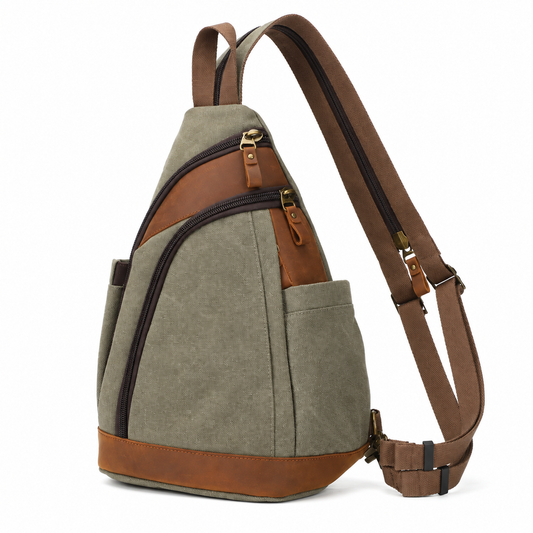
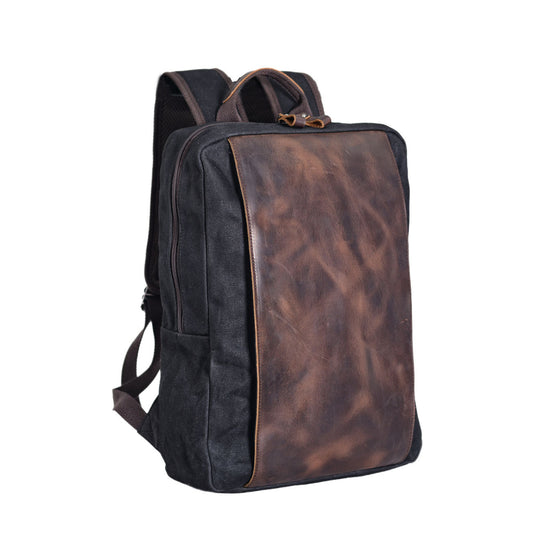
- Leather reinforcement: genuine leather on the base, straps, and lash points dramatically extends life. Hybrid canvas-and-leather builds offer the best balance — see the canvas and leather backpack collection for examples.
- Hardware: look for solid brass or antique-finish metal buckles, not plastic side-release clips that crack in cold weather.
- Back panel and straps: padded, contoured straps are essential above 25 L; a sternum strap stabilizes the load on scrambles.
- Capacity: 20–25 L for day hikes, 30–40 L for weekend trips and one-bag travel, 45 L+ for extended trekking.
- Access: top-loading with a storm collar is most weatherproof; a laptop sleeve adds versatility for mixed city-trail trips.
- Stitching: double- or triple-stitched seams with bar tacks at stress points are non-negotiable.
If your adventures skew toward serious trail days, pair your shortlist against dedicated designs in the hiking backpack collection, where suspension and capacity are tuned for distance rather than style alone.

Regional Reality Check: Where Each Fabric Shines
Europe
Hut-to-hut routes in the Dolomites, the West Highland Way, coastal Portugal: moderate loads, mixed town-and-trail days, frequent drizzle. Waxed canvas thrives here. It handles rain well, looks appropriate in alpine villages and city museums alike, and European travelers increasingly prefer natural materials for environmental reasons.
Asia
Monsoon bursts in Vietnam, tea-house trekking in Nepal, train travel across Japan. Canvas handles the rough baggage handling and looks refined in urban settings. In genuinely hot, humid jungle conditions, nylon's fast drying is an advantage — though a waxed pack with a rain cover performs perfectly well for typical itineraries.
The Americas
Patagonia wind, Rocky Mountain scree, Central American chicken buses. For expedition-length backcountry carries, nylon's weight savings matter. For everything else — national park day hikes, road trips, Andean market towns — waxed canvas delivers superior durability and looks that do not mark you as a target.
Caring for a Waxed Canvas Backpack in the Field
Care is simple, and this simplicity is part of the appeal:
- Brush off dry mud with a stiff brush; spot-clean with cold water and a sponge. Never machine wash or dry clean — both strip the wax.
- Re-wax high-wear areas (base, front face, strap edges) once a year, or when water stops beading.
- To re-wax: rub a wax bar over clean fabric, warm with a hair dryer until it absorbs, then hang for 24 hours in a warm room.
- Store dry and uncompressed; stuff with paper to hold shape between trips.
- Treat leather trim with a neutral leather conditioner twice a year.
Field Notes: How Waxed Canvas Backpacks Perform Trip After Trip
Specifications only tell half the story, so consider how the two fabrics behave across a realistic year of adventure travel. In spring, you take a waxed canvas pack on a four-day coastal walk in Cornwall. It rains on and off for two days; the canvas darkens slightly at the shoulders but nothing inside gets damp, and by the evening fire the fabric has dried without any special attention. In summer, the same pack rides in overhead racks on trains from Munich to Ljubljana, gets wedged under a bus seat in Croatia, and is dragged over limestone at a swimming cove. The scuffs blend into the patina. A thin ripstop pack subjected to the same summer would show white abrasion lines and possibly a puncture from the limestone.
In autumn, you carry firewood, a thermos, and camera gear on frosty morning hikes. The canvas stays supple in freezing temperatures where cheap synthetic coatings can stiffen and crack, and plastic buckles become brittle enough to snap under a gloved thumb. By winter, the pack has molded to your back, the leather trim has darkened a shade, and water still beads on the wax. This trip-after-trip resilience — not any single spec-sheet number — is why waxed canvas earns lifelong loyalty from travelers who buy it once.
Load Behavior and Everyday Ergonomics
One under-discussed advantage of heavier canvas is structure. A 16 oz canvas pack stands up on its own when you set it down, keeps its shape while you dig for a water bottle, and does not collapse into a floppy sack when half-empty. Ultralight nylon packs, by contrast, need careful packing to carry well and slump awkwardly on cafe floors and airport security belts. For mixed travel days — trail in the morning, museum in the afternoon — that structure translates into small but constant conveniences: easier access, tidier packing, a pack that sits upright on a train luggage shelf instead of sliding over.
Common Mistakes Buyers Make When Choosing an Adventure Backpack
- Buying on empty weight alone. A pack that is 700 g lighter but collapses under load or wears out in three seasons is not a bargain. Judge total cost and comfort over the pack's realistic lifetime.
- Ignoring strap and back-panel quality. The fabric gets the marketing attention, but thin, unpadded straps ruin more trips than any fabric choice. Test the pack loaded with 6–8 kg before committing.
- Oversizing. Most travelers fill whatever volume they buy. A disciplined 30–35 L waxed canvas pack forces better packing and stays under airline carry-on limits across Europe and Asia.
- Assuming all canvas is equal. Uncoated cotton canvas soaks up water like a towel. Confirm the fabric is genuinely wax-impregnated, not merely "canvas-look" polyester or untreated cotton.
- Neglecting hardware. Zippers and buckles fail long before quality fabric does. Metal hardware and large-gauge zippers are worth insisting on for adventure use.
- Skipping the rain plan. Whatever fabric you choose, electronics belong in an interior dry pouch. No backpack seam — canvas or nylon — is truly submersion-proof.
Packing a Waxed Canvas Backpack for a Weekend Adventure
A 30–40 L waxed canvas pack comfortably handles a three-day trip when packed with intent:
- Bottom third: sleep layer or packable jacket in a compression sack — items you will not need until evening.
- Middle core, against the back panel: the heaviest items — spare boots, food, camera body — to keep the center of gravity high and close.
- Top third: rain shell, lunch, and the layers you will actually touch during the day under the storm collar.
- Lid and outer pockets: headlamp, map, snacks, phone battery — anything you need without breaking stride.
- Interior pouch: passports, chargers, and electronics inside a zip pouch or dry bag as cheap insurance.
Because waxed canvas is quiet and holds its shape, repacking on a windy summit or a crowded train platform is faster and calmer than fighting a crinkling, collapsing ultralight sack — one of those small quality-of-life differences that never appears on a spec sheet but matters every single travel day.
Budget vs Investment: What Should You Actually Spend?
Entry-level waxed canvas backpacks start around $80–120 and typically use 12 oz canvas with lighter hardware — perfectly good for day hikes and commuting. The $150–250 tier brings 16–18 oz canvas, full leather trim, brass fittings, and stitching built for decades; this is the sweet spot for adventure travelers who want one pack for everything. Above $300 you are largely paying for brand heritage rather than measurable durability. On the nylon side, technical packs from major outdoor brands run $180–350 and deliver excellent suspension — but remember you will likely buy two or three of them across the lifespan of a single quality canvas pack. Budget for the decade, not the checkout page.
Frequently Asked Questions
Are waxed canvas backpacks fully waterproof?
They are highly water-resistant rather than submersion-proof. A well-waxed pack sheds hours of steady rain. For torrential monsoon conditions, add a rain cover or use interior dry bags — the same advice applies to most nylon packs, whose seams also leak under prolonged saturation.
How heavy is a waxed canvas backpack compared to nylon?
Expect roughly 0.5–1.2 kg more than an equivalent-volume nylon pack. For day hiking and travel this is rarely noticeable; for ultralight thru-hiking it may matter.
Does waxed canvas work in hot climates?
Yes. Wax does not melt at air temperatures — quality blends stay stable well beyond 40°C. The fabric feels slightly stiffer in heat but performs normally. In extreme humidity, allow the pack to air-dry overnight like any gear.
How often should I re-wax my backpack?
Once a year for regular use, or whenever water soaks in rather than beading up. High-contact zones may want touch-ups every six months.
Is waxed canvas better than nylon for airline travel?
Generally yes. Canvas resists conveyor-belt abrasion, does not snag like thin ripstop, and a patina hides scuffs that would make a nylon pack look ragged. Many waxed canvas packs in the 35–40 L range fit carry-on limits comfortably.
The Verdict: Which Backpack Should You Buy in 2026?
Choose nylon if you are counting grams on multi-week thru-hikes, climbing technical routes, or trekking in relentlessly wet jungle where fast drying is critical. Choose a waxed canvas backpack if you want one pack that handles hiking, adventure travel, daily carry, and decades of service — while aging beautifully and staying out of landfill. For the vast majority of adventure travelers whose trips blend trails, towns, trains, and cafes, waxed canvas backpacks are not just the more charming choice in 2026; they are the more rational one. Buy quality once, re-wax it occasionally, and let the patina record everywhere you have been.