
Waxed Canvas Backpacks for Hiking: 2026 Buyer's Guide – Woosir Skip to content

10% OFF on Your First Order, coupon code: WS10

Waxed Canvas Backpacks for Hiking: 2026 Buyer's Guide

by Woosir Editorial Team 01 Sep 2026 0 comments
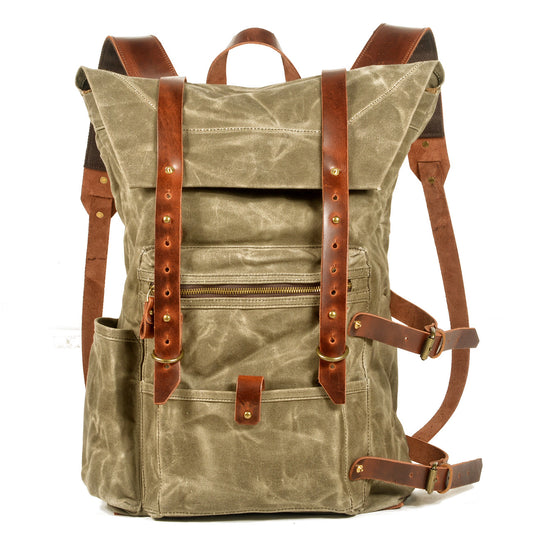
Cream waxed canvas backpacks ready for hiking and adventure travel

Why Waxed Canvas Backpacks for Hiking Outperform Synthetics

Waxed canvas backpacks for hiking and adventure travel have earned a loyal following among travelers who want gear that shrugs off bad weather and looks better the more it is used. Unlike thin synthetic packs that show every scuff and fade under hard UV light, a waxed canvas pack develops a patina that quietly records your trips across Europe, Asia, and the Americas. The waxed finish is the secret: cotton canvas is saturated with a paraffin or beeswax blend that makes water bead up and roll off instead of soaking through the fibers.

Hiker wearing a backpack on a forest trail

For day hikes, multi-day treks, and the messy middle ground of "I am traveling and also exploring on foot," waxed canvas hits a sweet spot that nylon and polyester simply do not. It breathes better than a coated shell, so your back stays drier on a humid approach. It is quiet and soft, so it does not rattle like a hard-shell daypack when you brush past rocks. And it is genuinely repairable: a torn seam or a worn strap can be stitched by almost any cobbler, whereas a delaminated synthetic panel usually means buying a whole new bag.

The waxed finish advantage

The wax does far more than repel rain. It adds structure, so the pack stands up on its own when you set it down at a trailhead or a train platform. It resists abrasion from granite, limestone, and gritty desert stone. And it self-heals to a degree: rub a scuff with the warmth of your thumb and the wax redistributes, hiding minor marks. A single annual re-waxing restores the water resistance almost like new, which is why these packs are passed down rather than discarded.

Breathability versus synthetics

Synthetics win on absolute weight, but waxed canvas wins on comfort for most people. The natural fibers wick a little and vent better against bare skin or a light shirt. On a hot ascent in the Italian Dolomites or a humid jungle trail in Borneo, that small difference keeps you from arriving drenched in your own sweat rather than just the rain. You still sweat, of course, but the pack does not trap it against your back the way a sealed membrane can.

What to Look for in Waxed Canvas Backpacks for Hiking

Not every waxed canvas pack is built for the trail. A fashion tote with a waxed coating will fail fast under a 12-kilogram load on rough terrain. When you shop for waxed canvas backpacks for hiking and adventure travel, judge the bag by four build details that separate a true trail tool from a lookalike.

Canvas weight and ounce rating

Canvas is measured in ounces per square yard, and this number predicts almost everything about the bag. A 10- to 12-ounce canvas is the sweet spot for hiking: light enough to keep the empty pack under roughly one kilogram, but dense enough to resist tears from brambles and rock. Anything under 8 ounces feels flimsy and sags when loaded; anything over 16 ounces gets heavy once wet. Look for "tightly woven" cotton duck, which resists snags and holds its shape better than a loose weave.

Hardware and zippers

Cheap zippers are the first thing to fail on any backpack, so this is not the place to cut corners. Insist on YKK or an equivalent with a #8 or #10 gauge on the main compartment, because a heavier gauge track survives grit and strain. Buckles should be forged metal or heavy-duty acetal, not thin stamped plastic that cracks in cold weather. D-rings and reinforced attachment points let you lash a rain jacket or trekking poles to the outside when the interior is full, which is exactly when you need the option.

Harness and load transfer

For loads above 7 kilograms, a padded back panel and a simple hip belt move weight off your shoulders and onto your hips, where your body carries it efficiently. Even a lightweight frame sheet helps the pack ride straight instead of swinging side to side. Adjustable sternum straps keep the load centered when you are scrambling over roots in a Pacific Northwest forest or stepping across a stream in the Scottish Highlands. Try the pack on with a realistic load before you buy if you can.

Waxed Canvas vs Nylon: A Quick Comparison

Both materials have loyal fans, and the honest answer is that neither is universally better. The table below shows where each shines so you can choose based on how and where you actually travel, rather than on marketing.

Factor Waxed Canvas Nylon (Coated)
Water resistance Excellent with re-waxing Excellent, no upkeep
Weight Heavier when wet Lighter overall
Breathability Breathes against back Can trap heat
Durability Repairable, ages well Can delaminate
Style Quiet, classic, blends in Technical, sporty
Upkeep Re-wax yearly Wipe clean

The practical takeaway: choose nylon if you are counting grams on a thru-hike where every ounce matters, and choose waxed canvas if you want one pack that works on the trail, the plane, and the city afterward without looking like sporting goods.

All-Weather Performance of Waxed Canvas Backpacks for Hiking

Adventure travel means different weather on every continent, and the same pack behaves differently depending on climate. Here is how waxed canvas backpacks for hiking and adventure travel perform across three common regions, with notes on what to pack alongside them so you are never caught out.

Europe: alpine passes and coastal winds

From the Pyrenees to the Norwegian fjords, sudden squalls are normal and the waxed finish shrugs off a 20-minute downpour while you wait it out under a pine. Pair the pack with a packable shell and you are set for shoulder-season trekking when the weather turns hourly. In cities like Lisbon or Prague, the same bag looks perfectly at home in a cafe, so you carry one pack instead of a trail pack plus a city pack.

Asia: tropical humidity and highland cool

In Southeast Asia the wax beads monsoon rain, but the humidity means you should air the pack out nightly to avoid mildew building in the fibers. Up on the Tibetan plateau or in the Japanese Alps, the insulation of canvas keeps gear from getting clammy in cold wind that would chill a thin nylon shell. A lightweight rain cover is still wise during peak monsoon, because no woven fabric is a substitute for a sealed layer in a cloudburst.

Americas: desert sun and rainforest downpours

In the American Southwest, waxed canvas resists abrasive sandstone and keeps its shape in dry heat that cracks lesser materials. In the Amazon basin or the Pacific Northwest, it handles soaking rain and dries slowly but completely if you hang it properly. The key everywhere is not overstuffing: a packed-to-bursting bag stresses every seam, while a comfortably full one will serve you for years of hard use.

How to Care for Your Waxed Canvas Backpack

Care is simple and is part of the appeal rather than a chore. After a trip, brush off dirt with a soft brush and sponge the bag with cold water only; never machine wash or use detergent, because both strip the wax and can shrink the cotton. Let it dry naturally away from direct heat or sunlight. Once a year, or when water stops beading on the surface, apply a thin layer of canvas wax and use a hairdryer on low to melt it in, then buff with a clean cloth. Store the pack empty and unzipped in a cool, dry place so mildew never gets a foothold.

Packing Tips for Adventure Travel

Use packing cubes to create structure inside the soft walls, because a waxed pack has less internal rigidity than a framed synthetic. Keep a dry bag or zip pouch for electronics so a soaked exterior never reaches your laptop or camera. Put heavy items close to your back and centered, and use exterior lash points for wet rain gear so the interior stays dry for your dry layers. A small carabiner on a D-ring keeps a water bottle or trekking pole within easy reach on the move.

  • Roll clothing to save space and reduce creases on the trail.
  • Carry a packable daypack inside for side trips into towns.
  • Keep your passport, cash, and phone in a front pocket you can watch.
  • Balance the load left and right so the pack does not pull you sideways on a ridge.
  • Weigh the packed bag before a flight to stay under carry-on limits.

Sizing Your Waxed Canvas Backpack for Adventure Travel

Capacity decides whether the bag serves a day hike or a week of travel, so choose against your longest realistic trip rather than your dream expedition. As a practical rule, 18 to 22 liters covers a day hike plus a laptop commute; 25 to 30 liters handles an overnight with a packed cube and a light sleep kit; 30 to 40 liters stretches to a short adventure trip if you pack lean and roll tightly. An oversized soft pack just lets contents shift and sag against your back, so resist the temptation to size up.

Trip type Recommended liters What fits
Day hike + commute 18-22 L Laptop, layers, water bottle
Overnight trail 25-30 L Packing cube + sleep kit
Short adventure trip 30-40 L One-bag capable if packed lean

Common Mistakes When Buying a Waxed Canvas Hiking Pack

Shoppers repeat the same avoidable errors, and most surface on the first heavy carry. Buying too large leads to a saggy, shifting load that pulls on one shoulder. Choosing a pack with a flimsy strap anchor means the seam can fail under a full load on the trail. Skipping the hip belt makes every hill a chore because your shoulders bear weight they were never meant to hold. Ignoring the wax renewal cycle lets water resistance fade unnoticed until you are caught in a storm. Forgetting to check airline personal-item limits can turn a great travel pack into a gate-checked nuisance. Read the specs, try the pack with a realistic load, and plan for yearly care from the start.

Waxed Canvas Backpacks for Hiking: Best Use Cases

These packs shine in situations where style and substance overlap. They are ideal for the traveler who flies in, then hikes out, because one bag works in both worlds without looking like gear. They suit photographers who want a quiet, blend-in bag that does not advertise expensive equipment in a crowded market. They fit slow travelers and digital nomads who value a bag that ages with them rather than one they replace every season. And they are a strong choice for anyone tired of synthetic packs that look worn after a single hard trip.

  • Weekend hiking trips that start and end in a city.
  • European rail travel with lots of walking between stations.
  • Asia backpacking where a professional look opens doors.
  • Everyday carry that doubles as a daypack on days off.

Travel and Security Tips for Your Waxed Canvas Pack

Because waxed canvas blends in, it is a smart choice in pickpocket-prone areas, but a few habits protect you further. Wear the pack on your front in crowded markets and transit, especially in tourist hubs across Europe and Asia where distraction theft is common. Use the interior zip pocket for your passport and a slim wallet rather than the easily opened outer pocket. Clip a small carabiner through a zipper pull and a D-ring so a quick-open theft is much harder to pull off. At a cafe, loop a strap around your chair leg so the bag cannot be snatched and gone before you notice. None of this is paranoia; it is the same situational awareness you would use with any bag, made easier by a pack that does not broadcast expensive gear to everyone nearby.

Frequently Asked Questions

Are waxed canvas backpacks waterproof?

They are highly water-resistant, not fully waterproof. The wax makes rain bead and roll off, and the seams are usually tight enough for hours of light rain. For heavy storms or river crossings, add a rain cover or keep electronics in a dry bag, because no woven fabric is truly sealed without a membrane.

Do waxed canvas backpacks for hiking weigh too much?

A well-made 12-ounce canvas daypack weighs roughly 0.9 to 1.3 kilograms empty, about the same as a sturdy nylon pack of similar size. It does gain weight when soaked, so vent it after rain. For ultralight thru-hikes, nylon is lighter; for general adventure travel, the difference is minor and the durability is better.

How often should I re-wax the bag?

Most travelers re-wax once a year, or sooner if water stops beading on the surface. A single tin of canvas wax treats a bag several times, so the upkeep cost is tiny compared with replacing a failed synthetic pack.

Can I wash a waxed canvas backpack in a machine?

No. Machine washing and detergents strip the wax and can shrink the cotton, ruining the water resistance. Clean with cold water and a soft brush only, then re-wax if the finish looks dry.

Will the wax rub off on my clothes?

A freshly waxed bag can leave a faint mark on light fabric until the surface cures. Let a new coat dry fully and buff off the excess wax, and the transfer stops. Older, well-cured packs leave no marks at all.

Conclusion: Waxed Canvas Backpacks for Hiking Remain the 2026 Favorite

Waxed canvas backpacks for hiking and adventure travel are the rare piece of gear that gets better with use: weatherproof, repairable, and quietly stylish from a Bavarian trail to a Bangkok street market. Choose a 10- to 12-ounce canvas with solid YKK zippers and a real hip belt, care for it yearly, and it will outlast several synthetic packs while looking better every season. Browse our waxed canvas bags and hiking backpacks to find the pack that fits your next adventure, and start building a bag with a story worth telling for years to come.

New Arrival

Best Sellers

Close
Edit Option
Close
Notify Me
Close
Login Close
My Cart (0) Close