Waterproof Canvas Bags 2026: Wax, Coatings & Build – Woosir Skip to content

10% OFF on Your First Order, coupon code: WS10

Waterproof Canvas Bags: Wax, Coatings & Construction That Keep You Dry in 2026

by Woosir Editorial Team 01 Sep 2026 0 comments
Waxed canvas backpack leaning against a forest tree, built for waterproof durability

Waterproof Canvas Bags: Wax, Coatings & Construction That Keep You Dry in 2026

There is a quiet confidence that comes with slinging a waterproof canvas bag over your shoulder as the sky opens up. Unlike a glossy synthetic pack that screams tourist, a well-made canvas bag shrugs off drizzle, puddles, and the occasional downpour while looking like it belongs in any city you land in. But not all canvas is created equal, and the word waterproof hides a surprising amount of engineering. In this guide we break down the waxes, coatings, and construction tricks that separate a bag that merely repels a splash from one that keeps your laptop and passport bone-dry through a monsoon. Whether you commute through London drizzle, trek across Southeast Asia, or road-trip the American West, understanding how waterproof canvas bags are built helps you choose the right one and keep it performing for years.

Why "Waterproof" Canvas Is a Moving Target

Canvas starts life as plain woven cotton, and cotton loves water. Left untreated, a canvas bag will soak through in minutes. The waterproof label you see on a product page is the result of treatments layered onto that base cloth, and every treatment comes with trade-offs in weight, breathability, feel, and longevity. A bag described as water-resistant shrugs off light rain but eventually wets out. A truly waterproof canvas bag either carries a sealed synthetic laminate or relies on a heavy wax load that beads water on contact. Knowing which you are buying matters more than the marketing adjective.

Brown waxed canvas backpack resting on a coastal cliff, weatherproof performance

The second reason waterproof is a moving target is wear. Wax rubs off, coatings crack at fold points, and DWR finishes lose their magic after a season of use. A bag that passed its first rainstorm flawlessly can start weeping at the seams six months later if you never re-treat it. The good news: canvas is forgiving and re-proofable in a way that torn nylon rarely is, which is exactly why vintage canvas luggage is still in service decades later.

The Three Ways Canvas Becomes Waterproof

Most waterproof canvas bags rely on one of three treatment families, sometimes combined. Here is what each does and where it falls short.

Traditional Wax (Waxed Canvas)

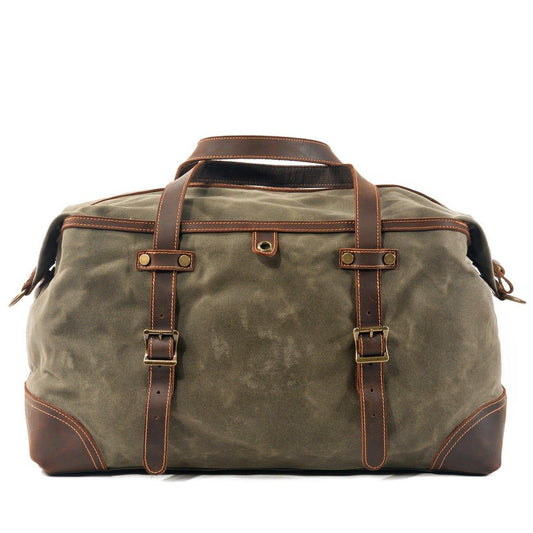
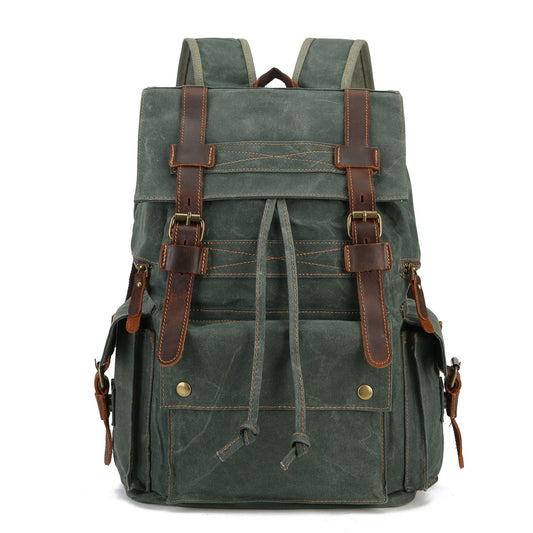
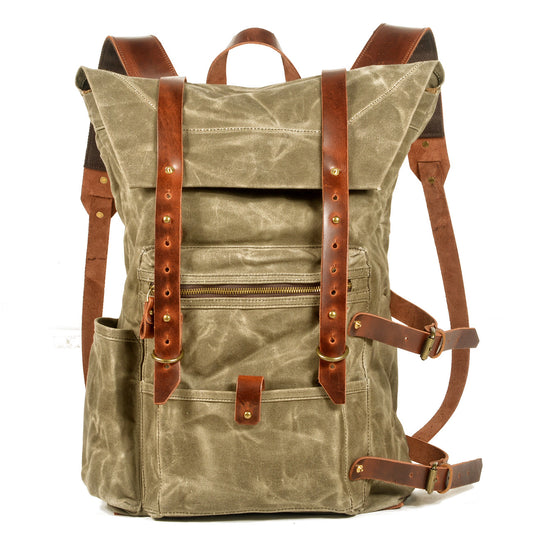
Waxed canvas is the heritage option. Makers brush or tumble hot paraffin or beeswax blends into the cloth, filling the gaps between threads so water beads and rolls off. The result is a bag with a soft, broken-in hand feel, a natural patina, and a scent many travelers love. Waxed canvas also self-heals small scuffs when you warm and rub the area. The downsides: it is heavier than uncoated cloth, it can feel stiff in cold weather, and it transfers a faint wax residue to light clothing until it cures. It is also not technically submersible — sit it in a puddle and water will eventually wick through the weave from below.

Polyurethane (PU) Lamination

A PU laminate bonds a thin plastic film to the back of the canvas. This creates a genuine waterproof barrier that blocks water from both directions, which is why you see it on expedition duffles and dry-bag hybrids. PU-coated canvas is lighter than a heavy wax load and easier to wipe clean. The trade-off is breathability and feel: the laminate can crack at sharp folds over years, and a puncture in the film is harder to repair than a wax rub. Many premium bags now use a wax-PU hybrid — wax outside for looks and touch, PU inside for a certified barrier.

Durable Water Repellent (DWR) Finish

DWR is a microscopic surface treatment that makes water bead up rather than soak in. You will often see it on nylon, but canvas makers use it too, usually as a topcoat over wax or as a lighter alternative for bags that only need to handle brief showers. DWR wears off fastest of the three — abrasion, washing, and even skin oils degrade it — but it is also the easiest to refresh with a spray. Treat DWR as the first line of defense, not the whole wall.

Treatment Waterproof level Feel & weight Lifespan Easiest to refresh
Traditional wax High (not submersible) Heavy, soft, patinas Years with re-wax Medium (warm + wax)
PU lamination Very high (sealed) Light, less breathable Long, crack risk Low (needs pro repair)
DWR finish Low–medium Light, unchanged Months High (spray)

Reading the Spec Sheet: Oz, Denier, and Hydrostatic Head

When comparing waterproof canvas bags, three numbers tell you most of what you need. Fabric weight in ounces (oz) describes how heavy the base weave is — 18 to 22 oz waxed canvas is rugged and holds shape, while 10 to 12 oz is lighter and more packable but dents durability. Denier, more common on nylon, measures fiber thickness; higher means tougher. Hydrostatic head, measured in millimeters, tells you how much water pressure the fabric resists before leaking — 1,000 mm shrugs off rain, 5,000 mm handles a storm, 10,000 mm plus survives immersion. A bag that lists a hydrostatic head is one built by people who test it; treat that number as your honesty check.

Construction Details That Actually Stop Leaks

Treatment is only half the story. Water is relentless and will find the weakest seam. Three construction details separate a bag that leaks from one that laughs at the rain.

Seams and Stitching

Every needle hole is a potential leak path. Quality waterproof canvas bags use tightly packed stitching, then seal the seams with tape, a rubberized strip, or a second welded layer on laminated builds. On waxed canvas, the wax itself plugs many holes, which is why heritage bags can get away with exposed stitching — but the wax must be maintained. If you plan to be out in serious weather, look for taped or welded seams at the base and sides, where water pools.

Zippers and Storm Flaps

A waterproof body means nothing if the main zipper lets rain run straight inside. The best designs bury the zip under a storm flap with magnetic or snap closure, or use a water-resistant zipper with a rubberized tooth coating. Exposed metal zippers are the most common failure point on water-resistant bags. For true protection, a roll-top closure beats any zipper because there is no zip to leak.

Roll-Top vs Flap Closures

Roll-top canvas bags fold the opening over two or three times and clip it shut, creating a seal that survives full immersion if the seams hold. They are the gold standard for kayaking, motorcycling in the rain, and monsoon travel. Flap-and-buckle bags look smarter for city use but rely entirely on the flap's overlap and a waxed or coated underside to shed water. Choose roll-top for function, flap for form — or a hybrid that offers both.

Closure Water protection Look Best use
Roll-top Excellent (immersible) Utilitarian Monsoon, watersports
Storm-flap zip Very good Smart-casual Commute, city travel
Plain flap Good (sheds rain) Classic Light drizzle

Waterproof Canvas vs Nylon: The Real Rain Showdown

Travelers often ask whether they should skip canvas entirely and buy a nylon dry bag. The honest answer depends on your trip. Nylon with a PU or TPU coating is lighter, more packable, and often more durably waterproof — but it looks technical and shows scuffs. Canvas, especially waxed or wax-PU hybrid, is quieter, ages beautifully, and blends into cafes and boardrooms alike. In a sudden tropical downpour, a sealed nylon bag will keep contents drier longer; in everyday European drizzle, a waxed canvas tote is more than enough and far better looking.

Factor Waterproof canvas Coated nylon
Looks in the city Excellent, blends in Technical, stands out
Weight Heavier Lighter
True waterproofing Good–very good Excellent
Repairability High (re-wax, patch) Lower (film cracks)
Patina / aging Improves with use Fades, pills

Regional Rain Realities: Europe, Asia, the Americas

Where you travel shapes how much waterproofing you need. In Northern Europe — London, Amsterdam, Bergen — drizzle is a daily companion rather than an event. A waxed canvas messenger or tote handles this perfectly, and you will blend in with locals who have carried similar bags for decades. Southern Europe brings sudden Mediterranean storms; a roll-top or storm-flap closure earns its keep there.

Across Asia, the variables are intensity and humidity. Mumbai and Bangkok monsoons are not drizzle — they are walls of water. There, a PU-laminated canvas duffle or a roll-top pack is the safer bet, and you will want sealed seams for ferry rides and flooded streets. In Japan, where rain is frequent but commuters prize neatness, a slim waxed canvas shoulder bag keeps documents dry without shouting outsider.

In the Americas, the contrast runs from Pacific Northwest mist to Andean cloud forest to Gulf Coast thunderstorms. A road-tripper crossing the American Southwest sees little rain but violent, brief desert storms; a bag that shrugs off a 20-minute cloudburst is ideal. Heading to Patagonia or the Amazon, step up to laminated or roll-top construction. Match the bag to the climate and you will never fight your gear.

How to Re-Proof a Canvas Bag (and How Often)

Re-proofing is where canvas beats almost every alternative. For waxed canvas, plan a full re-wax once a year of heavy use, or when water stops beading and starts darkening the cloth on contact. Clean the bag with a damp brush and mild soap, let it dry, then apply a purpose-made wax bar or tin with a hairdryer to melt it into the weave. Warm, rub, and let it cure for a day. For DWR-topped bags, a wash-in or spray refresher every few months restores the bead. PU laminates rarely need touch-ups but inspect fold points for cracks; a clear seam sealer can buy time before a professional repair.

Care and Storage Between Trips

A waterproof canvas bag lives longest when it dries fully after each wet outing. Never pack a damp bag — mildew is canvas's only true enemy. Air-dry away from direct heat, which can crack wax and laminate. Store stuffed with tissue in a cool, dry closet, never in a plastic bag that traps moisture. If the bag picked up salt or city grime, rinse the base and let it dry before storage. A little ritual care each season keeps the waterproofing honest and the patina rich. If you rotate between two bags, treat the rested one every few months anyway, because wax and coatings dry out even in the closet.

Common Waterproofing Myths

  • Myth: "Waterproof" means submersible. Only sealed laminates and roll-tops approach that; waxed canvas resists but is not immersion-proof.
  • Myth: More wax is always better. Over-waxed bags feel stiff, crack in cold, and stain clothing. Balance is key.
  • Myth: DWR lasts forever. It degrades with abrasion and washing; plan to refresh it seasonally.
  • Myth: A waterproof bag needs no care. Every treatment has a lifespan; neglect is the fastest route to a leak.

Red Flags to Avoid When Buying

  • No hydrostatic head listed. If a maker will not state a water rating, assume the bag is only water-resistant at best.
  • Exposed zippers with no flap. The single most common leak point; insist on a storm flap or a water-resistant zip.
  • Vague canvas claims. Confirm the actual treatment — wax, PU, or DWR — because each demands different care.
  • Non-replaceable hardware. Buckles and clips wear; choose bags with spares or standard fittings you can source abroad.
  • Too-light base cloth. Under 10 oz canvas tears faster; 18 to 22 oz lasts for years of real travel.
  • No re-proofing support. Makers who sell wax kits and spare parts signal a bag built to last, not a season.

How to Choose the Right Waterproof Canvas Bag in 2026

Start with the climate you actually face, not the one in the marketing photos. City commuter in mild rain? A waxed canvas tote or messenger with a storm flap is enough and looks great. Multi-day adventure or monsoon travel? Choose a roll-top or PU-laminated build with taped seams. Check the base fabric weight — 18 to 22 oz waxed canvas is rugged; lighter weights save weight but dent durability. Confirm the closure type, inspect the zipper coverage, and read owner reviews about real rain performance. Finally, buy from makers who sell re-wax kits and spare hardware; that support signals a bag built to last decades, not a season. Explore our waterproof canvas bag collection and broader waxed canvas bags range to compare builds, and see how tactical bags approach all-weather sealing if you need maximum weather protection.

Frequently Asked Questions

Are waxed canvas bags really waterproof?
They are highly water-resistant and will shed hours of rain, but they are not submersible. For full immersion protection, choose a PU-laminated or roll-top design.

How do I know when to re-wax my canvas bag?
When water stops beading and instead darkens the fabric on contact, it is time. For daily users that is roughly once a year.

Can I machine wash a waterproof canvas bag?
No. Machine washing strips wax and DWR. Spot-clean with a damp brush and mild soap, then air-dry.

Is coated nylon better than canvas for travel?
For pure waterproofing and weight, yes. For looks, blend-in, and repairability, canvas wins. Many travelers carry both.

Do waterproof canvas bags smell?
New waxed canvas has a mild, pleasant wax scent that fades. It does not retain odors the way some synthetics can.

Will a waxed bag stain my clothes?
Only until the wax cures, usually a few weeks of light use. Avoid light denim and white cotton during that window.

Conclusion

Waterproof canvas bags earn their reputation through a combination of wax, coatings, and smart construction rather than a single magic finish. By understanding whether your bag uses traditional wax, a PU laminate, or a DWR topcoat — and by checking seams, zippers, and closures — you can pick a bag that keeps your gear dry from a London commute to a Bangkok monsoon. Maintain it with annual re-waxing and proper storage, and a quality waterproof canvas bag will outlast several synthetic replacements. Choose the build that matches your climate, and travel dry and quietly confident in 2026.

New Arrival

Best Sellers

Close
Edit Option
Close
Notify Me
Close
Login Close
My Cart (0) Close