
Vintage Leather Bag Storage & Climate Care: Protect Your Bag Year-Round in 2026

Why Vintage Leather Bag Care Starts With Storage
Most owners fuss over conditioner and polish, then quietly undo all that effort by shoving their bag into a damp closet for six months. The truth about vintage leather bag care is simple: how you store a bag matters as much as how you clean it. Leather is a living material. It breathes, it absorbs moisture from the surrounding air, and it slowly responds to temperature and humidity. A bag parked in the wrong spot will crack, mildew, or lose its shape long before the wear from actual daily use ever shows.
In this guide we cover the routines that keep a heritage bag healthy between trips — from the relentless humidity of a Southeast Asian monsoon flat to the dry heat of an American desert workshop, and the damp, mild winters of Northern Europe. We also give you a practical seasonal calendar you can actually follow without turning bag care into a second job. The cost of ignoring storage is not dramatic at first: a little stiffness here, a faint mark there. But over two or three years those small neglects compound into cracked grain, loose stitching, and hardware that no longer closes cleanly.
The good news is that storage is cheap. Unlike a full restoration, which can cost more than the bag is worth, good storage costs nothing but attention. A dust bag, some tissue, and a cool shelf prevent the vast majority of problems. Think of it as compound interest in reverse: small, consistent care avoids large, sudden losses, and the bag you protect today is the one that still looks right in a decade.
Know Your Climate Before You Store Anything
Leather reacts constantly to the air around it. Before you decide where a bag lives for most of the year, understand the climate it sits in. The same conditioning product that rescues a cracked bag in Colorado can rot a bag in Manila if the underlying problem is humidity, not dryness. Spend ten minutes thinking about where the bag actually spends its time, and you will already be ahead of most owners.
Asia: Humidity Is the Real Enemy
In much of tropical and subtropical Asia — Bangkok, Singapore, Hong Kong, Manila, Kuala Lumpur — relative humidity routinely sits above 80 percent for half the year. That moisture is exactly what feeds mold and mildew on untreated leather. If you store a vintage bag in a closed cabinet in a non-air-conditioned room here, expect a white bloom within weeks. The fix is airflow and a desiccant, not more conditioner. A small silica-gel pouch or two inside the bag, plus a dehumidifier in the room during the wet season, keeps spores from ever taking hold. Monsoon months are the danger window; check stored bags every two to three weeks rather than every couple of months.
The Americas: Dry Air and Temperature Swings
Across much of the United States, Mexico, and the drier parts of South America, the problem flips entirely. Low humidity and forced-air heating pull moisture out of leather, leaving it stiff and prone to surface cracking. Desert regions and heated winter homes are the worst offenders. Here, vintage leather bag care means moderate conditioning and keeping the bag away from radiators and direct sun. A leather bag left on a shelf above a heating vent in Chicago in January will dry out faster than one carried daily through the tropics. The swing between a cold bedroom and a hot car trunk in summer is also hard on the hide, so aim for a stable, moderate spot.
Europe: Mild, Damp, and Unpredictable
Northern and Western Europe — London, Amsterdam, Berlin, Dublin — deliver cool, damp air with frequent rain and little extreme heat. The risk is slow, steady moisture plus salt-laden winter slush if bags are stored near entryways. Coastal and island climates add salt air that can corrode hardware. Store bags away from exterior walls and never by a front door where wet coats drip onto the floor beneath them. A simple shelf in a heated, ventilated interior room beats a beautiful but cold conservatory every time.
Read Your Leather Type Before You Care
Not all leather stores the same way, and a one-size routine will shortchange at least one of your bags.
- Full-grain and crazy-horse leather — the most robust, but also the most reactive to humidity. These develop patina; store them dry and breathable, and let the character build naturally.
- Top-grain and corrected leather — has a protective coating, so it tolerates humidity better but still cracks if baked by heat.
- Suede and nubuck — absorb moisture fast and stain easily; these need a dedicated suede bag and absolute dryness in storage.
- Vintage coated canvas with leather trim — the canvas is hardy, but the trim still needs the same leather-aware storage as a full hide bag.
The Five Enemies of a Stored Vintage Bag
- Humidity — feeds mold and relaxes stitching until seams loosen.
- Direct sunlight — fades dye and bakes the natural oils out of the grain.
- Heat sources — radiators and vents dry leather until it splits.
- Plastic bags — trap moisture and suffocate the hide; always use breathable cotton.
- Overstuffing — causes permanent creases and broken seams from long-term pressure.
How to Store a Vintage Leather Bag the Right Way
Follow this short routine every time a bag goes into storage, and you will prevent most problems before they start:
- Empty it completely, including hidden pockets, pen loops, and card slots.
- Wipe the exterior with a dry, soft cloth to remove dust and skin oils.
- Stuff the interior with acid-free tissue or a clean cotton shirt to hold the shape.
- Slip one or two silica-gel pouches inside if you live in a humid region.
- Place it in a breathable cotton dust bag — never plastic.
- Store upright on a shelf in a cool, dark, ventilated space.
- Rotate the bag every couple of months so no fold line sets in permanently.
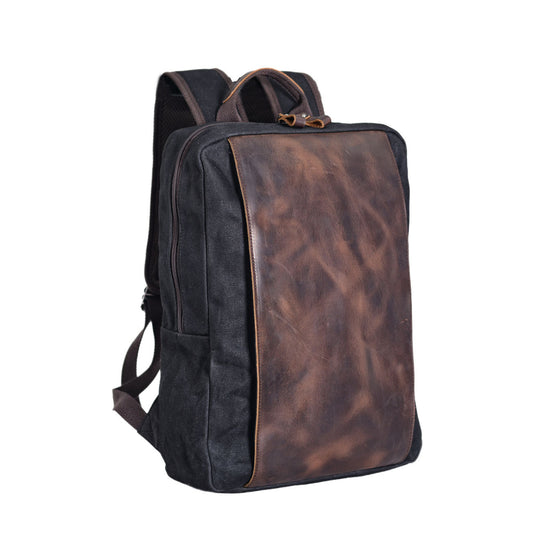
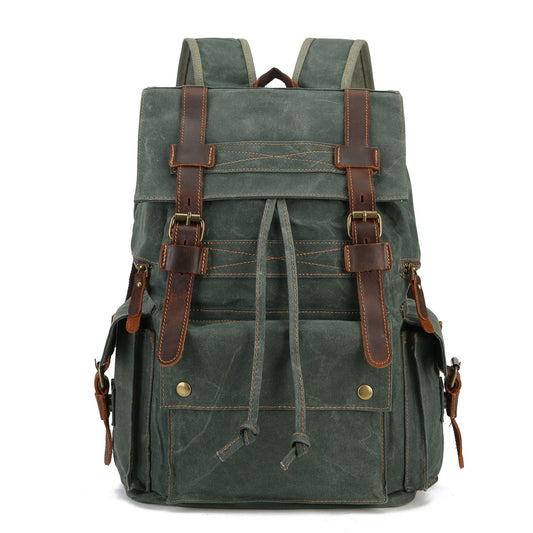
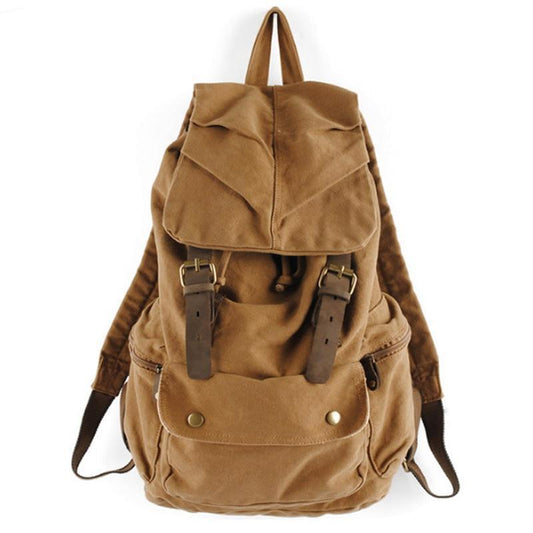
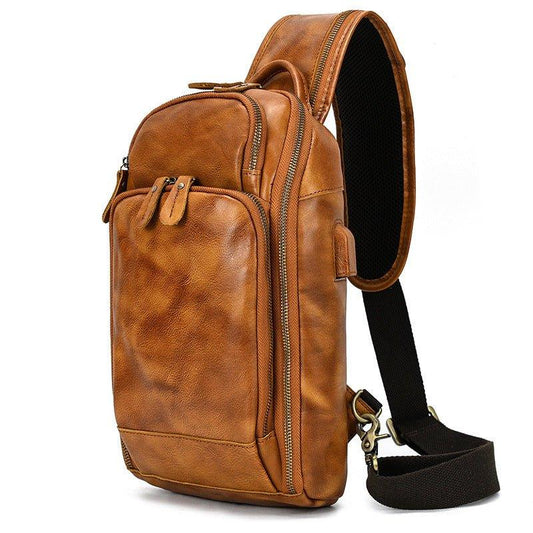
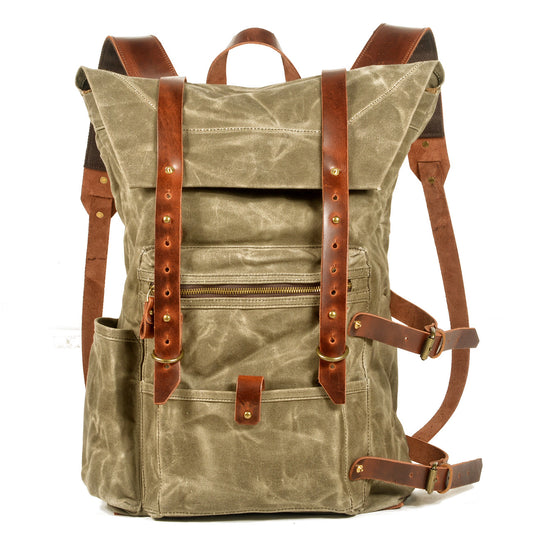
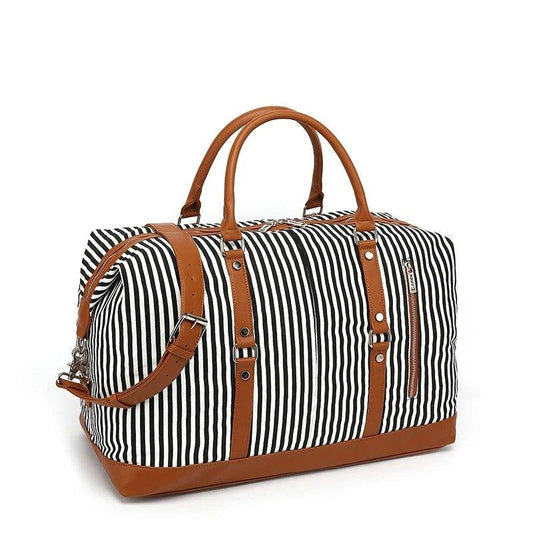
Explore our genuine leather backpacks and genuine leather duffle bags for heritage pieces worth this level of care.
Storing Your Bag on the Road
Vintage leather bag care does not stop at home. When you travel, hotel rooms and Airbnbs become temporary storage with their own risks. In a humid Asian hotel, keep the bag out of the bathroom — steam from showers is the fastest route to mildew. In a dry American desert rental with constant AC, keep it away from the vent. In a damp European guesthouse, never leave it on a damp tiled floor. A simple habit solves all three: hang the bag on a wooden or metal hook, or rest it on a raised shelf, and drop a silica pouch inside during any humid stay. Treat every overnight stop as a mini storage decision, not an afterthought.
Recovering a Bag After Travel Abroad
A bag that just flew home from a humid Asian summer or a rainy European winter needs attention before it returns to the shelf. Salt from sweat and sea air is corrosive; rain leaves mineral spots; fine dust works into the grain.
- Asia trips: wipe down immediately, air-dry in shade, and check seams for early mildew. A 50/50 distilled-water-and-white-vinegar wipe kills spores without soaking the leather.
- Americas trips: if the bag saw desert heat or dry cabin air, let it rest a week in normal humidity, then condition lightly.
- Europe trips: remove road salt and slush residue with a damp cloth, dry slowly, and towel-dry hardware to prevent rust.
The 10-Minute Monthly Inspection Routine
Even a bag in good storage deserves a quick monthly look. This routine takes ten minutes and catches problems while they are still cheap to fix:
- Smell the interior — a musty odor means moisture is building; add desiccant and improve airflow.
- Run a finger along every seam to feel for looseness or a single popped stitch.
- Check hardware for tarnish, stiffness, or rust, especially after a coastal trip.
- Look at stress points — strap anchors and corners — for early cracking.
- Confirm the dust bag is clean and the bag is still upright and uncompressed.
Catching a loose stitch now saves a full re-stitch later, and catching mildew at the powder stage saves the hide.
When to Call a Professional Restorer
Some problems are beyond a home routine. Reach out to a leather specialist when you see any of these:
- A cracked or split spine along a fold line that conditioning will not close.
- Torn or missing stitching across a load-bearing seam.
- Hardware that no longer aligns, closes, or turns smoothly.
- Established mold with deep staining rather than a surface bloom.
- Significant color loss or scuffing where re-dyeing would help.
A good restorer costs less than replacing a beloved heritage bag, and early contact preserves more of the original character.

A Seasonal Vintage Leather Bag Care Calendar
Use this simple schedule to stay ahead of problems instead of reacting to damage:
| Season | Key Task | Climate Note |
|---|---|---|
| Spring | Inspect for winter dryness; light condition if cracked | Europe and Asia: watch for damp storage |
| Summer | Add desiccant; check for mildew monthly | Asia: peak humidity season |
| Autumn | Deep clean; re-proof hardware | Americas: prep for dry heated winter |
| Winter | Keep away from vents; humidity-check monthly | Americas: biggest cracking risk |
How Often Should You Condition?
Conditioning too often is as harmful as never doing it — excess oil attracts dirt and softens the bag's structure. A sensible vintage leather bag care rhythm looks like this:
- Humid climates: condition every 6–9 months; focus on cleaning and desiccant the rest of the time.
- Dry climates: condition every 3–4 months to replace lost moisture.
- Temperate climates: a twice-yearly routine in spring and autumn is enough.
Travel Storage Quick Checklist
| Before Storing | After a Trip |
|---|---|
| Empty all pockets | Wipe down sweat and salt |
| Dry, soft-cloth wipe | Air-dry in shade, never sun |
| Stuff to hold shape | Check seams for mildew |
| Desiccant if humid | Towel-dry hardware |
| Breathable dust bag | Rest a week before conditioning |
Building a Dedicated Storage Spot
You do not need a climate-controlled vault, but you do need one consistent home for your bags. A dedicated shelf in a bedroom or closet that stays cool, dark, and ventilated beats the rotating clutter of chairs, floors, and car trunks. Line the shelf with a breathable cotton cloth, keep a small desiccant jar nearby in humid homes, and resist the urge to pile other items on top. When every bag has a predictable address, the monthly inspection becomes a thirty-second glance rather than a search mission, and bags stop getting crushed by things dropped on top of them.
Long-Term vs Short-Term Storage
The routine changes with the timeline. For a bag parked for a week between trips, a quick empty, wipe, and dust bag is enough. For a bag stored for a season or a year, go full protocol: stuff it, desiccant it, inspect it monthly, and condition on the climate schedule above. The mistake is treating a year-long storage like a weekend layover — by month three the creases have set and the hardware has dulled. Match the effort to the downtime, and your future self will thank you when the bag comes back out looking untouched and ready to carry.
Signs Your Storage Routine Is Working
- The leather feels supple, not stiff, when you pick the bag up after months away.
- No musty smell and no powdery film along the seams.
- Hardware still turns and closes smoothly without resistance.
- The bag holds its original shape because it was stuffed and upright.
- Color looks consistent, with no sun-fade patch from a bright shelf.
Hit all five and your environment is doing the heavy lifting. Miss one and adjust that part of the routine before damage spreads, because a single ignored signal is how small problems become expensive ones.
Common Storage Mistakes to Avoid
- Using a plastic garbage bag “just for a few weeks” — it sweats and blooms mold.
- Stacking heavy items on top of a stored bag — flattens and creases it.
- Storing in an attic or basement — both bring temperature extremes and damp.
- Never letting the bag see light or air for a year — stale, brittle leather results.
- Leaving metal hardware wet after a trip — rust spreads to the surrounding leather.
Frequently Asked Questions
Can I store a vintage leather bag in its original box?
Only if the box is breathable and the room is climate-stable. Most retail boxes are fine short-term, but long-term storage is better in a cotton dust bag on a shelf with steady airflow.
Is silica gel safe next to leather?
Yes. Silica-gel pouches absorb ambient moisture without touching the hide. Just do not let loose beads spill directly onto the leather, where they can abrade the finish.
Should I stuff the bag or leave it empty?
Stuff it. Acid-free tissue or a soft cotton cloth holds the silhouette and prevents permanent fold lines during long storage.
How do I know if mold has already started?
Look for a faint white or grey powdery film, usually along seams and inside pockets. Catch it early with a vinegar wipe and improved airflow; established mold may need a professional clean.
Can I use leather balm instead of conditioner for storage?
Balm is a richer, heavier product best saved for restoration, not routine storage. A light conditioner on schedule is enough; balm can over-soften the leather and attract dust if applied too often, which then needs cleaning that the bag never asked for.
Does climate matter more than the conditioner I buy?
For storage, yes. The right environment prevents damage; conditioner only repairs a fraction of it after the fact. Get storage right first, then condition on schedule.
How long can a vintage bag stay in storage?
Indefinitely, if the environment is right. Bags stored in stable, breathable, moderate conditions have survived decades. The limit is set by the room, not the calendar.
Conclusion
Good vintage leather bag care is mostly about the boring middle — smart storage, climate awareness, and a light seasonal routine. Treat your bag like the living material it is, and it will outlast trends and travel for decades. Browse our vintage canvas messenger bags and leather collections to find your next heritage piece worth protecting.