
School Backpacks vs Travel Backpacks: Key Differences (2026 Guide)

School backpacks and travel backpacks may look similar, but they are designed around different loads and movement patterns. A school pack often prioritizes books, a laptop, and daily access, while a travel pack must manage clothing, security checks, longer carries, and changing environments.
This 2026 comparison explains the differences in fit, capacity, organization, device protection, materials, comfort, and access. Use the live product details to confirm dimensions rather than choosing from appearance alone.
Start with the daily load
A school backpack usually carries books, folders, a laptop, lunch, and small stationery. A travel backpack may carry clothing, a toiletry kit, a charger pouch, documents, and a water bottle. Write the actual list and measure the largest item before deciding that one format can replace the other.
The right capacity leaves a little flexibility without encouraging a heavy load. An oversized school bag can become uncomfortable when filled with books, while a travel pack with a large cavity may be inefficient for small daily items. Match volume to the objects that will be carried most often.
Compare compartment logic
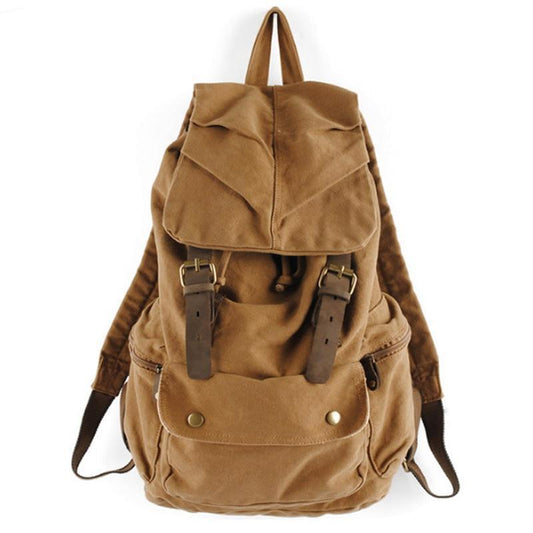
School packs often use a front organizer and a dedicated device sleeve for repeated access. Travel packs may use a clamshell opening, compression straps, or larger zones for clothing and shoes. Neither layout is automatically better; the question is how often the pack must be opened and what needs to remain reachable.
For a commute, keys, transit details, headphones, and a water bottle should have predictable places. For travel, the same pockets may need to accommodate a passport, cables, and a rain layer. Organization succeeds when it reduces searching rather than simply increasing pocket count.
Fit, straps, and load stability
A school backpack may be carried for short walks, but the load can be dense. A travel pack may be carried for longer distances and needs better weight distribution. Check padded shoulder straps, a sternum strap, back ventilation, and the position of the pack against the body.
Load dense items close to the back and avoid letting a laptop or textbook sit against the lower edge. Test the bag while walking and sitting because a comfortable standing fit can become restrictive on public transport. Adjust straps with the real load rather than empty.
Laptop and document protection
Both categories benefit from a protected laptop sleeve, but the sleeve must fit the actual device. A travel pack may also need to protect clothing and documents from shoes, liquids, or rough handling. Use an additional sleeve when the main compartment is soft or when the bag will be placed under an airplane seat.
Keep papers in a folder and chargers in a pouch so they do not press against the computer. During security checks, a travel-friendly opening can save time, while a school organizer may be faster for daily stationery. Choose access based on the most frequent context.
Material and weather planning
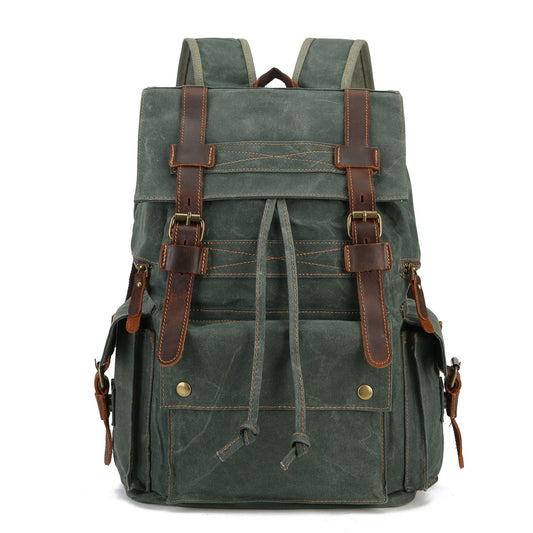
School use exposes a backpack to floors, lockers, rain, and repeated daily abrasion. Travel adds luggage racks, station platforms, and longer periods outside. Compare the fabric, base, zippers, and seam binding with those exposures. A water-resistant finish is useful, but it does not replace an inner dry pouch.
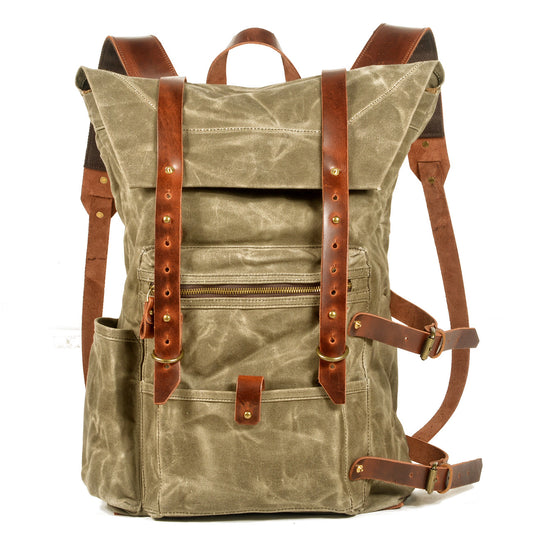
Let a wet pack dry fully before storage and brush grit from zipper tracks. If the bag includes leather trim or waxed canvas, follow its care instructions and avoid high heat. Simple maintenance prevents a daily bag from becoming unreliable during travel.
When one pack can do both jobs
A versatile backpack can serve school and travel when the laptop sleeve is protected, the main cavity can expand, and the harness remains comfortable after several hours. It should also have enough quick access for daily items without losing a controlled packing structure.
If the school load is dense and the travel load is bulky, compromise may be tiring in both settings. Consider using a dedicated school pack and a larger travel pack when the routines are substantially different. The best choice protects the body and the contents first.
Decision checklist
- List the school or travel load before choosing volume.
- Check device sleeve dimensions and document protection.
- Test straps and stability with dense and bulky loads.
- Compare opening style with the frequency of access.
- Plan for rain, drying, and base abrasion.


The most useful school or travel backpack is the one that keeps the real load stable without forcing the wearer to compensate. Check fit after packing, protect the device, and let the route determine the capacity. A clear comparison is more valuable than choosing the bag with the most pockets or the most adventurous photograph.
The transition between school and travel can be managed with a clear packing map. Keep the device in the protected sleeve, put books or clothing in the main zone, and reserve one pocket for items needed during transit. Remove the daily load before a trip so travel weight does not accumulate around forgotten stationery or food.
Check the current dimensions and materials on the live page, then test the bag on the body with both dense and soft contents. A good dual-purpose backpack is comfortable because its structure matches the load, not because it is simply large.
A dual-purpose backpack also needs a clear reset routine. Remove school papers before travel, empty food and bottles, and check the base and straps for wear. That keeps the daily load from becoming a hidden source of extra weight and helps the pack remain ready for a different route.
Related Woosir resources
Use these related Woosir pages to compare current materials, dimensions, care details, and available variants before making a final decision.