
School Backpacks vs Travel Backpacks: Key Differences (2026 Guide)

School Backpacks vs Travel Backpacks: Key Differences Explained (2026)
School backpacks vs travel backpacks—at first glance, they might seem like variations on the same theme. After all, both are bags worn on your back. But the more you dig into the details, the more apparent the differences become. Whether you're a student trying to use one bag for campus and weekend trips, or a traveler wondering if you can save money by repurposing your school bag, this guide breaks down the key differences between school backpacks and travel backpacks in 2026, so you can make the right choice for your lifestyle.
The Core Distinction: What Each Bag Is Designed For
The fundamental difference between school backpacks and travel backpacks comes down to design intent. School backpacks are designed for daily carry of books, devices, and personal items over short distances. Travel backpacks are engineered for multi-day packing, varying carrying conditions, airline compliance, and security in transit. Once you understand that distinction, all the specific feature differences make perfect sense.
Size and Capacity
School Backpacks
School backpacks typically range from 20 to 35 liters. That's enough for a 15-inch laptop, several textbooks or notebooks, a water bottle, and daily essentials. The size is optimized for daily commuting rather than multi-day packing, so there's little need for volume beyond what fits comfortably on a campus walk or a subway ride.
Travel Backpacks
Travel backpacks span a much wider range—from 30L carry-on-sized packs all the way up to 70L+ expedition packs. The most popular travel backpacks for city travel and international trips sit in the 40–50L sweet spot, which provides enough space for 5–10 days of clothing and gear while still meeting most airline carry-on requirements. For longer adventures or camping, 60L+ bags offer room for sleeping bags, tents, and more.
| Feature | School Backpack | Travel Backpack |
|---|---|---|
| Typical Capacity | 20–35L | 30–70L+ |
| Carry-On Compatible | Often yes (smaller sizes) | Designed for it (40–45L) |
| Frame/Structure | Light internal frame | Internal or external frame |
| Hip Belt | Rarely | Common on 40L+ |
| Material Quality | Entry–mid level | Mid–premium |
Organization and Internal Layout
School Backpack Organization
School backpacks are built around the daily-use workflow of students and commuters:
- A large main compartment for books and a laptop sleeve
- A front organizer pocket with pen slots, key clips, and small accessory pockets
- Side mesh water bottle pockets
- Sometimes a tablet sleeve or secondary laptop pocket
The focus is on quick access and separation of everyday items—not on maximizing packing efficiency for multi-day trips.
Travel Backpack Organization
Travel backpacks take a different approach. Their internal layout is designed for packing and living out of the bag for extended periods:
- A clamshell or panel-loading main compartment that opens completely flat for easy packing
- Compression straps inside to secure clothing and prevent shifting
- A dedicated laptop and documents sleeve, often accessed separately from the main compartment
- A hip belt with zip pockets for valuables
- External attachment points for trekking poles, sleeping bags, or wet gear
- Top lid pockets or quick-grab sleeves for items you need in transit
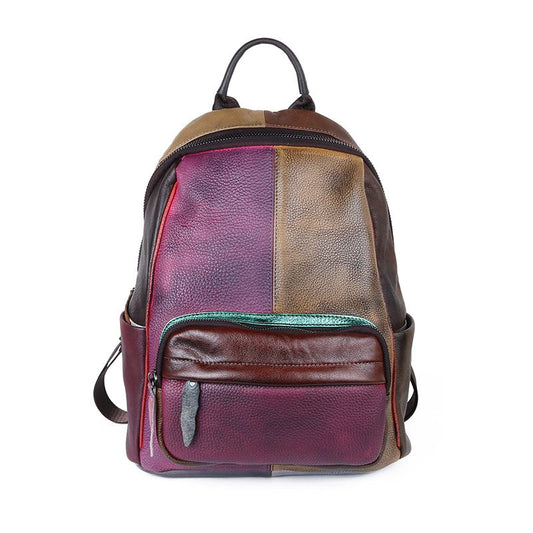
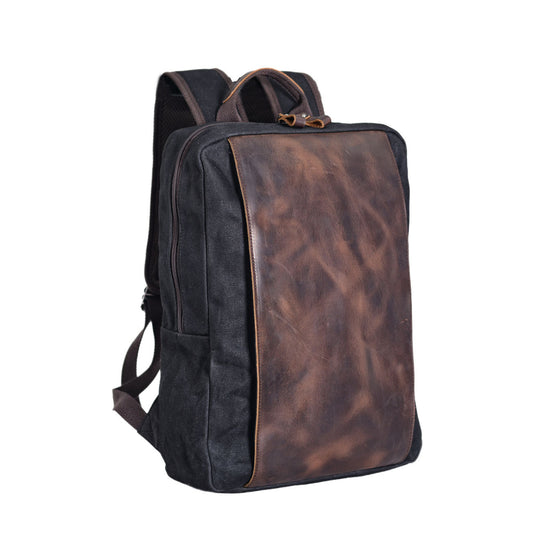
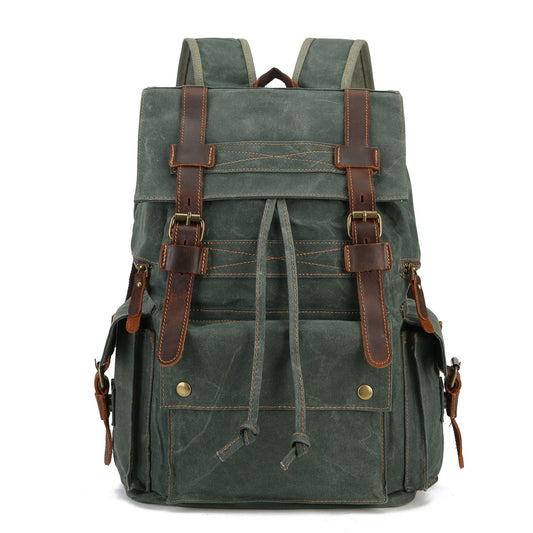
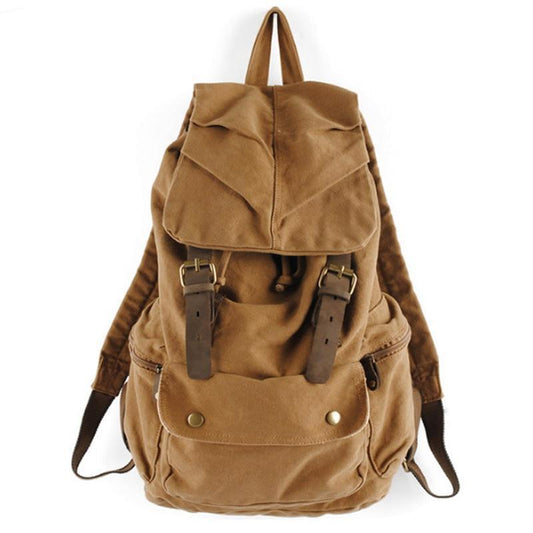
Many quality travel backpacks, including those in our canvas and leather backpack collection, include thoughtful internal organization that makes packing for a week-long trip genuinely intuitive.
Carrying Comfort and Ergonomics
School Backpack Suspension
School backpacks typically feature basic padded shoulder straps with minimal contouring, a simple padded back panel, and no hip belt. This works perfectly well for 20–30 minute commutes with a 5–10kg load. However, over longer distances or with heavier loads, the lack of ergonomic engineering becomes apparent. Weight distribution falls almost entirely on the shoulders, which leads to fatigue and discomfort.
Travel Backpack Suspension
Travel backpacks are engineered for extended carry. Quality models feature:
- Contoured shoulder straps with foam padding that wraps around the shoulder joint
- A load lifter strap that pulls the top of the bag toward your body, keeping weight close to your center of gravity
- A padded hip belt that transfers 60–80% of the bag's weight from your shoulders to your hips
- A ventilated back panel with channels or foam ridges that promote airflow and reduce back sweat
- A torso length adjustment system so the bag fits different body types correctly
These suspension features make a 15kg fully loaded travel backpack feel dramatically more manageable than a 10kg school bag with basic straps.
Durability and Materials
School Backpacks
School backpacks are generally built to last 1–3 years of heavy daily use. They're made from polyester (typically 600D–1680D denier), nylon, or occasionally canvas. The zippers are usually functional but not top-tier—expect Coats or generic zippers rather than YKK or SBS hardware. This is appropriate for the price point ($30–$150) and the use case.
Travel Backpacks
Quality travel backpacks are built to last years or even decades. Premium options feature:
- 1000D Cordura nylon or ballistic nylon for abrasion resistance
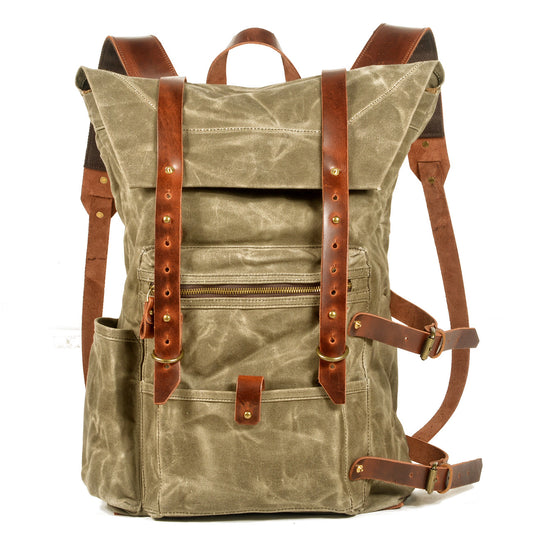
- Waxed canvas for water resistance and heritage aesthetics
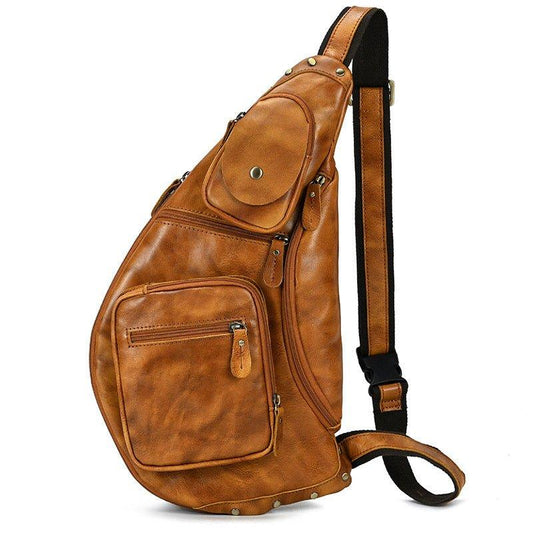
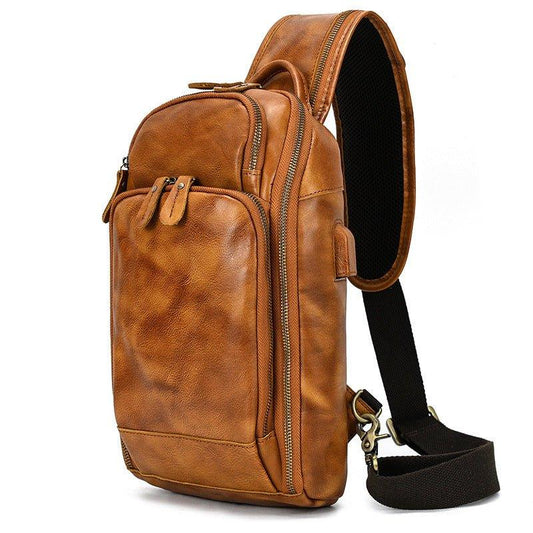
- Full-grain leather for premium models that develop a patina over time
- YKK #10 zippers on main compartments
- Bartack stitching at all stress points
- Reinforced grab handles with bar-tack stitching
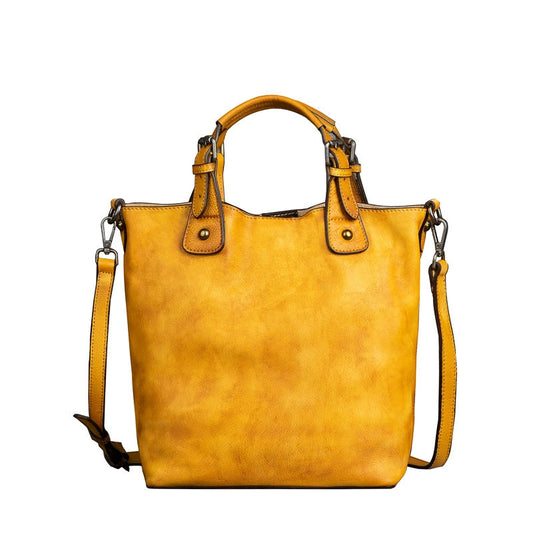
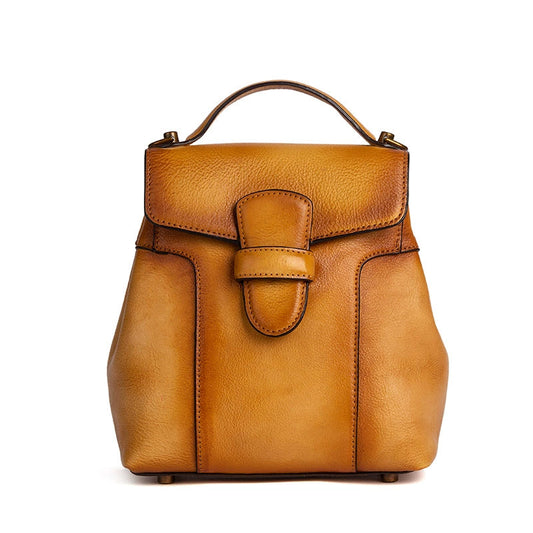
A high-quality travel backpack in waxed canvas or leather is genuinely an investment that pays off over years of travel. Browse our genuine leather backpacks to see premium options built to last.

Security Features
School Backpacks
School bags are designed for campus environments where security is relatively low-risk. Most have standard zippers without lockable pulls, and main compartments face outward (toward pickpockets) rather than toward the wearer's back. Side pockets are easily accessible—which is great for grabbing a water bottle, but less ideal in a crowded subway station in Paris or a market in Marrakech.
Travel Backpacks
Travel backpacks for international travel often include:
- TSA-approved lockable zipper pulls on the main compartment
- Hidden or back-facing pockets for passports, cash, and electronics
- Cut-resistant panels or mesh in some anti-theft models
- Internal cable loops for locking the bag to a chair or rack in cafes and hostels
- RFID-blocking pockets for card protection
These features matter enormously when you're navigating busy transportation hubs in Southeast Asia, Eastern Europe, or Latin America.
Weather and Environmental Resistance
School Backpacks
Most school backpacks offer minimal weather protection. They may have a DWR (durable water repellent) coating that sheds light rain, but they are not designed to handle prolonged exposure to rain, mud, or extreme temperatures. The zippers are rarely waterproof, meaning a downpour can soak the interior.
Travel Backpacks
Travel backpacks—especially those designed for adventure travel—are built to handle varied weather conditions. Features include:
- Waterproof or water-resistant base materials (waxed canvas, coated nylon)
- Waterproof zippers on key compartments
- An integrated rain cover (stored in a bottom pocket) for heavy downpours
- Sealed seams on premium models
- Materials that resist UV fading for extended outdoor use
Price Range Comparison
Price is one area where school backpacks have a clear advantage for budget-conscious buyers. Here's a general breakdown:
- School backpacks: $30–$150 for mainstream options; $150–$300 for premium daily carry brands
- Travel backpacks: $80–$200 for budget/mid-range options; $200–$500+ for premium travel-specific brands; $400–$800+ for artisan leather or heritage canvas models
The price difference reflects the engineering complexity of travel-specific suspension systems, higher-grade materials, and security features. For frequent travelers, the investment in a proper travel backpack pays for itself quickly in comfort and longevity.

Can You Use a School Backpack for Travel (and Vice Versa)?
Using a School Backpack for Travel
For a 1–2 day trip with minimal gear, many school backpacks work perfectly well. They're carry-on friendly, familiar to pack, and sufficient for light loads. However, for trips longer than 3 days, or any trip involving significant walking with a loaded bag, the ergonomic limitations of a school backpack become a real problem. Back pain and shoulder fatigue are common complaints from travelers who rely on school bags.
Using a Travel Backpack for School
This actually works quite well in many cases. A 35–40L travel backpack is usually roomy enough for campus use, and the organizational features often exceed what school-specific bags offer. The main downsides are weight (travel bags with structured frames and hip belts can be heavier) and aesthetics (some travel backpacks look out of place in a lecture hall). However, if you're a student who also travels frequently, a single quality travel backpack that serves both purposes is an excellent investment.
Choosing the Right Bag for Your Lifestyle in 2026
You Should Buy a School Backpack If:
- You primarily need a bag for daily commuting, class, or work
- You rarely travel for more than 1–2 days at a time
- Budget is a primary concern
- Style and low profile matter more than rugged performance
You Should Buy a Travel Backpack If:
- You travel internationally or domestically more than a few times per year
- You take trips of 3 or more days regularly
- You carry your bag for long distances on foot
- You need serious organizational features and security
- You want a bag that will last 5–10+ years
You Should Buy Both If:
- You're a student who also travels seriously—a small school bag for daily use, a quality travel backpack for trips
- You're a professional who commutes daily but also takes frequent trips—a premium daily bag for the office, a travel backpack for the road

Frequently Asked Questions: School Backpacks vs Travel Backpacks
Q: What size backpack do I need for a week-long trip?
A: Most experienced travelers can fit a week's worth of clothing and essentials in a 40–45L travel backpack, especially if they pack efficiently using packing cubes and roll clothing. A school backpack in the 25–30L range will typically be too small for a week unless you're an extreme minimalist.
Q: Are travel backpacks allowed as carry-on luggage?
A: Most 40–45L travel backpacks are designed to meet carry-on size requirements for major airlines (typically 22" x 14" x 9"). Always check your specific airline's requirements, as budget carriers in Europe and Asia often have stricter limits.
Q: Can I use a travel backpack as an everyday school bag?
A: Yes, though it may feel large for daily campus use. If you choose a 35L or smaller travel backpack, it works very well for school while giving you the flexibility to use it on trips.
Q: What's the best material for a travel backpack?
A: It depends on your priorities. Waxed canvas offers weather resistance and a classic aesthetic. Ballistic nylon is lighter and extremely durable. Leather is the most premium option and develops a beautiful patina over time. For most travelers, waxed canvas or a canvas-leather combination offers the best balance.
Q: Do I really need a hip belt on a travel backpack?
A: For bags over 35L and any carry over 30 minutes, yes—a hip belt makes a significant difference in comfort by shifting weight from your shoulders to your hips. For smaller city travel packs used mainly in taxis and transit, a hip belt is less critical.
Conclusion: Make the Right Choice for How You Move
The school backpack vs travel backpack debate ultimately comes down to how you move through the world. School backpacks are brilliant daily tools—compact, organized, and affordable. Travel backpacks are engineered for a different challenge: keeping you comfortable, organized, and secure across days, borders, and adventures.
If you're ready to invest in a backpack built for the road, explore our collection of canvas and leather backpacks—crafted for travelers who want both rugged performance and timeless style.