
School Backpack vs Travel Backpack: A 2026 Student & Parent Buying Guide (Budget, Durability & Features)

Choosing between a school backpack and a travel backpack used to be simple: one for the classroom, one for the airport. But as more students study abroad, take gap years, and travel between semesters, the line has blurred. This 2026 guide helps students and parents decide whether one pack can do both jobs, how budgets differ, and which features actually survive a year of daily use plus a summer on the road. The school backpack vs travel backpack decision is no longer academic — it is a practical buying choice that affects comfort, cost, and how much you carry.
School Backpack vs Travel Backpack: The Core Difference
The short version: a school backpack is built for books, a laptop, and a locker; a travel backpack is built for clothes, a week away, and your back on a ten-kilometre walk. A school pack opens from the top or front with a laptop sleeve and organiser pockets. A travel pack opens like a suitcase (clamshell) so you can live out of it without dumping everything on a hostel floor. The school backpack vs travel backpack question is really about opening style, harness quality, and how much abuse the seams can take.
Think of the school pack as a filing cabinet you wear and the travel pack as a suitcase you wear. The filing cabinet wants many small compartments so a pen, a charger, and a notebook each have a home. The suitcase wants one or two big spaces so a packing cube slides in cleanly. A student who only travels in summer leans filing cabinet; a student who is abroad for a semester leans suitcase. The trick is spotting which description fits the coming year before you spend a cent.
School Backpack vs Travel Backpack: Budget Tiers
Budgets differ sharply between the two. Here is what you get at each price point for either category:
| Price | School pack | Travel pack |
|---|---|---|
| Under $40 | Basic polyester, 1 year life | Rare; thin frames, weak zips |
| $40–$90 | Reinforced straps, padded sleeve | Entry clamshell, decent harness |
| $90–$180 | Premium organiser, water resistance | Real hip belt, suspension, warranty |
| $180+ | Designer / leather statement | Frame sheet, lifespan 10+ years |
For a student who also travels, resist the urge to over-spend on a $250 travel pack that spends nine months a year holding textbooks. A $90–$130 clamshell from a reputable brand is the smart middle ground. The single best value move is to buy one bag in that band with a lifetime warranty; the brand's repairs will outlast the student's degree, which a $35 special never will.
Durability: What Survives a School Year and a Backpacking Trip
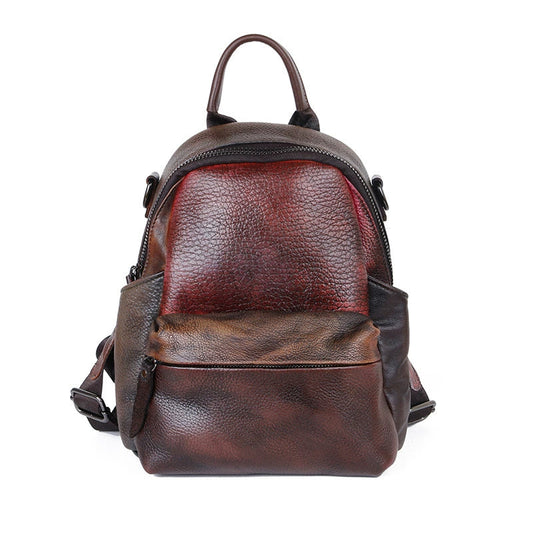
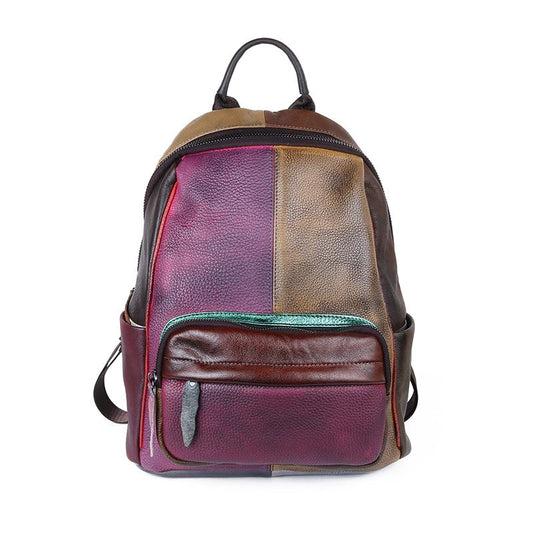
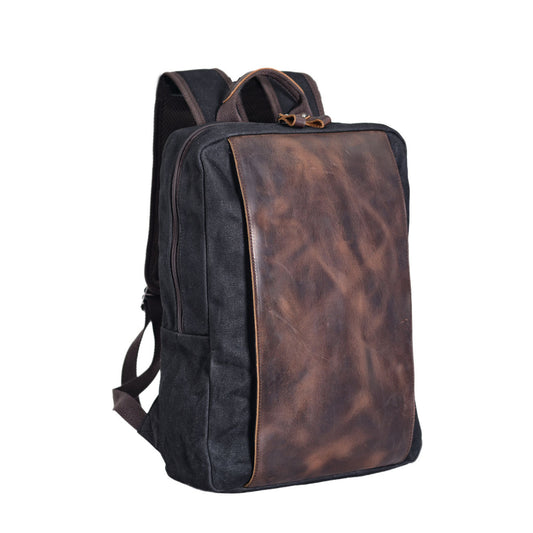
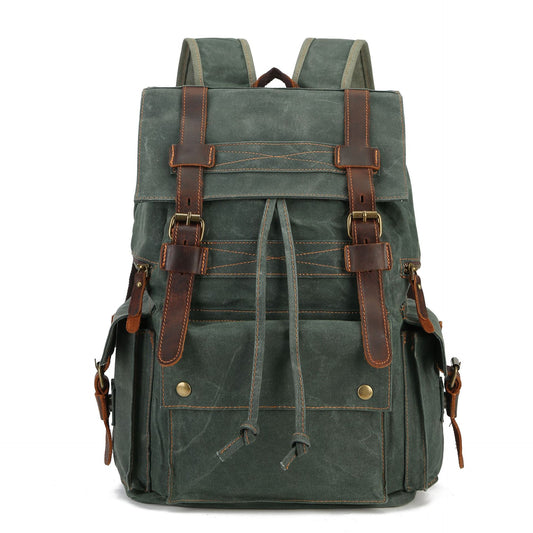
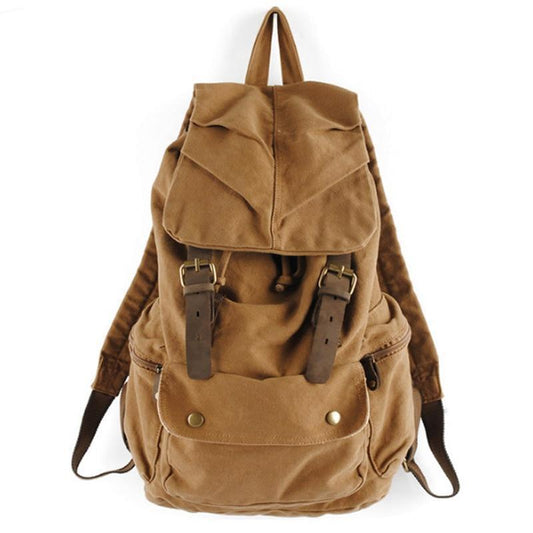
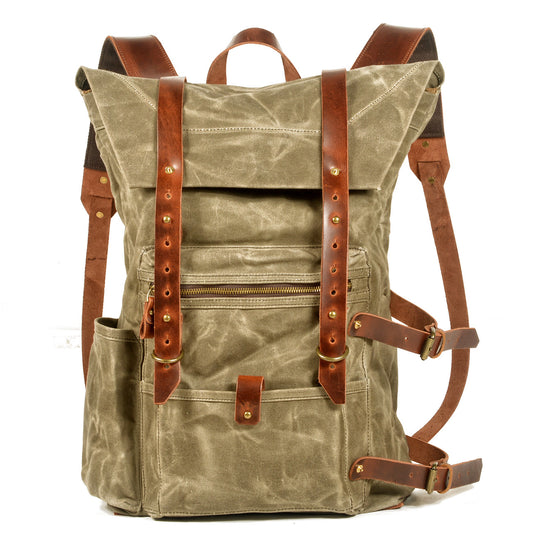
Durability is where the two categories meet or part. A school pack dies from zipper fatigue and bottom-corner abrasion; a travel pack dies from harness stitching and hip-belt rivets. If one bag must do both, inspect these stress points: bartacked strap anchors, a #8 or #10 main zip, and a reinforced laptop compartment that doubles as a suspended travel sleeve. A canvas and leather backpack splits the difference beautifully — leather corners shrug off scuffs, canvas takes the weather. A reinforced bottom panel is non-negotiable if the bag will sit on wet quad lawns and hostel floors alike.
Materials Compared: Canvas, Leather, Nylon
- Canvas: tough, breathable, ages well; heavier when wet. Great for everyday campus use.
- Leather: premium look, longest life, heaviest and priciest; needs conditioning.
- Nylon (500D–1000D): lightest, most water- and abrasion-resistant; ideal if travel dominates the year.
For a mostly-campus student, canvas or a canvas-leather mix wins on style and lifespan. For a semester-abroad traveller, nylon clamshell wins on weight and weather. A useful rule: if the bag will see rain more than twice a week, skip untreated leather. If it will sit in a lecture hall five days a week, canvas or leather reads sharper than shiny nylon. The material choice is really a forecast of where the bag will spend its time.
Feature Checklist for Students Who Travel
- Clamshell or wide U-opening (live out of it, not just carry it).
- Suspended, false-bottom laptop sleeve (protects the device in both roles).
- Hidden back-panel pocket for passport and cash abroad.
- Water-bottle pockets that do not bulge into the main compartment.
- Carry-on sizing — under 40 L for most international flights.
- Luggage pass-through strap if you will ever piggyback it on a roller.
School Backpack vs Travel Backpack: Capacity and Organization

| Factor | School backpack | Travel backpack |
|---|---|---|
| Typical size | 18–28 L | 30–45 L |
| Opening | Top or front panel | Clamshell / U-zip |
| Organization | Many small pockets | Few large, cube-friendly |
| Harness | Basic padded straps | Hip belt + load lifters |
| Best use | Daily commute | Multi-day travel |
The capacity gap is the deal-breaker for most families. A 22 L school pack is perfect for books and a laptop but hopeless for a five-day trip. A 40 L travel pack swallows a weekend of clothes but swamps a small lecturer's room. The compromise is a 30–34 L clamshell: enough for a short trip, still manageable on campus. Anything outside that window forces the two-bag conversation.
Study Abroad and International Travel Considerations
Regional rules change the calculus. In Europe, budget airlines enforce tiny personal-item sizers — a 28 L school pack may carry on where a 40 L travel pack will not, so a slim pack plus a packing cube is the frugal student's friend. In Asia, humid cities and bullet trains favour lightweight nylon you can keep on your lap; a soft pack is easier to wedge into an overcrowded Tokyo car than a rigid case. Across the Americas, bigger overhead bins and long road trips let a 40–45 L travel pack shine, and a semester at a U.S. state school with a car makes volume less of a worry. A hiking backpack can double as a travel pack for rugged gap-year trips but looks out of place in a lecture hall.
Fit, Comfort, and Safe Load Limits

Whatever you buy, fit matters. A loaded pack should not exceed 10–15% of body weight for a teenager, and the hip belt — not the shoulders — should carry most of it. Measure torso length (C7 vertebra to the top of the hips) and match it to the pack's size band. A poorly fitted school backpack vs travel backpack debate is moot if the straps cut off circulation by lunch. Have the student try the pack on with a realistic load in the shop; a bag that feels fine empty can savage the shoulders at eight kilos. Adjust the hip belt first, then the shoulder straps, then the load-lifters, and the pack should hug the back rather than hang off it.
The Student Lifecycle: Freshman to Grad Trip
Needs change across a degree. A freshman wants organiser pockets for notebooks and a club fair flyer. A junior who studies abroad wants a clamshell and a hidden pocket. A senior heading on a graduation trip wants something that still looks decent in a nice restaurant. Buying a single 30–40 L clamshell with a clean exterior covers all three better than a cartoon-print school pack that no longer fits the traveller. Parents who frame the purchase as a four-year investment, not a back-to-school splurge, usually make the smarter call.
Packing a School Pack Efficiently
Even the right bag fails if it is packed wrong. For daily campus use, keep the heaviest items — the laptop, the thicker textbooks — against the back panel so the load sits close to the spine and does not pull the shoulders forward. Use the small organiser pockets for chargers, pens, and cards so they are not rattling at the bottom. A water bottle belongs in the side pocket, never loose in the main compartment where it soaks the notebook. A packed school pack should let you pull one item without unpacking three, which is the whole point of the organiser layout most school packs offer.
Making a Travel Pack Campus-Friendly
If you chose a travel-style clamshell as your one bag, you can make it work on campus with two habits. First, add a thin insert or a couple of small pouches for pens, a calculator, and a phone charger so the big travel compartments do not swallow your daily kit. Second, keep the laptop in its suspended sleeve and treat the clamshell's top third as a "school zone" you open from the front, reserving the bottom for travel clothes on trip days. A travel pack worn this way reads as a normal backpack in a lecture hall and transforms into a suitcase the moment you unzip it abroad. The small adjustment is what lets one bag honestly do both jobs.
A Simple Decision Framework
If the choice still feels muddy, answer three questions. First, how many nights away per year: under ten suggests a school pack plus the odd borrowed duffle; ten to thirty suggests one 30–40 L clamshell; over thirty suggests a real travel pack plus a cheap school bag. Second, how much walking: if stairs, trains, and cobblestones dominate, favour a backpack harness over wheels every time. Third, what is the bag seen wearing: a lecture hall rewards a clean canvas or leather look, while a trail rewards nylon. Score the three answers and the right pick usually reveals itself without overthinking the spec sheet.
When to Buy Two Separate Bags
Buy two when the year splits cleanly: daily heavy textbooks plus a separate two-week international trip. A $40 school pack and a $110 travel pack together often out-perform one $180 compromise that is mediocre at both. Buy one hybrid only if travel is occasional and campus life is the default. Two bags also lets a student keep the travel pack pristine in the closet during term, so it is not ground down by daily textbooks — a quiet way to extend both lives.
Common Mistakes Parents Make
- Buying the biggest pack "so they grow into it" — oversized packs encourage overloading and back strain.
- Skipping the hip belt because "it is only for travel" — students walk a lot.
- Choosing fashion over a suspended laptop sleeve; a dropped laptop costs more than the bag.
- Forgetting warranty — a good brand's lifetime repair beats replacing yearly.
- Buying a wheeled bag for a walking campus; stairs make rollers useless by week two.
Warranty, Repair, and Resale Value
A bag with a real warranty is cheaper over four years than three cheap bags. Brands that repair straps and zippers for free turn a $120 purchase into a decade-long tool. Leather and canvas packs also hold resale value — a clean used canvas-and-leather pack sells to next year's freshers, offsetting the original cost. Nylon resells for less but still beats binning a torn no-name pack. Factor the warranty and the second-hand market into the budget table above and the "expensive" option often wins.
Care and Maintenance

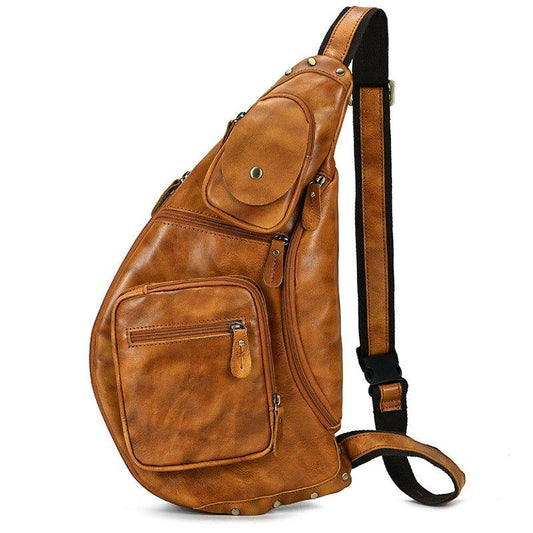
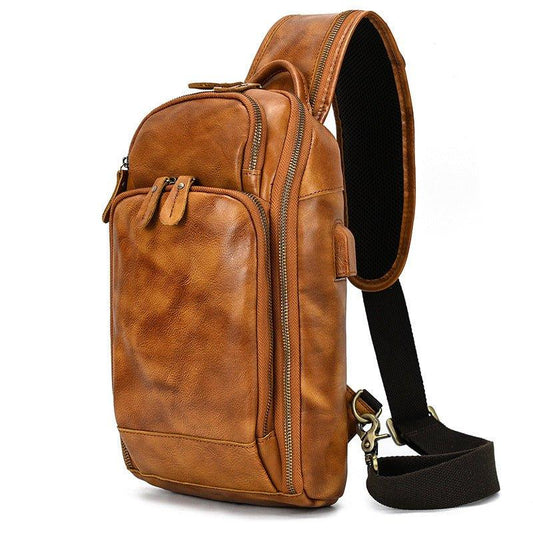
Empty both packs weekly, wipe interiors, and air-dry after rain. Condition leather panels every few months; re-wax canvas once a year. Repair a loose strap anchor immediately — a small stitch now prevents a torn seam mid-trip. A cared-for genuine leather backpack can outlast an entire degree. At term's end, empty the bag fully, brush out crumbs, and store it unzipped and lightly stuffed so the shape holds and no mildew breeds in a damp laptop sleeve.
Frequently Asked Questions
Can one backpack work for both school and travel? Yes, if it is a 28–35 L clamshell with a suspended laptop sleeve and a hip belt. Below 28 L it is too small for travel; above 40 L it is awkward on campus.
Which is more durable, a school or travel backpack? Travel packs usually use burlier materials and frames, but a reinforced leather school pack can outlast a cheap travel pack. Check zippers and strap anchors, not the label.
What size is best for study abroad? 30–40 L carry-on sizing, ideally with a clamshell opening so you can live out of it in hostels and still fit campus days.
Is a hiking backpack okay for school? It works for travel-heavy gap years but looks out of place in lectures and lacks the small organiser pockets students use daily.
Conclusion
The school backpack vs travel backpack decision comes down to honesty about the year ahead. If campus life dominates, a durable 25–30 L pack with a leather or canvas build is the value pick. If a semester abroad or gap-year trip is on the calendar, a 30–40 L clamshell with a hip belt does double duty. Parents and students who weigh budget, durability, and the feature checklist above will land on a bag that survives both the classroom and the continent. Browse our canvas and leather backpacks to start comparing.