
Motorcycle Bags Buying Guide 2026: Saddlebags, Tank Bags, and Tail Bags Explained

Motorcycle Bags Buying Guide 2026: Saddlebags, Tank Bags, and Tail Bags Explained
Whether you're a weekend canyon carver, a cross-country adventure tourer, or a daily commuter on two wheels, the right motorcycle bags can transform your ride from a logistical puzzle into a smooth, stress-free journey. In 2026, the market for motorcycle bags has never been more diverse — from heritage leather saddlebags that evoke Route 66 romance to technical tank bags loaded with waterproof zippers and magnetic attachment systems. This guide helps you choose the right motorcycle bags for your specific needs, riding style, and aesthetic.

We'll cover the three primary categories of motorcycle bags — saddlebags, tank bags, and tail bags — with detailed guidance on what to look for in each, plus tips on installation, waterproofing, security, and matching your bags to your motorcycle's style.
Understanding Motorcycle Bags: The Three Main Categories
Motorcycle luggage breaks down into three primary categories, each serving distinct purposes. Most long-distance tourers use some combination of all three. Understanding what each type does will help you build the right system for your rides.
Saddlebags: The Classic Choice for Motorcycle Luggage
Saddlebags are paired bags that drape across the rear of the motorcycle, one on each side of the rear wheel. They're the most classic form of motorcycle luggage — seen on everything from Harley-Davidson cruisers thundering across the American Southwest to vintage BSAs and Triumphs photographed on European mountain passes.
Saddlebags are the workhorse of motorcycle luggage. They offer the largest combined capacity of any bag type, and their low-slung mounting position keeps the center of gravity low, which benefits handling — particularly important on two-lane roads and mountain passes.
Saddlebag styles to know:
- Throw-over saddlebags: The simplest design — drape over the seat or rear rack with bags hanging on each side. Quick to install and remove, no permanent mounting hardware required.
- Rigid hard saddlebags: Made from ABS plastic or fiberglass, these lock shut and offer excellent weather and theft resistance. Common on touring bikes like the Honda Gold Wing or BMW R1200GS.
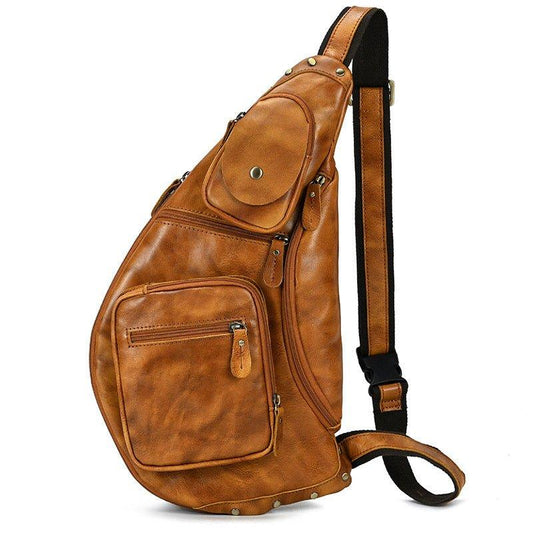
- Soft leather saddlebags: The most aesthetically beautiful option for cruisers and classic bikes. Premium leather develops a patina over time that makes each bag unique.
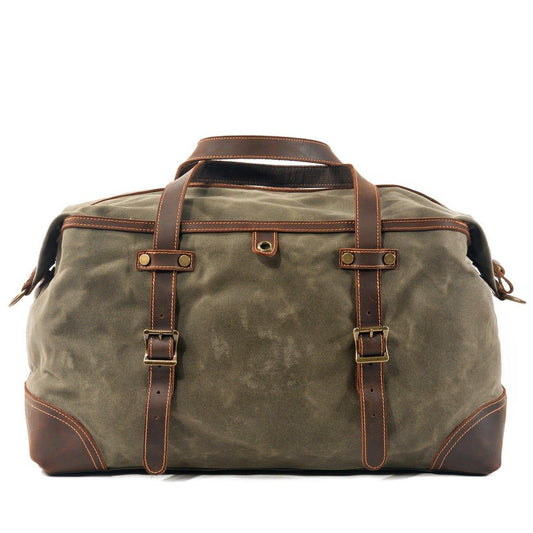
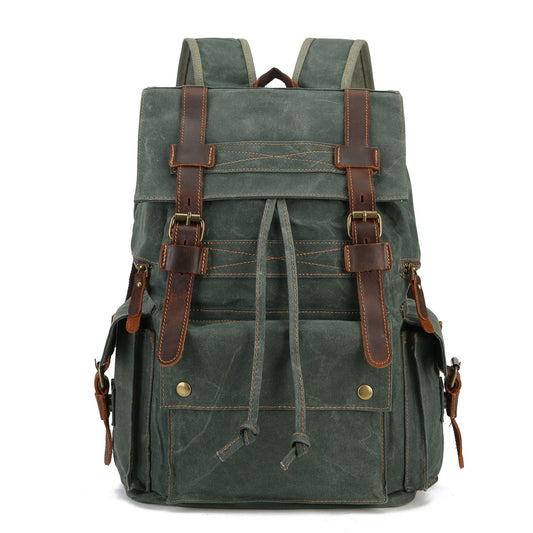
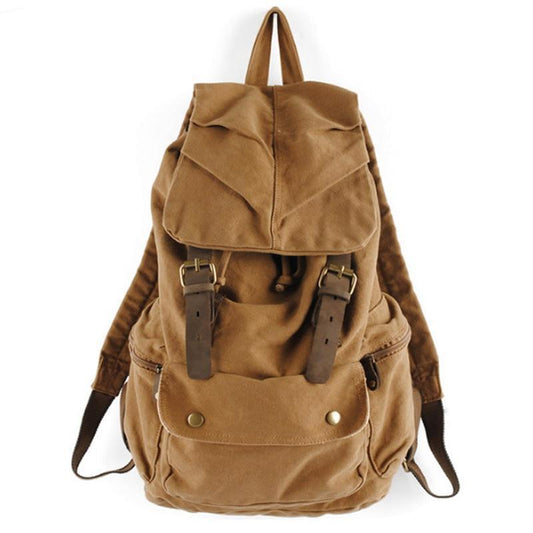
- Waxed canvas saddlebags: An increasingly popular option for adventure and scrambler riders who want vintage aesthetics with improved water resistance.

Tank Bags: Access Your Essentials on the Move
Tank bags mount on top of the motorcycle's fuel tank, directly in front of the rider. Their key advantage is accessibility — you can reach your tank bag without stopping, making it perfect for storing items you need regularly: your phone (visible through a clear top pocket), energy snacks, a compact camera, sunglasses, and gloves.
Tank bag attachment types:
- Magnetic tank bags: Use powerful magnets to grip the metal tank. Fast and simple, but won't work on bikes with plastic or aluminum tanks.
- Strap-mounted tank bags: Use buckle straps around the tank or frame. Compatible with all motorcycle types.
- Cradle-mounted tank bags: A permanent cradle mounts to the tank and the bag clicks in and out. The most secure option for long-distance riding.
Tank bags range from compact 5-liter options to expandable 20+ liter designs. For most riders, a 7-12 liter tank bag hits the sweet spot: large enough to hold everything you need close at hand without interfering with your riding position.
Tail Bags: Flexible Capacity on the Rear
Tail bags (also called seat bags or rack bags) mount on the passenger seat, rear rack, or the top of hard panniers. They're the most versatile motorcycle bag type — they can expand to accommodate gear changes, compress when running light, and be easily removed and carried as a regular bag at your destination. Many tail bags include a shoulder strap and handles, making them convertible bags that function as luggage on the bike and as a regular travel bag off it.
Saddlebags Deep Dive: What to Look for in 2026
Saddlebags require careful consideration because they affect your bike's profile, handling, and aesthetics significantly. Here's what separates excellent saddlebags from mediocre ones:
Capacity and Volume
Saddlebag capacity ranges from 10 liters per side (suitable for day rides) to 30+ liters per side (full touring capacity). For long-distance trips spending multiple nights away, aim for at least 40-50 liters of total combined saddlebag volume. For weekend rides, 20-30 liters total is comfortable.
Clearance and Fitment
This is the most critical consideration when buying saddlebags. Bags that sit too close to the rear wheel, exhaust pipe, or chain will suffer damage — and potentially create a dangerous situation. Always verify clearance specifications:
- Exhaust clearance: Minimum of 5 cm (2 inches) from the exhaust pipe. Heat from the exhaust will degrade leather and melt synthetic materials over time.
- Wheel clearance: At least 2.5 cm (1 inch) from the rear tire at maximum compression.
- Suspension clearance: Bags must not contact any moving suspension components throughout the full range of suspension travel.
Closure Systems
Saddlebag closures range from buckle straps (classic, reliable) to quick-release buckles (modern, convenient) to magnetic clasps (elegant, less secure) to zipper-and-buckle combinations (most weatherproof). For touring use in variable weather, a zipper closure with an integrated rain cover is the most practical combination.
Choosing Motorcycle Bags for Your Riding Style
The Cruiser Rider
Classic cruiser bikes — Harley-Davidson, Indian, Royal Enfield — look best with leather saddlebags that match the bike's heritage aesthetic. Throw-over leather saddlebags with silver hardware or tooled leather detailing are period-correct and functionally sound. Shop our dedicated motorcycle bags collection for leather and canvas options that complement cruiser styling.
The Adventure Tourer
Adventure bikes (BMW GS series, KTM Adventure, Honda Africa Twin) need luggage that handles both pavement and dirt. Waxed canvas saddlebags or hybrid canvas-leather designs offer a compelling middle ground: weather resistance, durability, and significantly less weight than hard cases.
The Commuter
Daily commuters prioritize quick access, security, and durability over capacity. A well-chosen tank bag plus a compact saddlebag on one side can handle a laptop, lunch, and a change of clothes without overwhelming the bike.
The Cafe Racer / Scrambler Rider
Minimalist aesthetic machines demand minimal, tasteful luggage. A compact canvas tail roll, a small leather saddlebag, or a single waxed canvas pannier on one side suits the stripped-back ethos of these bikes. Avoid anything that adds visual bulk or interrupts the clean lines that define the cafe racer silhouette.

Waterproofing Your Motorcycle Bags
Waterproof vs. Water-Resistant vs. Shower-Proof
- Shower-proof / water-resistant: Treated to repel light rain for a short duration. Fine for brief showers, not for extended riding in heavy rain.
- Water-resistant with rain cover: The bag itself may not be fully waterproof, but a separate integrated rain cover can be deployed when needed — the most common approach for soft luggage.
- Fully waterproof: Requires welded seams and waterproof zippers. Heavier and more expensive, but genuinely keeps contents dry in sustained heavy rain.
Waterproofing Treatments
- Leather: Apply a leather conditioner and waterproofing treatment twice a year.
- Waxed canvas: Rewax annually using a product like Otter Wax. Apply at room temperature and gently warm with a hair dryer to improve penetration.
- Seams: The most vulnerable point on any bag. Treat seams with a seam sealer regardless of the main material's water resistance.
Motorcycle Bag Security
- Use locking carabiner clips on buckle closures to deter quick grabs
- Loop a cable lock through bag handles and around a fixed part of the frame
- Don't leave valuables in bags in public parking areas
- Hard panniers with proper locking mechanisms are significantly more secure than soft bags in high-theft areas
Comparison: Saddlebags vs. Tank Bags vs. Tail Bags
| Feature | Saddlebags | Tank Bags | Tail Bags |
|---|---|---|---|
| Typical Capacity | 20-60L total | 5-20L | 10-50L |
| Ride-time Access | Poor (need to stop) | Excellent | Poor (need to stop) |
| Handling Impact | Low (weight stays low) | Moderate (weight forward) | Moderate (weight high/rear) |
| Best Aesthetic Fit | Classic / Cruiser | Sport / Adventure | Adventure / Touring |
| Off-Bike Use | Limited | Moderate | Excellent (shoulder strap) |
Frequently Asked Questions About Motorcycle Bags
Q: How do I know if saddlebags will fit my motorcycle?
A: Check the manufacturer's fitment guide or measure the clearances yourself: exhaust-to-mounting-point distance, rear wheel clearance, and frame dimensions. Many bag manufacturers publish compatibility lists. When in doubt, contact the seller with your bike make, model, and year before purchasing.
Q: Can I use a regular backpack on a motorcycle instead of motorcycle-specific bags?
A: Technically yes, but not recommended for long rides. Backpacks place weight high on your body, affecting your center of gravity and increasing fatigue. They also reduce your ability to lean naturally. For short commutes a backpack is fine; for longer rides, proper motorcycle bags are safer and more comfortable.
Q: What's the difference between soft and hard motorcycle luggage?
A: Hard luggage offers superior weather resistance, theft deterrence, and impact protection. Soft luggage is lighter, more flexible, better-looking on classic and cruiser bikes, and less expensive. For adventure touring where you may drop the bike on dirt roads, hard cases protect gear better. For pavement touring, well-made soft luggage is often sufficient.
Q: How do I attach throw-over saddlebags without damaging my bike?
A: Use foam or rubber protection strips between the bag straps and any painted surfaces. Ensure the bags hang evenly and don't contact the exhaust or wheel. Some riders use a protective rear fender bib under the throw-over point to prevent scratching.
Conclusion: Building Your Motorcycle Bag System in 2026
The best motorcycle bag setup matches your actual riding needs. Start by identifying your most common ride type: weekend day trips, multi-day touring, daily commuting, or occasional adventure riding? Let that primary use case drive your first purchase.
Most riders eventually develop a small collection of motorcycle bags they mix and match depending on the journey. A pair of leather saddlebags for weekend cruises, a compact tank bag for commutes, and an expandable tail bag for the annual long-distance trip covers almost any riding scenario imaginable.
Explore our full range of motorcycle bags — including leather saddlebags, canvas options, and accessories — to find the right luggage for your ride in 2026. Invest in quality, and your bags will outlast several sets of tires.