
How to Care for Your Vintage Leather Bag: Conditioning and Repair Guide (2026)

Learning how to care for your vintage leather bag is the single best way to protect an investment that can last for decades. A well-made leather bag does not wear out the way synthetic bags do — it wears in, developing a rich patina and character that no factory finish can replicate. But that only happens if you condition, clean, and store it correctly. In this complete 2026 guide, we cover everything you need to know about vintage leather bag care: routine cleaning, deep conditioning, repair, waterproofing, storage, and travel protection. Whether your bag crosses Europe on weekend trains, endures monsoon season in Southeast Asia, or commutes daily through American cities, these methods will keep it supple, strong, and beautiful for years.
Why Vintage Leather Bag Care Matters More Than You Think
Full-grain and crazy horse leather are living materials. They contain natural oils and waxes that keep the fibers flexible. Over time, sunlight, heat, rain, and simple friction pull those oils out. When leather dries, it stiffens. When it stiffens, it cracks. And cracks, unlike scratches, cannot be reversed.
The good news: preventing this takes surprisingly little effort. A conditioning session two to four times a year, a few smart storage habits, and quick responses to spills will keep most vintage leather bags in excellent shape for 20 years or more. Compare that with a synthetic bag that typically delaminates or frays within three to five years, and the value of proper care becomes obvious.
- Cost per year drops dramatically. A $200 leather bag that lasts 20 years costs $10 per year. A $60 synthetic bag replaced every 3 years costs $20 per year — twice as much for a lesser product.
- Patina improves with age. Crazy horse and full-grain leathers grow more attractive as they absorb oils from your hands and darken in high-contact areas.
- Resale and heirloom value. Well-maintained vintage leather bags hold value; cracked and dried ones do not.
- Sustainability. The most sustainable bag is the one you never throw away. Caring for leather keeps it out of landfills.
Know Your Leather Before You Care for It
Different leathers need different treatment. Before you apply anything, identify what you own.
Full-Grain Leather
The top layer of the hide with the grain intact. It is the strongest, most durable leather and the most forgiving to condition. Most quality vintage-style briefcases and duffles use full-grain. It absorbs conditioner readily and darkens slightly with each application.
Crazy Horse Leather
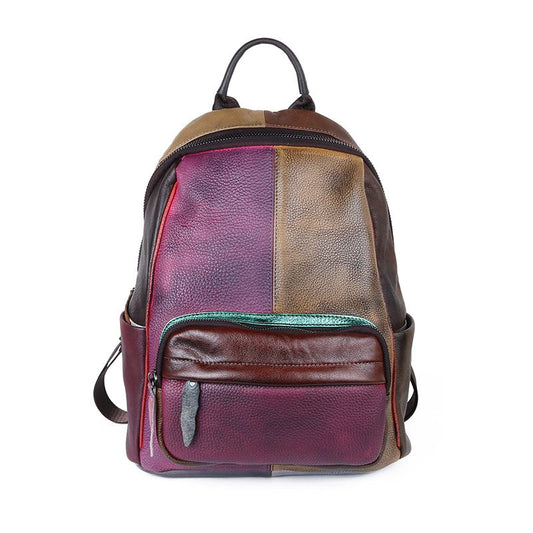
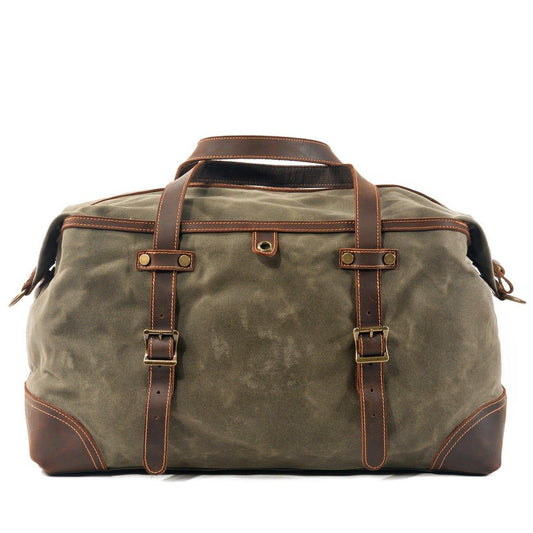
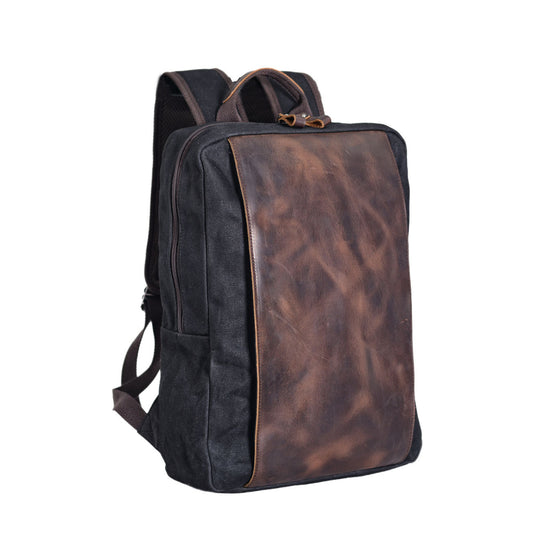
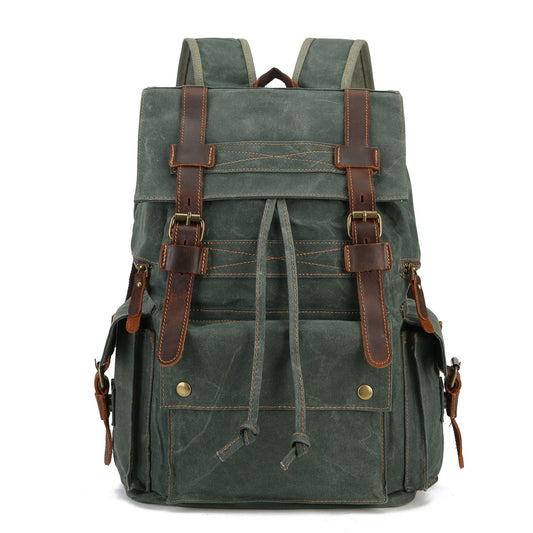
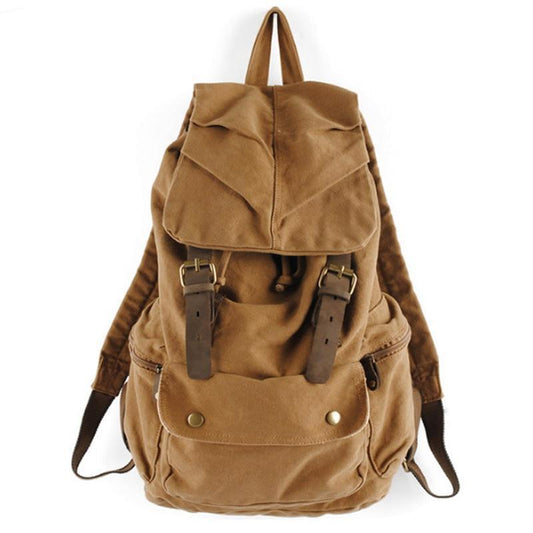
Full-grain leather treated with a heavy wax coating. Scratches appear light at first, then can be buffed back with your fingertips as the wax redistributes. Crazy horse needs less frequent conditioning — the wax is already doing much of the work — but benefits from an occasional wax-based balm. Many of the vintage backpacks and duffles in the genuine leather backpacks collection use crazy horse leather precisely because it ages so gracefully with minimal upkeep.
Top-Grain and Corrected Leather
Sanded and refinished for a uniform look. It has a sealed surface, so conditioner penetrates slowly. Apply thinner coats and give them more time to absorb.
Suede and Nubuck
Napped finishes that should never be treated with cream or oil conditioners. Use a suede brush and specialized suede protector spray only. If your vintage bag has suede panels, mask them off before conditioning the smooth leather around them.
The Essential Leather Care Kit
You do not need a shelf full of products. Six items cover virtually every situation:
- Soft horsehair brush — removes dust and buffs after conditioning.
- Two lint-free microfiber cloths — one for cleaning, one for buffing.
- Leather cleaner or saddle soap — pH-balanced, for removing grime before conditioning.
- Leather conditioner — a neutral cream or lanolin-based conditioner for routine feeding.
- Beeswax-based balm or leather wax — adds water resistance and restores crazy horse finishes.
- Leather honey or neatsfoot oil (used sparingly) — for reviving severely dried vintage pieces only.
Avoid household substitutes. Olive oil turns rancid inside the fibers. Petroleum jelly clogs pores and attracts dirt. Baby wipes contain alcohol that strips natural oils. Stick to purpose-made leather products — they cost little and last years.

How to Clean a Vintage Leather Bag: Step by Step
Clean before you condition, always. Conditioning over dirt grinds particles into the grain.
- Empty the bag completely. Open every pocket, shake out debris, and vacuum the lining with a brush attachment if needed.
- Dry brush the exterior. Use the horsehair brush in light, sweeping strokes to lift dust from seams, buckles, and stitching lines.
- Wipe with a barely damp cloth. Wring the cloth until it is almost dry. Wipe the entire surface in sections.
- Apply leather cleaner to trouble spots. Work a small amount of cleaner into a cloth (never directly onto the bag), then rub gently in circles over stains and handles where skin oils accumulate.
- Remove residue and air dry. Wipe away cleaner with a fresh damp cloth and let the bag dry naturally for at least an hour, away from heaters and direct sun.
Conditioning: The Heart of Leather Bag Care
Conditioning replaces the natural oils that daily use and weather remove. This is the step that prevents cracking and keeps vintage leather soft.
How Often Should You Condition?
- Temperate climates (most of Europe, coastal US): every 3–4 months.
- Hot, dry climates (Southwest US, Southern Spain, Australia, Middle East): every 6–8 weeks. Heat pulls oils out fast.
- Humid tropical climates (Southeast Asia, Gulf Coast): every 4–6 months, with extra attention to mold prevention and ventilation.
- Cold winters with indoor heating (Northern Europe, Canada, Northeast US): condition at the start and end of winter. Radiator-dried air is brutal on leather.
The Conditioning Process
- Test first. Apply a small dab of conditioner to the bottom of the bag or an inside edge. Wait 24 hours. Some conditioners darken leather permanently — make sure you like the result.
- Apply thin coats with a cloth. Scoop a pea-sized amount and work it in with small circular motions. Thin and even beats thick and heavy — leather can only absorb so much at once.
- Pay attention to stress points. Handles, strap attachment points, corners, and the fold lines near zippers dry out fastest and flex the most.
- Let it absorb. Give the bag 12–24 hours in a cool, ventilated space.
- Buff to finish. Use the horsehair brush or a clean cloth to remove any surface residue and bring up a soft sheen.
For crazy horse leather, substitute a wax-based balm for cream conditioner once or twice a year. Rub it in with your palm — body heat helps the wax melt into the grain — then buff. Scratches and scuffs will blend back into the finish almost like magic.
Repairing Common Vintage Leather Bag Problems
Scratches and Scuffs
On crazy horse leather, rub the scratch firmly with a fingertip; friction warms the wax and the mark fades. On full-grain, apply a drop of conditioner and massage in circles. Deep gouges can be filled with matching leather balm or left alone as honest character — many owners prefer the story marks tell.
Dried, Stiff Leather
For a neglected vintage piece — say, an old duffle found at a flea market in Lisbon or an inherited briefcase — a single conditioning will not be enough. Apply thin coats of a penetrating restorer like leather honey once every 48 hours over two weeks. Flex the leather gently between applications. Most bags revive dramatically. If the surface flakes or powders, the fibers have broken down and a professional restorer is your only option.
Loose Stitching
Do not pull loose threads. Trim them, then take the bag to a cobbler or leather worker for re-stitching with waxed thread. Saddle-stitched repairs on quality bags typically cost $15–40 and last decades.
Sticky or Failing Zippers
Rub a graphite pencil or a small amount of beeswax along the zipper teeth, then work the slider back and forth. If the slider itself has worn out, a repair shop can replace just the slider without replacing the whole zipper tape.
Water Stains and Spots
Counterintuitively, the fix for a water spot is more water. Dampen a cloth and wipe the entire panel edge to edge so it dries evenly, with no tide line. Once dry, condition the panel.
Mold and Mildew
Common after tropical travel or damp storage. Take the bag outdoors, brush off spores, then wipe with a cloth dampened in a 1:1 mix of water and white vinegar. Dry completely in indirect light, then condition. Store afterward with silica gel packets.
Waterproofing Vintage Leather: What Works
Leather is water-resistant, not waterproof. A quality wax treatment dramatically improves rain performance:
- Beeswax balms offer the strongest water barrier and suit crazy horse and matte full-grain leathers. They may darken the leather slightly.
- Silicone-free protector sprays suit finished and top-grain leathers where you want zero color change.
- Reapply seasonally — before autumn rains in Europe, before monsoon season in Asia, before winter slush in North America.
If your daily route involves serious weather, consider rotating your leather bag with a waxed canvas piece from the waxed canvas bags collection — waxed canvas shrugs off heavy rain and shares the same vintage aesthetic, giving your leather a rest day when the sky opens up.

Storing Your Leather Bag the Right Way
- Stuff it. Fill the bag with acid-free tissue or a clean cotton towel so it holds its shape. Never use newspaper — ink transfers.
- Bag it breathable. Store inside the cotton dust bag it came with, or a pillowcase. Never plastic; trapped moisture breeds mold.
- Keep it cool and dark. Direct sunlight fades and dries leather. Closets away from radiators are ideal.
- Hang nothing heavy. Long-term hanging by the strap deforms attachment points. Store bags sitting upright on a shelf.
- Condition before long storage. Going away for a season? Clean, condition, stuff, and cover. The bag will emerge ready to work.
Leather Care While Traveling
Vintage leather bags are made for travel, but travel is hard on leather. A few habits make the difference:
- Pack a travel-size tin of leather balm on trips over two weeks, especially to dry or tropical regions.
- Wipe salt residue off immediately after coastal trips — salt crystallizes and draws moisture out of the hide.
- In humid climates, air the bag out nightly rather than leaving it zipped in a hotel wardrobe.
- Keep the bag off airport floors and out of overhead-bin crush zones when possible; place it under the seat or on top of soft luggage.
- Blot rain immediately with any absorbent cloth, then let the bag dry slowly at room temperature. Never use a hair dryer.
Quick Comparison: Conditioning Products at a Glance
- Cream conditioner: best for routine care of full-grain and top-grain. Moderate darkening. Apply every 3–4 months.
- Beeswax balm: best for crazy horse, water resistance, and scratch blending. Slight darkening. Apply 2–3 times a year.
- Leather oil (neatsfoot, leather honey): best for reviving dried vintage leather. Noticeable darkening. Use only for restoration, not routine care.
- Protector spray: best for finished leathers and suede trim. No darkening. Reapply seasonally.
Frequently Asked Questions About Vintage Leather Bag Care
How often should I condition my vintage leather bag?
Every three to four months for most climates and usage levels. Condition more often — every six to eight weeks — if you live somewhere hot and dry, use the bag daily, or notice the leather looking dull or feeling stiff. The leather itself tells you: if it looks thirsty, feed it.
Can I use olive oil or coconut oil on leather?
No. Food oils penetrate unevenly, darken leather in blotches, and eventually go rancid inside the fibers, producing odor and accelerating breakdown. Purpose-made leather conditioners cost under $15 and last for years of applications.
How do I remove scratches from a crazy horse leather bag?
Rub the scratch with your fingertip using firm, quick strokes. The friction warms the wax layer and redistributes it, blending the mark away. For deeper scuffs, apply a small amount of beeswax balm with a cloth and buff. This self-healing quality is exactly why crazy horse leather is prized for travel bags.
My leather bag got soaked in the rain. Is it ruined?
Almost certainly not. Blot excess water with a towel, stuff the bag with dry cloth to hold its shape, and let it dry slowly at room temperature over 24–48 hours. Never apply direct heat. Once fully dry, condition the entire bag — water displaces natural oils, and replacing them promptly prevents stiffness.
Is it worth repairing an old leather bag, or should I replace it?
Quality full-grain bags are almost always worth repairing. Stitching, zipper sliders, edge re-dyeing, and hardware replacement are inexpensive relative to a new bag, and vintage leather that has already developed patina cannot be bought new at any price. Replace only when the leather itself is cracked through or powdering.
How do I store a leather bag long term without damage?
Clean and condition it first, stuff it with acid-free paper or cotton to preserve the shape, place it in a breathable cotton dust bag, and store it upright in a cool, dark, ventilated closet. Add a silica gel packet in humid climates and check on it every couple of months.
A Seasonal Leather Care Calendar You Can Actually Follow
Good intentions fail without a schedule. Here is a simple annual rhythm that takes less than two hours of total effort per year and covers every climate scenario:
- Early spring: deep clean after winter. Wipe away road salt residue, condition thoroughly, and inspect stitching and hardware while you work. Winter heating and slush are the two hardest seasons on leather, so this is the most important session of the year.
- Early summer: light conditioning and a UV check. If you park your bag near a sunny window or carry it outdoors daily, rotate which side faces the light and consider moving storage away from direct sun. Fading is gradual and irreversible.
- Early autumn: waterproof before the rains. Apply a beeswax balm or protector spray, paying extra attention to the bottom panel and seams where water pools. In Europe and East Asia this timing matters most; in tropical regions, wax before monsoon season instead.
- Early winter: condition before indoor heating season begins. Dry radiator air pulls moisture from leather faster than summer sun. Stuff bags you will not use until spring and move them into breathable storage.
Set four calendar reminders and the routine becomes automatic. Owners who follow a seasonal schedule report their bags looking better at year five than neglected bags look at year one.
The Two-Minute Monthly Habit
Between deep sessions, spend two minutes a month: brush off dust, wipe the handles where skin oils build up, check the corners for scuffing, and empty crumbs from the interior. Small habits prevent ninety percent of the problems that send bags to repair shops.
When to Call a Professional
Some jobs are worth paying for. Seek out a leather repair specialist or cobbler when you see structural stitching failure along load-bearing seams, cracked or torn strap attachment points, broken frames or feet, deep tears in panels, or color loss across large areas that needs professional re-dyeing. Expect to pay $20–80 for most repairs — trivial compared to replacing a quality bag, and far less than the cost of a failed strap dropping your laptop onto pavement.

Conclusion: Care for Your Vintage Leather Bag and It Will Outlast Trends
Knowing how to care for your vintage leather bag transforms it from a purchase into a companion. The routine is simple: brush and wipe monthly, condition quarterly, wax before wet seasons, store it stuffed and breathable, and repair small problems before they grow. Do this and your bag will not merely survive years of commutes, flights, and adventures across Europe, Asia, and the Americas — it will look better at year ten than it did on day one. That is a promise no synthetic bag can make. Give your leather twenty minutes of attention a few times a year, and it will give you decades of service in return.