
Crazy Horse Leather vs. Full-Grain Leather

Crazy Horse leather and full-grain leather are often compared as if they were opposing materials, but the terms describe different aspects of leather. Full-grain refers to the part of the hide and the amount of surface retained, while Crazy Horse usually describes a pull-up finish that changes tone when the leather is rubbed or flexed. A product can therefore be full-grain and have a Crazy Horse-style finish.
Understanding that distinction helps you compare appearance, aging, care, and construction without relying on a misleading either-or choice. Check the exact material description and live product details before ordering.
Full-grain describes the hide surface
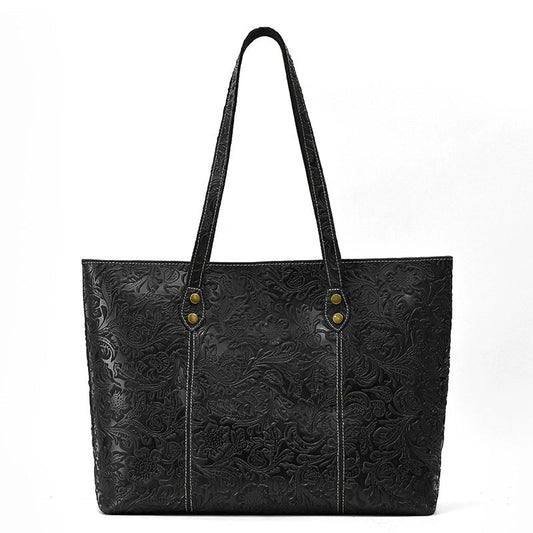
Full-grain leather keeps the natural grain of the hide and may show variation, scars, or pores. It can develop patina and feel substantial, but the finished product still depends on thickness, stitching, edge treatment, lining, and hardware. Full-grain does not automatically mean waterproof or perfectly durable under any load.

Crazy Horse describes a finish effect
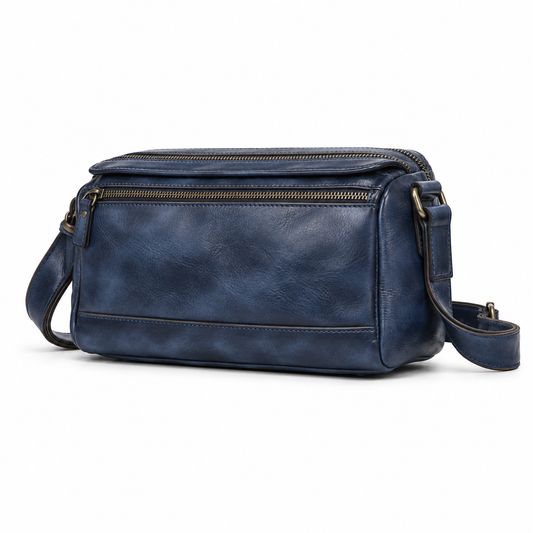
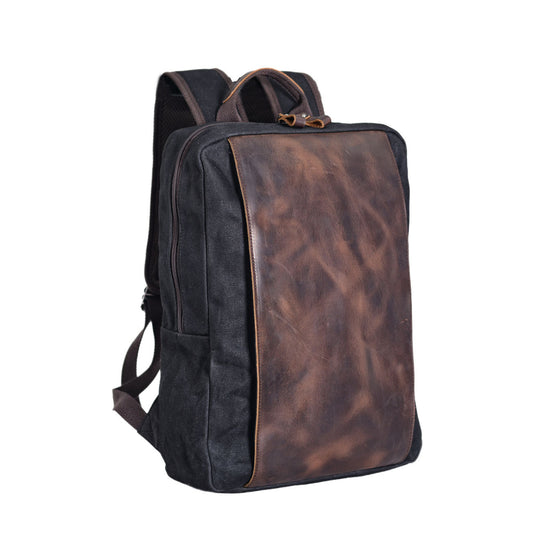
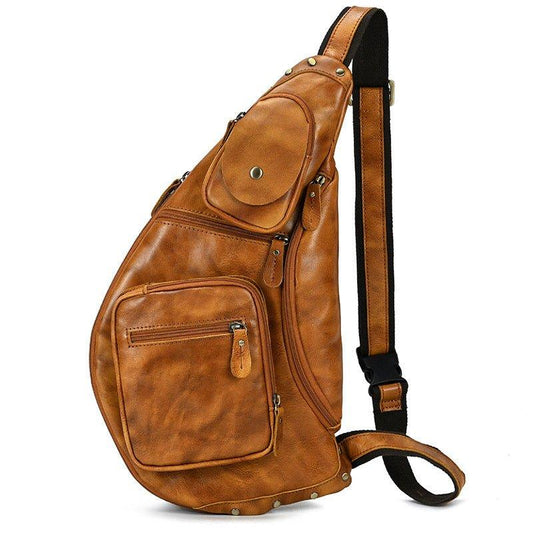
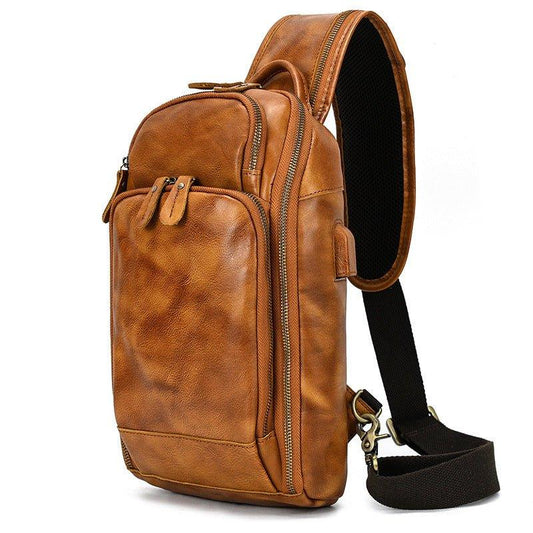
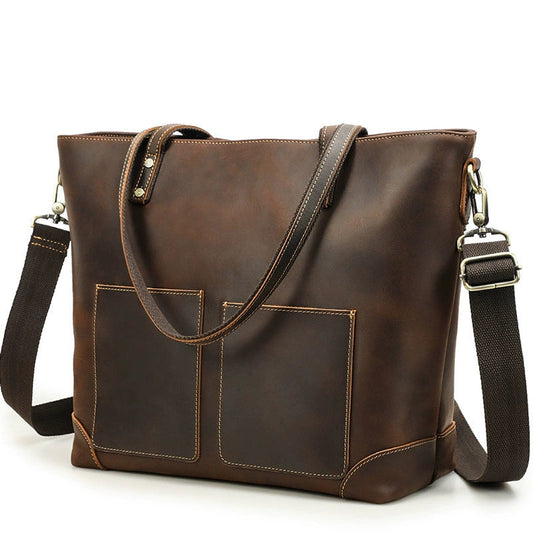
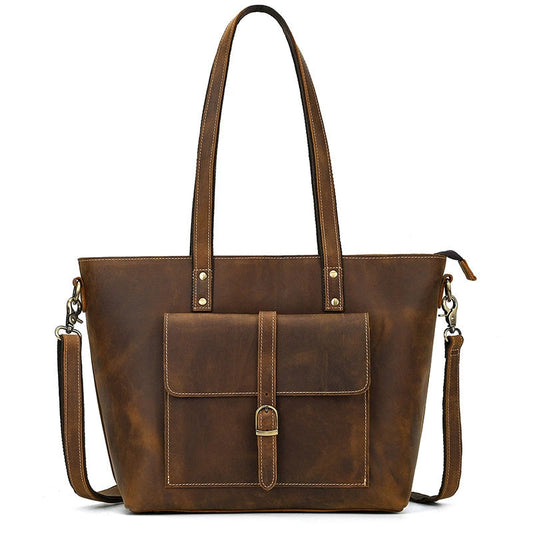
Crazy Horse leather commonly uses oils or waxes to create a pull-up effect. When bent or rubbed, the surface may become lighter or darker, producing a visible change that can develop into a personal patina. The term is associated with cowhide and working-bag aesthetics, not horse hide.

Appearance and aging
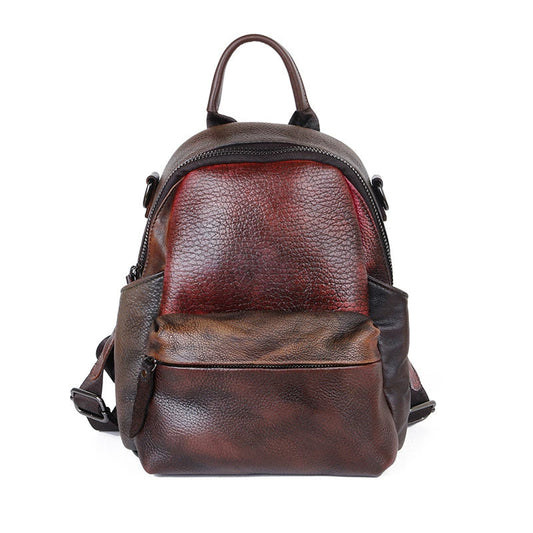
Choose full-grain when you value natural grain and a material that can mature over time. Choose a Crazy Horse finish when you specifically want tonal movement and a more relaxed vintage appearance. Both can show handling marks; the difference is how the finish responds and how visible that change is.
Care and weather limits
Both materials need sensible care. Dust with a soft cloth, blot moisture, and let the bag dry naturally. Use conditioner sparingly after a hidden-area test. Pull-up leather may darken or lose contrast if over-conditioned, while any leather can stiffen or distort under high heat. Neither label should be treated as a waterproof guarantee.
Construction still decides performance
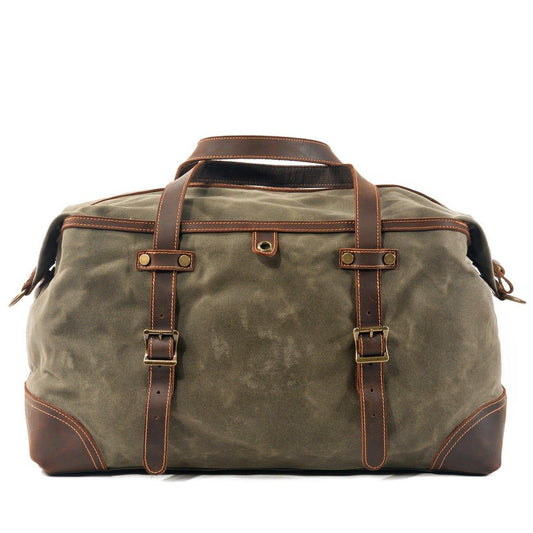
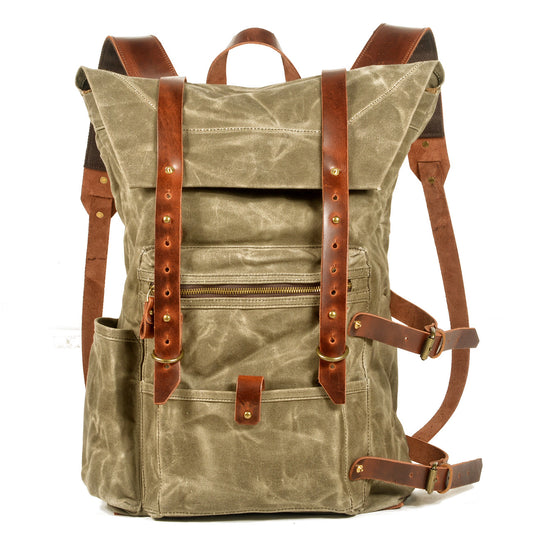
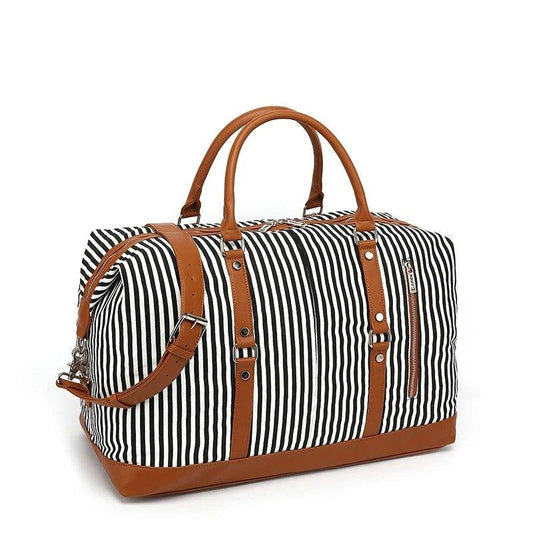
For a laptop bag or travel duffle, inspect load-bearing points rather than the finish alone. Check handle anchors, shoulder straps, base reinforcement, zipper paths, lining, and the fit of the main compartment. A carefully finished surface cannot compensate for a poor pattern or weak stitching.
Which should you choose?
- Choose natural full-grain character when grain and patina are priorities.
- Choose a Crazy Horse finish when you like visible pull-up variation and a vintage look.
- Choose based on construction when the bag will carry heavy devices or travel gear.
- Confirm care and weather limitations for the exact product, not only the material label.
Crazy Horse and full-grain are not mutually exclusive categories. Compare the hide, finish, construction, and care requirements together, then choose the combination that fits your desired appearance and the load you will carry.
The material comparison should end with a practical question: which surface, care routine, and construction will you be happy to own for several years? That answer is more useful than choosing a finish from a short product title.
How the two descriptions can overlap
A full-grain hide can receive a pull-up finish, which means a product may legitimately be described using both terms. Conversely, a product can use a Crazy Horse-style appearance without providing the same grain retention or construction quality you expect from a particular full-grain specification. Read the full material statement rather than treating the labels as competing grades.
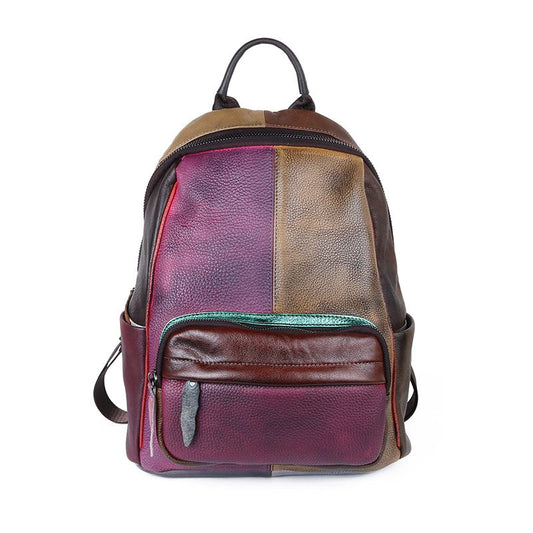
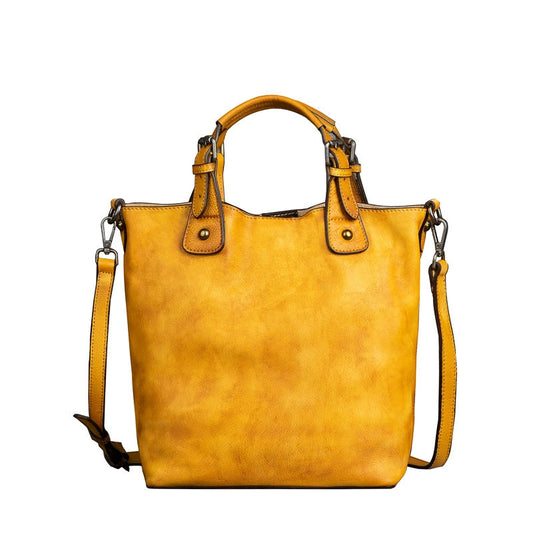
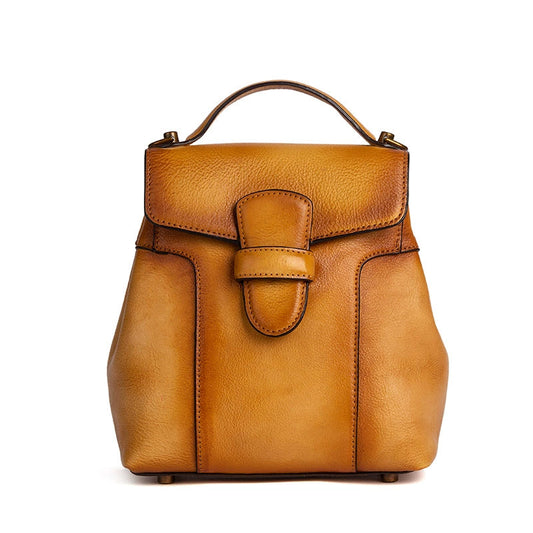
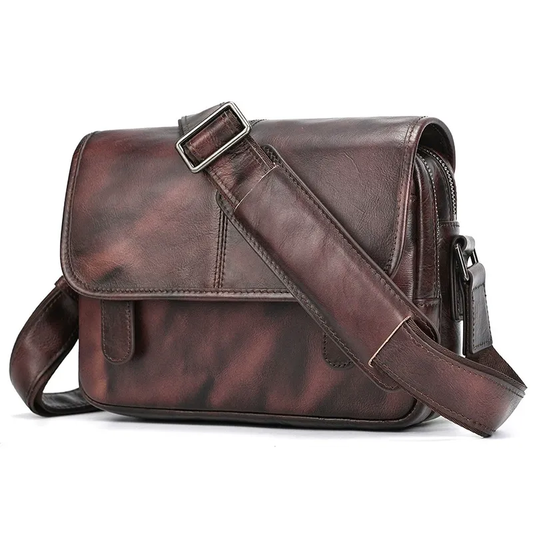
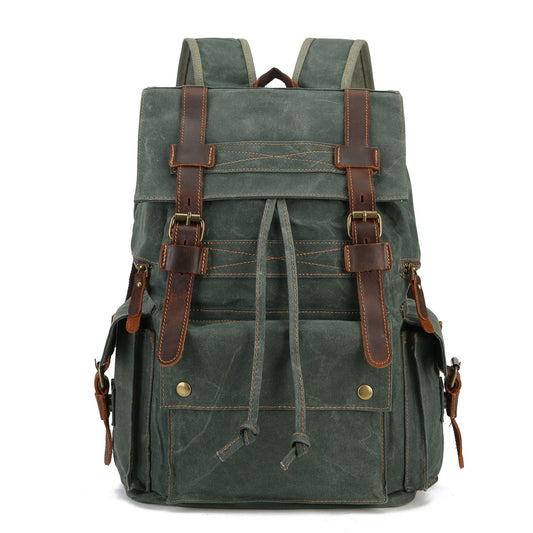
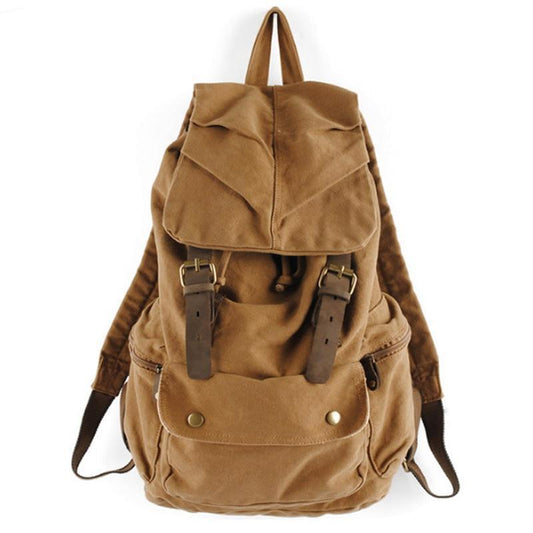
Look for evidence in the images and construction. Natural grain variation, edge treatment, panel thickness, and stitching tell you more about the finished bag than a single adjective. Ask how the surface reacts to rubbing or bending only when the seller's care information supports that test.
Choose based on the experience you want
Full-grain appeals to buyers who want visible natural texture and gradual patina. Crazy Horse pull-up appeals to buyers who enjoy tonal movement and a relaxed vintage surface. Both may become more attractive with use, but both also require protection from prolonged water, heat, and unsuitable cleaning products.
For a work bag or travel duffle, construction remains decisive. Confirm the handles, strap anchors, base, lining, closure, and device protection. A beautiful material comparison is useful only when the product can carry the intended load comfortably.
- Treat full-grain as a hide description and Crazy Horse as a finish style.
- Allow for natural variation instead of expecting identical panels.
- Compare care, weather limits, and conditioning requirements.
- Inspect the bag's construction and fit for the real load.
- Choose the surface whose aging pattern you will enjoy owning.
In short, the two labels can describe different layers of the same product. Read the hide description, finish notes, construction details, and care instructions together before deciding which leather best fits your expectations.
A useful final test is to imagine the care routine after a rainy commute or a scratched corner. If you are comfortable with gentle cleaning, slow drying, and gradual patina, Crazy Horse may suit you. If you prefer a more stable surface, another full-grain finish may be easier. The best choice is the one whose ownership expectations match the way you live.
Material character is valuable when it remains compatible with daily care and real travel conditions.
Related Woosir resources
Use these related collection and product pages to compare current materials, sizes, care details, and available variants before making a final decision.