
Backpack Duffle Hybrids: The Most Versatile Travel Bag Explained (2026)

Backpack duffle hybrids promise two useful carry modes, but the conversion alone does not make every model versatile. The real test is whether the bag remains balanced as a backpack, comfortable by the handles, easy to organize, and practical when the route changes from airport to street.
This 2026 guide explains how to compare volume, strap systems, openings, hardware, organization, weather planning, and the trade-offs between a hybrid and a dedicated backpack or duffle. Confirm live dimensions and construction on the Woosir collection before ordering.
Understand what the hybrid format changes
A backpack duffle normally combines a wide main opening and hand-carry handles with shoulder straps. That makes it easy to load clothing and shoes while offering hands-free movement on stairs or long station walks. The wide body can also pull backward when the load is not packed close to the back.
The format is most valuable when the route genuinely changes. If a traveler spends the whole journey walking with a technical load, a dedicated hiking pack may fit better. If the bag moves mainly from car to hotel, a standard duffle may be lighter. The hybrid earns its space by solving both transitions well.
Choose capacity from the bulky items
List the items that cannot be compressed: shoes, a jacket, a laptop, camera equipment, or outdoor gear. Choose enough volume for those items plus a flexible layer, then avoid using the remaining space as permission to overpack. A partially filled hybrid should still compress and remain stable.
Capacity should also respect airline and storage limits. Soft construction can flex, but an overfilled bag may exceed a carrier's dimensions and place extra stress on the zipper and handles. Measure the packed format and check current airline rules rather than relying on a generic carry-on claim.
Test the strap system
Shoulder straps should adjust smoothly and attach to reinforced points. A sternum strap can improve stability, while a hip belt becomes useful as capacity and walking distance increase. Put the bag on with the actual load and walk, sit, turn, and reach for a pocket before deciding that the harness is comfortable.
Check how the straps store in duffle mode. They should tuck away without creating a hard lump against the body or loose webbing that catches on luggage belts. A conversion system that takes too long to use will often be ignored, which removes much of the hybrid's intended value.
Organize the open interior
The duffle cavity is flexible, but it needs zones. Place shoes and dense objects at the bottom or near the back panel, use cubes for clothing, and keep toiletries sealed. A cable pouch prevents small technology from disappearing beneath a layer of fabric.
Keep documents, medication, water, and a rain layer reachable. The best organization is not necessarily the design with the most pockets; it is the layout that lets the traveler find the next item without unpacking everything. Use the same zones in both carry modes.
Compare materials and weather limits
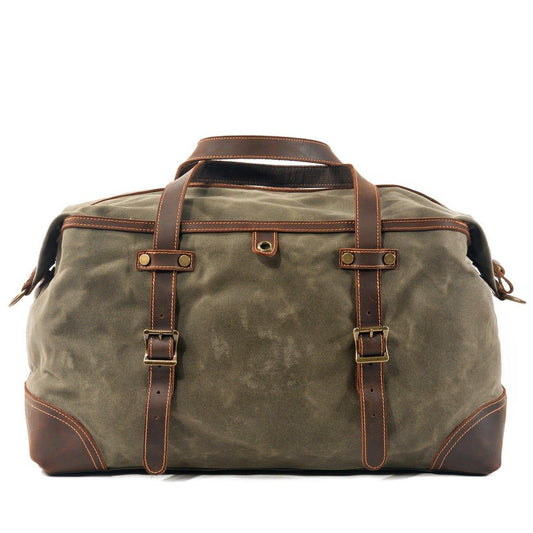
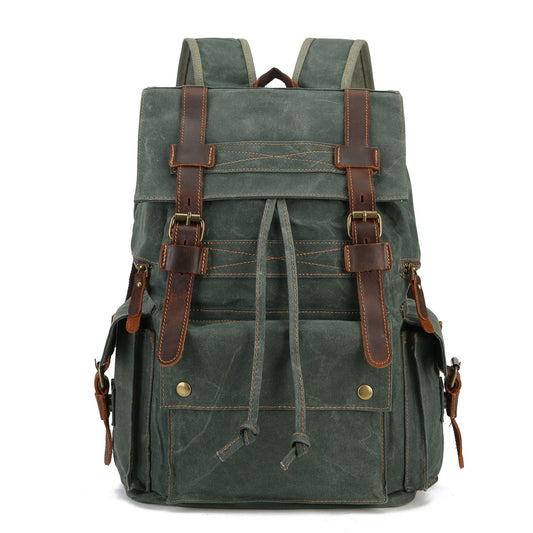
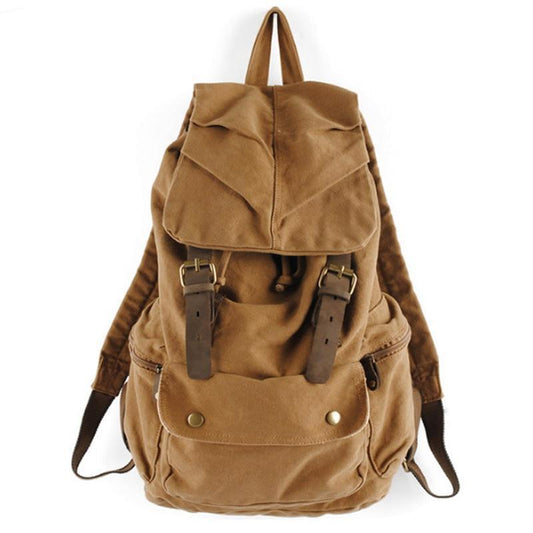
Waxed canvas and leather can provide character and structure, while technical fabric may reduce weight and simplify cleaning. Material choice affects empty weight, drying time, and how the bag looks after repeated handling. Compare those trade-offs with the route instead of choosing solely by rugged appearance.
A hybrid should still use inner protection for electronics and documents. Water-resistant fabric, covered zippers, or a rain cover help, but no single feature guarantees a dry interior. Open the bag and dry it naturally after a wet journey.
When a dedicated bag is better
Choose a dedicated backpack when the load needs a close-to-body harness, stable hip transfer, or technical access. Choose a traditional duffle when the bag will be moved mostly by hand and a lighter open cavity matters more than hands-free carry.
The hybrid is the better choice when the same trip includes both modes. Test the exact sequence—lifting from a car, walking a platform, boarding, and stowing the straps. Practical versatility is measurable in those moments, not in the product name.
Final hybrid checklist
- Match volume to the actual bulky items and route.
- Test backpack straps, handles, and conversion with a realistic load.
- Keep dense items close to the back and control partial loads.
- Protect electronics and documents with inner sleeves or pouches.
- Confirm current dimensions, materials, and airline limits.


A final hybrid test should reproduce the most awkward transition of the trip: lifting from a car, walking a platform, boarding, and storing the straps. If the bag remains balanced and accessible through that sequence, the conversion has practical value. If it becomes uncomfortable or slow, a dedicated format may serve the route better.
A useful hybrid should also be easy to store between trips. Keep the main cavity dry, loosen compression, and inspect the strap storage before folding or shelving it. If the harness becomes damp or dirty, clean and dry it before the next journey. These habits protect the conversion points that make the bag different from a basic duffle.
Use the product page to verify current construction, measurements, and available variants. Then choose the hybrid that remains comfortable in the mode you will use most, with enough flexibility for the occasional change.
Before a long trip, load the hybrid with the items that matter most and test the conversion several times. The bag should not require a special arrangement every time it changes modes. Easy conversion, predictable access, and balanced carry are the signals that the design is genuinely versatile.
Related Woosir resources
Use these related Woosir pages to compare current materials, dimensions, care details, and available variants before making a final decision.