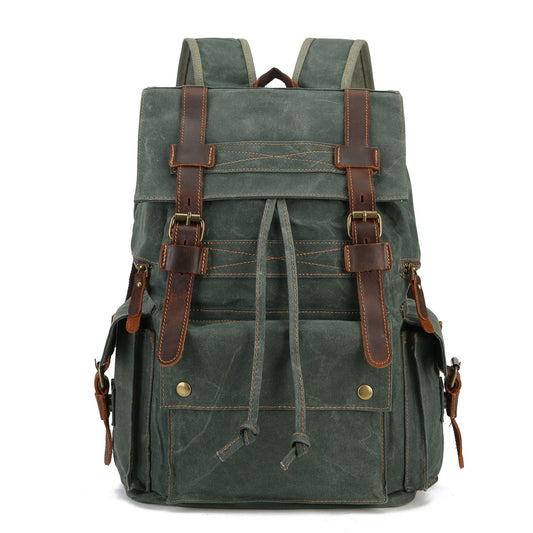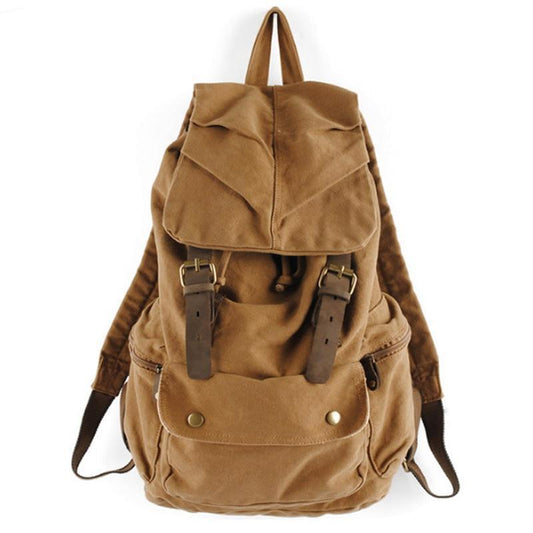


Guide des tailles des sacs à dos en toile cirée : Comment choisir la bonne capacité pour votre aventure (2026)

Pourquoi la taille d'un sac à dos en toile cirée est plus importante que la marque
Choisir le bon sac à dos en toile cirée pour la randonnée et les voyages d'aventure est rarement une question de marque. Il s'agit de faire correspondre la capacité, le harnais et le poids du tissu aux voyages que vous effectuez réellement. Un sac à dos en toile cirée de 45 litres, parfait pour un trek alpin de quatre jours, est lourd et peu maniable pour une randonnée d'une journée dans les collines de Melbourne, tandis qu'un sac de 18 litres, adapté aux trajets quotidiens en ville, éclatera lors d'un week-end à la montagne. Ce guide vous expliquera les tailles des sacs à dos en toile cirée, comment associer la capacité à la durée du voyage et les techniques de chargement qui rendent n'importe quel sac plus confortable sur vos épaules.
Les sacs en toile cirée sont différents des sacs à dos en nylon omniprésents avec lesquels la plupart des randonneurs ont grandi. Le coton ciré est plus lourd, plus structuré et plus résistant aux intempéries dès le départ. Cela signifie que la capacité interagit avec le poids et la rigidité de manières que vous devez comprendre avant d'acheter. Que vous planifiiez un week-end dans le Lake District, un trek de plusieurs jours en Patagonie ou une série d'excursions d'une journée dans les parcs nationaux américains, ce guide vous aidera à choisir le bon sac à dos en toile cirée dès la première fois.
Comprendre les capacités des sacs à dos en toile cirée : les litres et leurs limites
La capacité d'un sac à dos en toile cirée est mesurée en litres, et le chiffre indique approximativement la quantité d'équipement que vous pouvez transporter. Mais contrairement à un sac en nylon souple, un sac en toile cirée contient moins que sa capacité nominale, car le tissu rigide et les parois plus épaisses réduisent l'espace intérieur. Un sac à dos en toile cirée de 30 litres contient en réalité à peu près la même chose qu'un sac en nylon de 24 litres. Gardez cela à l'esprit lorsque vous comparez les spécifications entre les matériaux.
Voici une ventilation pratique des capacités des sacs à dos en toile cirée et ce qui rentre dans chacun d'eux :
- 16–20 litres : Randonnées à la journée, voyages urbains d'aventure, transport d'une journée pour un ordinateur portable, une bouteille d'eau, une veste et un déjeuner. Idéal pour les navetteurs qui veulent aussi un sac prêt pour l'extérieur, et pour les excursions d'une journée dans des villes comme Kyoto, Barcelone ou Portland.
- 21–25 litres : Le point idéal pour la randonnée à la journée sérieuse et une utilisation légère pour la nuit. Convient pour une veste de pluie, une poche d'hydratation, un petit kit photo et de la nourriture pour le sentier. Bon pour un jour de sommet lors d'une ascension ou une journée complète à parcourir le sentier côtier des Cinque Terre.
- 26–35 litres : Randonnées prolongées à la journée, nuits en refuge et voyages minimalistes d'un week-end. Peut contenir un drap de sac, un change de vêtements et un kit de toilette. Populaire pour les séjours en refuge dans les Dolomites ou un trek de deux nuits dans les Blue Mountains.
- 36–45 litres : Randonnée de plusieurs jours où vous transportez une tente, un sac de couchage et un réchaud. C'est la taille la plus pratique pour la plupart des voyageurs d'aventure, et elle exige une bonne ceinture de hanche et un cadre pour transporter la charge confortablement.
- 46+ litres : Longues expéditions ou voyageurs transportant des équipements encombrants pour temps froid. Ce sont des sacs spécialisés, et les versions en toile cirée de cette taille deviennent rapidement lourdes. La plupart des gens n'en ont pas besoin.
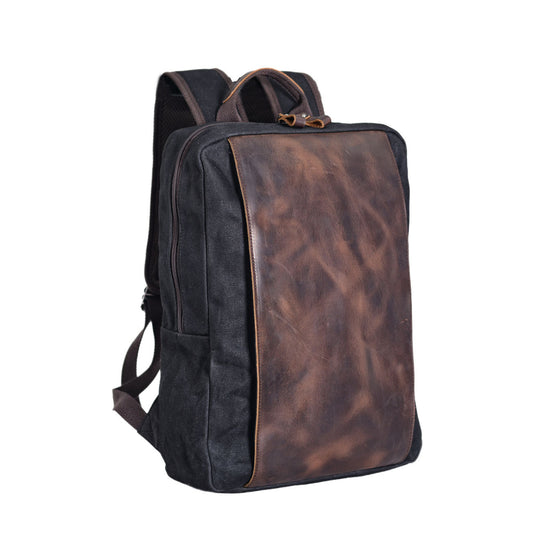
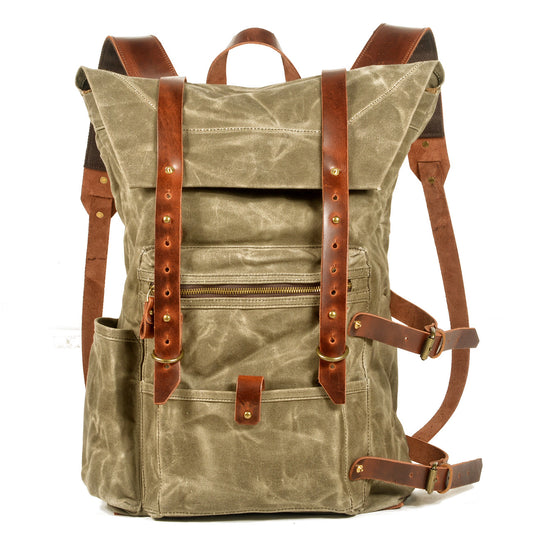
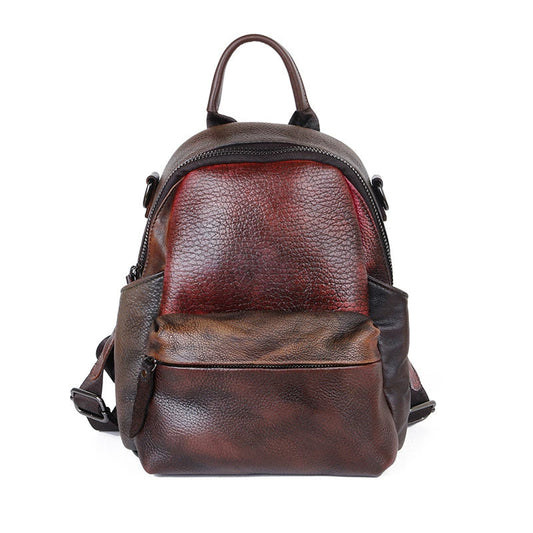
Découvrez notre collection de sacs à dos en toile cirée pour comparer une gamme de capacités, des sacs à dos de jour aux options plus grandes prêtes pour l'expédition.

Adapter la taille de votre sac à dos en toile cirée au type de votre voyage
Le moyen le plus rapide de choisir le bon sac à dos en toile cirée est de commencer par votre voyage le plus courant et de travailler à partir de là. Voici comment la capacité se traduit en scénarios de voyage réels dans trois régions.
Randonnées à la journée et excursions ville-sentier (16–25 litres)
Pour une sortie d'une seule journée, un sac à dos en toile cirée de 20 à 25 litres est le maximum pratique. Il devrait contenir une bouteille d'eau de 1 litre, un déjeuner emballé, une couche de pluie, une trousse de premiers secours et une couche de base de rechange sans que vous ayez à attacher quoi que ce soit à l'extérieur. Lors d'excursions d'une journée dans les Alpes suisses ou le long de la côte du Maine, la finition cirée du sac repousse la brume matinale et les averses soudaines, gardant votre appareil photo et vos collations au sec.
Un sac de 25 litres se prête également magnifiquement aux voyages d'aventure urbains. Vous pouvez monter dans un train à Londres avec le même sac à dos en toile cirée que vous avez utilisé pour une journée dans le Peak District. L'aspect patrimonial du tissu ne crie pas au touriste, ce qui est important dans les villes où l'équipement technique voyant fait de vous une cible pour les petits vols. Pour un sac de jour qui fait double emploi, 22 à 25 litres est le point idéal.
Week-ends et excursions de refuge en refuge (26–35 litres)
Dès que vous ajoutez une nuitée, la capacité passe à 28–35 litres. Cette taille permet de transporter un sac de couchage compressé (ou un kit de refuge), un change de vêtements, une trousse de toilette et deux jours de nourriture. C'est la taille classique pour les treks européens de refuge en refuge où l'on dort à l'intérieur chaque nuit — pensez au Tour du Mont Blanc ou à l'Alta Via dans les Dolomites — et pour les itinéraires de randonnée plus courts aux États-Unis et au Canada.
À cette taille, l'organisation interne du sac à dos en toile cirée devient cruciale. Recherchez un sac avec au moins une poche extérieure pour les articles dont vous avez besoin sans ouvrir le compartiment principal — votre téléphone, une collation, une carte de sentier. Une poche pour bouteille d'eau accessible en marchant vous évite de vous arrêter et de déboucler le rabat principal chaque fois que vous avez soif. Un sac en toile cirée de 30 litres avec des poches bien conçues est préférable à une caverne de 35 litres sans poches.
Une astuce pratique pour les week-ends : roulez, ne pliez pas. Rouler vos vêtements en cylindres serrés les comprime dans les coins du sac et laisse une cavité centrale stable pour les articles plus lourds comme un réchaud de camping ou un sac de chaussures de randonnée. Réservez une petite poche extérieure comme zone de "tirage rapide" dédiée à votre téléphone et à une batterie externe afin de ne jamais fouiller dans le compartiment principal à un croisement de sentiers ou sur un quai de gare.
Randonnée de plusieurs jours (36–45 litres)
Pour un véritable trek de plusieurs jours où vous transportez votre propre abri, un sac à dos en toile cirée de 36 à 45 litres est le plafond pratique. À cette taille, le poids est la principale préoccupation. Un sac en toile cirée de 40 litres peut peser de 2,5 à 3,5 kg à vide, avant d'ajouter une tente, un sac de couchage, un matelas, un réchaud et de la nourriture. Vous transportez une charge totale de 15 à 20 kg lors d'un trek sérieux. C'est exigeant pour n'importe quel système de portage, donc une ceinture de hanche de portage de charge et une sangle de poitrine réglable sont non négociables à cette capacité.
Les randonneurs de plusieurs jours dans des endroits comme le circuit de Torres del Paine en Patagonie ou l'arrière-pays de Yellowstone devraient sérieusement se demander si la durabilité de la toile cirée justifie le poids, ou si un sac technique moderne est plus approprié. Si vous choisissez une toile cirée pour une charge de trek de 40 litres, prévoyez une énergie supplémentaire pour le sac lui-même et planifiez votre liste d'équipement de manière impitoyablement minimale.

Poids du tissu : Comment le poids du sac à dos en toile cirée affecte le confort de portage
Le poids de votre sac à dos en toile cirée est largement déterminé par le poids du tissu de la toile elle-même. Le poids de la toile est mesuré en onces par verge carrée, et il varie d'environ 10 oz (léger) à 24 oz (lourd, comme une bâche de camion). Pour la plupart des utilisations en randonnée et en aventure, la toile cirée de 16 à 18 oz est l'équilibre parfait : suffisamment durable pour résister aux broussailles et aux rochers, mais suffisamment légère pour être portée sans regret.
| Poids de la toile | Caractéristique | Idéalement utilisé pour |
|---|---|---|
| 12–14 oz | Léger, souple, se compacte plus facilement | Sacs à dos de jour, transport urbain, randonnée légère |
| 16–18 oz | Durabilité et poids équilibrés | La plupart des randonnées et voyages d'aventure |
| 20–24 oz | Lourd, très robuste, conserve sa structure | Sacs de sport, sacs d'expédition, équipement de travail |
Pour un sac à dos en toile cirée axé sur l'aventure, évitez d'utiliser un tissu trop lourd. Un sac de 22 oz qui pèse 3 kg à vide sera un fardeau sur n'importe quel sentier de plus de quelques heures. Privilégiez plutôt un tissu de 16 à 18 oz et utilisez les économies de poids pour un meilleur harnais. Pour une alternative plus légère qui conserve l'aspect traditionnel sur le sentier, explorez notre collection de sacs à dos de randonnée pour des options techniques.
Ajustement du harnais : la caractéristique qui fait ou défait un sac à dos en toile cirée
Quelle que soit sa capacité, un sac à dos en toile cirée ne vaut que par son harnais. La randonnée est une activité répétitive et porteuse de charge, et un sac qui ne s'adapte pas correctement causera des douleurs aux épaules, des frottements et un voyage misérable. Portez attention à trois points de contact :
- Ceinture de hanches : Sur les sacs de plus de 26 litres, une ceinture de hanches rembourrée transfère 60 à 80 % de la charge de vos épaules vers votre bassin, où elle doit être. Si le sac n'a pas de ceinture de hanches, c'est un sac de jour, pas un sac de trekking. La ceinture doit reposer sur vos os iliaques, pas sur votre taille.
- Sangle de poitrine : Une sangle de poitrine tire légèrement les bretelles vers l'intérieur, les empêchant de glisser et améliorant la stabilité de la charge. Elle doit être à la hauteur de la clavicule et réglable de haut en bas sur un rail.
- Bretelles : Des bretelles rembourrées et profilées répartissent le poids sur le haut des trapèzes. Elles doivent envelopper le haut de votre épaule, et non s'enfoncer dans l'aisselle. Une sangle de rappel de charge qui s'incline du haut de la bretelle vers le sac resserre le sac contre votre dos.
Un harnais correctement ajusté fait qu'une charge de 15 kg semble en peser 10. Un harnais mal ajusté rend une charge de 5 kg insupportable. Lorsque vous essayez un sac à dos en toile cirée, chargez-le avec 8 à 10 kg et marchez dix minutes avant de vous décider. La plupart des problèmes de harnais apparaissent dans les premières minutes sous charge.
Chargement et emballage de votre sac à dos en toile cirée comme un pro
La façon dont vous chargez un sac à dos en toile cirée est aussi importante que le sac que vous choisissez. Un sac mal emballé s'affaisse, se déplace et vous déséquilibre. Suivez ces principes pour un portage stable et confortable :
- Articles lourds près de votre dos et à mi-hauteur : Placez votre équipement le plus lourd (tente, réchaud, cartouches de nourriture) contre votre colonne vertébrale, au niveau de vos omoplates. Cela maintient le centre de gravité haut et près, ce qui réduit le balancement.
- Sac de couchage au fond : Votre article le plus léger et le plus volumineux va dans le compartiment inférieur. Il se comprime dans l'espace inutilisé et maintient le centre de gravité du sac au bon endroit.
- Articles fréquemment utilisés sur le dessus : Veste de pluie, collations, carte et crème solaire doivent être à portée de main en haut ou dans une poche extérieure.
- Stabiliser avec des sangles de compression : Les sacs en toile cirée sont rigides, mais ils bénéficient tout de même des sangles de compression qui serrent la charge et l'empêchent de bouger pendant que vous marchez.
Prenez le temps de charger votre sac à dos en toile cirée la veille d'un voyage, puis marchez dans la maison pendant vingt minutes pour tester l'équilibre. Ajustez les sangles jusqu'à ce que la charge soit haute et serrée, la ceinture de hanche supportant la majeure partie du poids.
Considérations régionales pour les sacs à dos en toile cirée
Europe : Rail, pluie et pavés
Les voyages d'aventure en Europe impliquent souvent des trains, des rues pavées et des conditions météorologiques changeantes. Un sac à dos en toile cirée de 20 à 30 litres est idéal : suffisamment compact pour les porte-bagages du Eurostar, assez robuste pour les journées de sentier dans les Alpes, et suffisamment élégant pour être transporté dans un café à Paris ou Florence. La finition cirée est un véritable avantage dans les villes notoirement pluvieuses comme Édimbourg ou Bergen, où les averses soudaines sont quotidiennes. Choisissez un sac avec une fermeture éclair résistante aux intempéries ou un rabat sécurisé, et envisagez un sac avec un passage pour trolley si vous l'associez à une valise à roulettes.
Asie : Humidité, villes et sentiers subtropicaux
Dans les régions humides d'Asie — Bangkok, Singapour, Hong Kong et les Philippines — la toile cirée peut retenir la chaleur et rester humide si elle est trempée. Pour la randonnée subtropicale, assurez-vous que l'imperméabilisation de votre sac est bien entretenue et emportez une housse de pluie pour les averses prolongées. Dans les régions montagneuses plus sèches comme les itinéraires de trekking du Népal ou les montagnes du Yunnan en Chine, un sac à dos en toile cirée fonctionne à merveille : le tissu respire, la structure tient et l'aspect classique s'intègre à la culture des villes de montagne. Pour les voyages axés sur les villes au Japon ou en Corée du Sud, un sac à dos en toile cirée compact de 20 à 25 litres est perçu comme un style réfléchi plutôt que comme un bagage de touriste.
Amériques : Diversité et road trips
L'Amérique du Nord offre tout, des randonnées d'une journée dans le désert en Arizona aux treks de plusieurs jours dans les Rocheuses. Un sac à dos en toile cirée polyvalent de 25 à 35 litres couvre la majorité de ces voyages. Pour les voyages d'aventure en voiture à travers les États-Unis et le Canada, le même sac passe du sentier au motel et au sentier à nouveau. En Amérique latine, où des treks comme le Chemin Inca ou le W Trek en Patagonie exigent une capacité sérieuse, penchez vers la fourchette de 36 à 45 litres et investissez dans une bonne ceinture de hanche, car les sentiers y impliquent des ascensions soutenues en altitude où le confort de la charge est essentiel.
FAQ : Sacs à dos en toile cirée pour la randonnée et l'aventure
Quelle est la meilleure taille de sac à dos en toile cirée pour une randonnée à la journée ?
Un sac à dos en toile cirée de 20 à 25 litres est le plus pratique pour une randonnée à la journée. Il transporte l'eau, le déjeuner, une couche de pluie et un petit kit sans être trop grand pour surcharger ou trop petit pour que le matériel pende à l'extérieur. Si vous souhaitez également utiliser le sac pour les voyages urbains, la gamme de 22 à 25 litres est la taille unique la plus polyvalente.
Les sacs à dos en toile cirée sont-ils trop lourds pour le trekking ?
Pour les randonnées de plusieurs jours, un sac à dos en toile cirée de 36 à 45 litres est nettement plus lourd qu'un sac en nylon technique — environ 2,5 à 3,5 kg à vide contre 1,5 à 2 kg. Si vous portez une lourde charge pendant de nombreux jours, le poids supplémentaire entraîne une fatigue. Pour les randonnées d'une journée, les week-ends et les treks de refuge en refuge, la durabilité et la résistance aux intempéries de la toile cirée justifient facilement le poids. Pour les expéditions sérieuses de plusieurs jours, évaluez attentivement le compromis.
Comment entretenir un sac à dos en toile cirée ?
Maintenez l'imperméabilisation pour que l'eau perle sur le tissu. Réappliquez un traitement imperméabilisant à base de cire tous les 6 à 12 mois ou dès que l'eau ne perle plus. Brossez la saleté avec une brosse douce et essuyez avec un chiffon humide — évitez le lavage en machine, qui décape la cire. Rangez le sac dans un endroit frais et sec et rembourrez-le légèrement pour l'aider à conserver sa forme. Avec un entretien de base, un sac à dos en toile cirée de qualité dure une décennie ou plus.
Puis-je utiliser un sac à dos en toile cirée pour voyager en avion ?
Oui. Un sac à dos en toile cirée de 30 litres ou moins respecte la plupart des limites de bagages à main (vérifiez les dimensions exactes de votre compagnie aérienne, généralement autour de 55 x 40 x 23 cm). Il est idéal comme article personnel ou bagage à main pour les voyages d'aventure. Les sacs plus grands de 40 litres doivent généralement être enregistrés sur la plupart des compagnies aériennes, alors vérifiez la taille avant de prendre l'avion.
Conclusion : Choisissez votre sac à dos en toile cirée en fonction de vos voyages
Il n'existe pas de meilleur sac à dos en toile cirée unique — seulement la bonne capacité, le bon poids de tissu et le bon harnais pour les aventures que vous planifiez réellement. Commencez par votre voyage le plus courant : un sac de 16 à 25 litres pour les randonnées à la journée et les excursions ville-sentier, un sac de 26 à 35 litres pour les week-ends et les treks de refuge en refuge, ou un sac de 36 à 45 litres pour les expéditions de plusieurs jours. Adaptez le poids du tissu à votre équilibre entre durabilité et confort, et ne faites jamais de compromis sur une ceinture de hanche bien ajustée.
Un sac à dos en toile cirée bien choisi devient un compagnon pour la vie. Il vieillit avec vous, développe une patine qui enregistre chaque sentier et chaque passage de frontière, et surpasse l'équipement en nylon jetable année après année. Achetez la bonne taille pour vos vrais voyages, et ce sera le dernier sac à dos de randonnée que vous aurez besoin d'acheter.