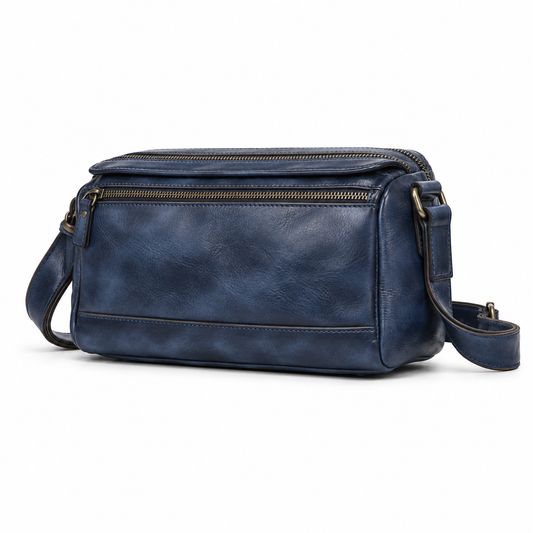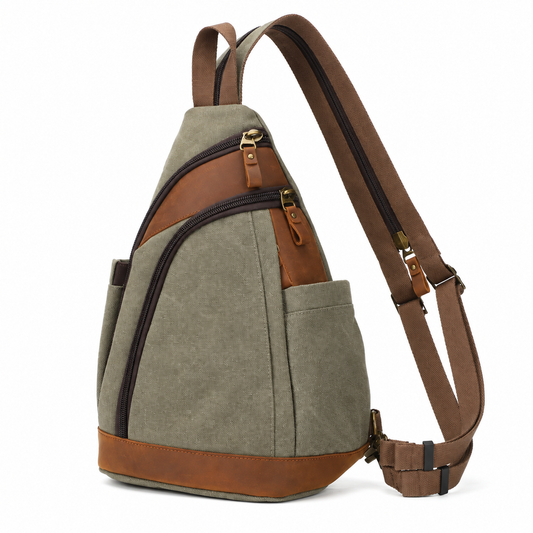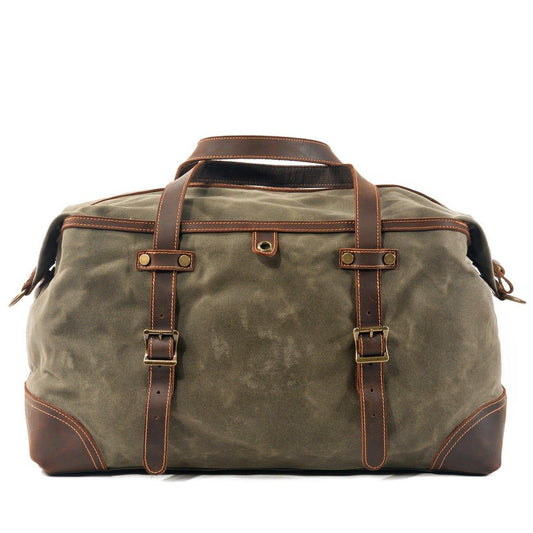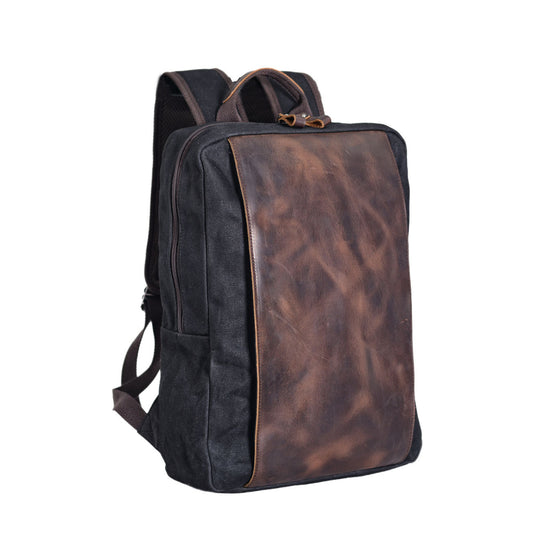
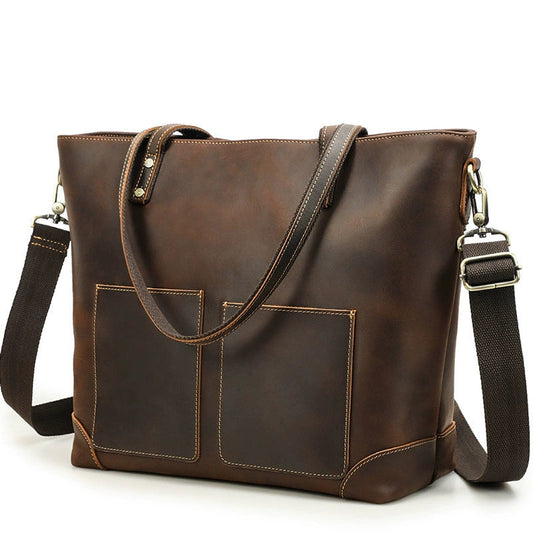
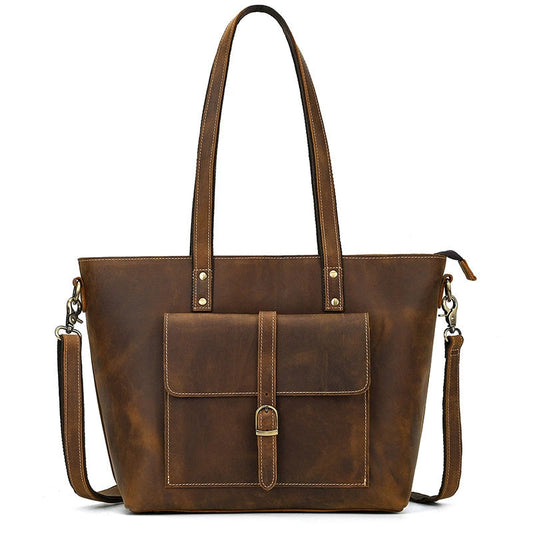
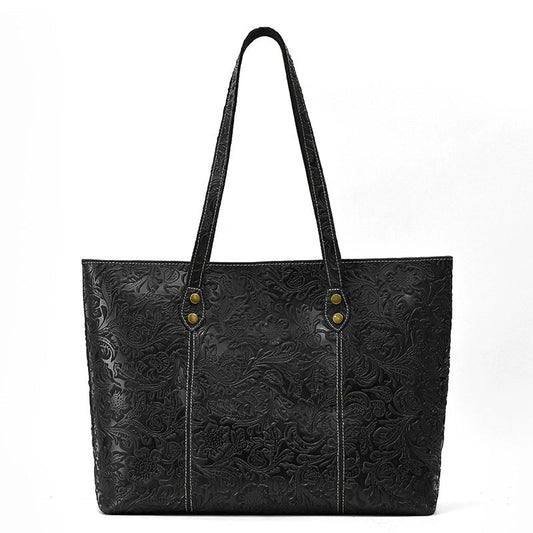
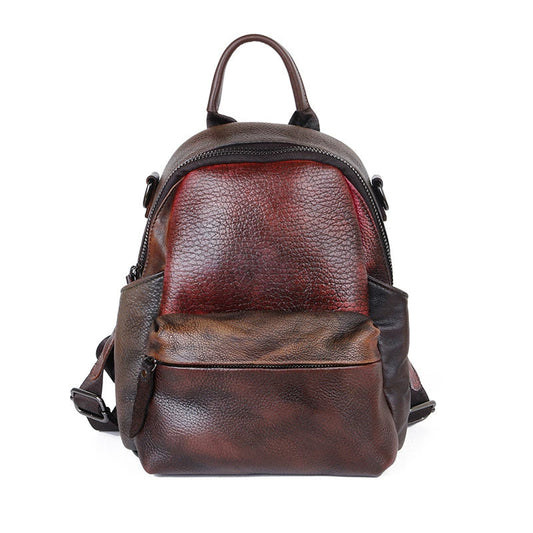

Sacs à bandoulière en cuir vintage ou sacs à dos : le guide de décision du navetteur pour 2026

Choisir entre les sacs bandoulière et les sacs à dos en cuir vintage est l'un des dilemmes les plus courants pour les navetteurs quotidiens en 2026. Les deux transportent votre ordinateur portable, les deux survivent à la cohue du train du matin, et les deux peuvent avoir l'air élégants avec une tenue de bureau — pourtant, ils se comportent très différemment une fois que vous vous déplacez réellement en ville. Les sacs bandoulière en cuir vintage offrent un accès instantané et un style professionnel intemporel, tandis que les sacs à dos répartissent le poids uniformément et libèrent les deux mains. Ce guide décortique les différences réelles pour que vous puissiez choisir le bon sac pour votre trajet, que vous preniez le métro de Londres, que vous fassiez du vélo à Amsterdam ou que vous preniez le Shinkansen à Tokyo.
Pourquoi les sacs bandoulière en cuir vintage dominent toujours les trajets quotidiens en 2026
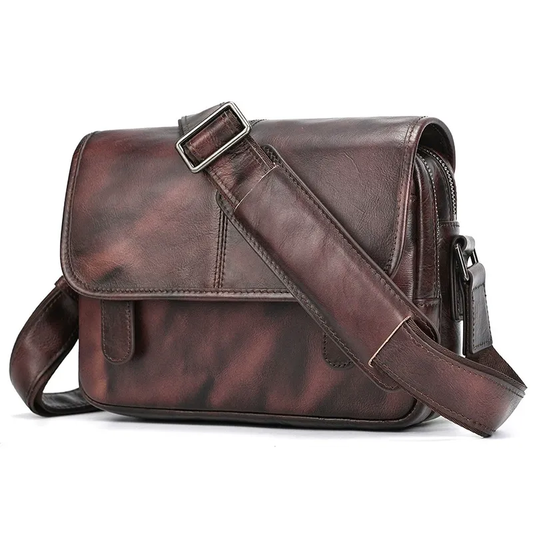
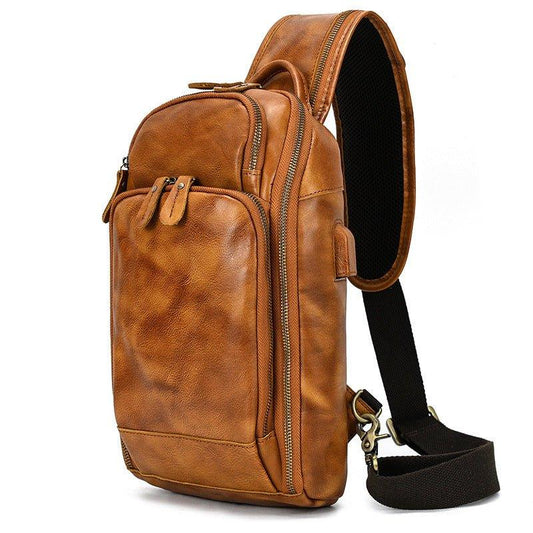
Le sac bandoulière a commencé sa vie comme un outil de travail — porté en travers du corps par les postiers, les coursiers télégraphiques, et plus tard, les coursiers à vélo urbains se faufilant dans le trafic de Manhattan. Cet héritage explique pourquoi les sacs bandoulière en cuir vintage restent si efficaces pour les navetteurs aujourd'hui : chaque élément de design existe parce que quelqu'un avait besoin de saisir rapidement des documents en déplacement.
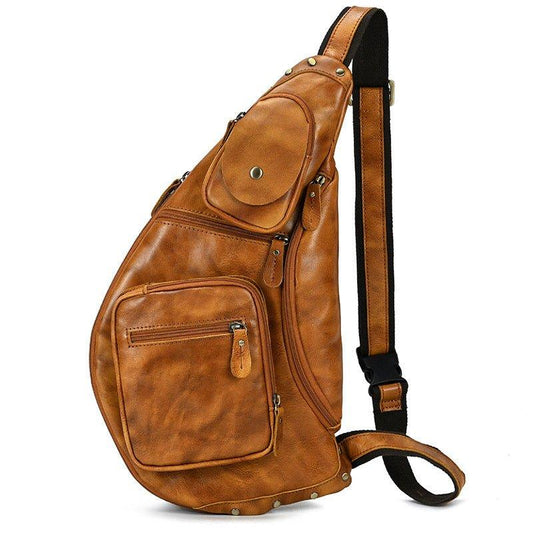
Une sacoche en cuir pleine fleur de qualité développe une patine qui raconte l'histoire de vos trajets quotidiens — le subtil éclat là où le rabat frotte votre hanche, la poignée assombrie par les prises quotidiennes, les coins adoucis par le fait d'être coincé sous les sièges de train. Contrairement aux sacs en nylon ou en polyester qui ont l'air usés après deux ans, le cuir de style vintage s'améliore avec l'âge. C'est l'un des rares accessoires où l'usure quotidienne augmente en fait son caractère et sa valeur perçue.

L'avantage de l'accès
Le principal argument en faveur d'un sac bandoulière est l'accès sans le retirer. Lorsque votre train arrive à quai et que vous avez besoin de votre carte de transport, de votre téléphone ou de votre ordinateur portable, il vous suffit de faire pivoter le sac vers l'avant et de soulever le rabat. Un sac à dos exige un arrêt complet : retirer les deux bretelles, trouver un endroit pour le poser ou l'équilibrer sur un genou, dézipper, fouiller, remettre sur l'épaule. Dans une voiture bondée entre la Gare du Nord et La Défense, cette différence compte plusieurs fois par jour.
L'impression professionnelle
Entrez dans une réunion client à Francfort, Singapour ou Chicago avec une sacoche en cuir vieilli sur l'épaule et vous communiquez quelque chose qu'un sac à dos technique ne peut pas : une appréciation de l'artisanat et de la permanence. Les sacoches s'accordent naturellement avec les vêtements sur mesure car leur silhouette fait écho à celle de la mallette sans la formalité. De nombreux professionnels gardent une sacoche pour les journées de contact client et un sac à dos pour les journées de travail intensif — mais si vous ne pouvez posséder qu'un seul sac qui doit faire les deux, la sacoche l'emporte généralement sur le style.
Où les sacs à dos surpassent les sacs bandoulière pour les navetteurs
L'honnêteté est importante dans un guide de décision, alors accordons aux sacs à dos ce qui leur est dû. Si votre trajet implique plus de vingt minutes de vélo, plus de deux kilomètres de marche, ou le transport de plus de sept kilogrammes, un sac à dos est ergonomiquement supérieur. Deux bretelles répartissent la charge sur les deux épaules et sollicitent votre tronc de manière symétrique, tandis qu'une sacoche concentre le poids sur un seul muscle trapèze.
- Cyclistes avec des charges lourdes : une sacoche peut basculer vers l'avant lorsque vous vous penchez sur le guidon, à moins qu'elle ne soit dotée d'une sangle stabilisatrice transversale. Un sac à dos reste en place.
- Longs trajets à pied : les physiothérapeutes notent constamment que des charges asymétriques supérieures à 10 % du poids corporel, portées quotidiennement, peuvent contribuer à la tension des épaules et du cou au fil du temps.
- Journées salle de sport + bureau : les chaussures, une serviette, un changement de vêtements et un ordinateur portable dépassent simplement la plupart des capacités des sacs bandoulière, qui atteignent généralement environ 15 litres.
- Trajets debout : dans un métro bondé où vous devez vous tenir à une barre, un sac à dos (porté sur le devant, comme l'exige l'étiquette à Tokyo) libère les deux mains.
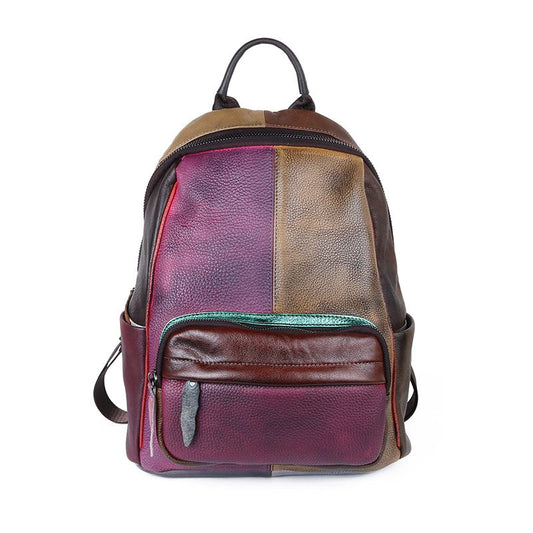
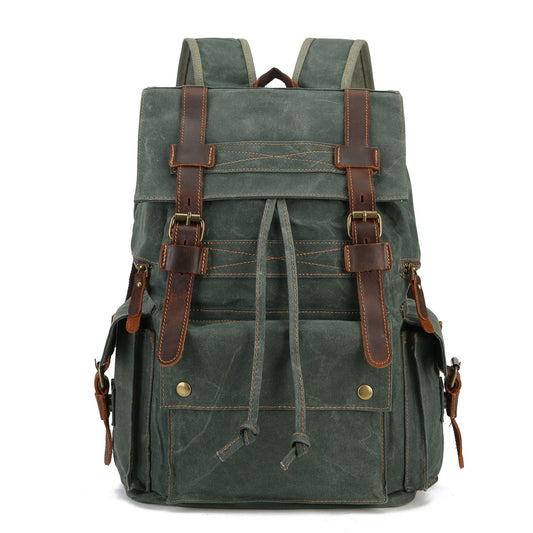
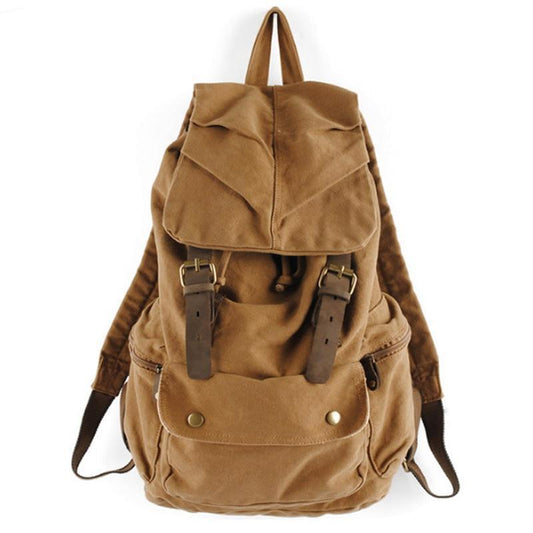
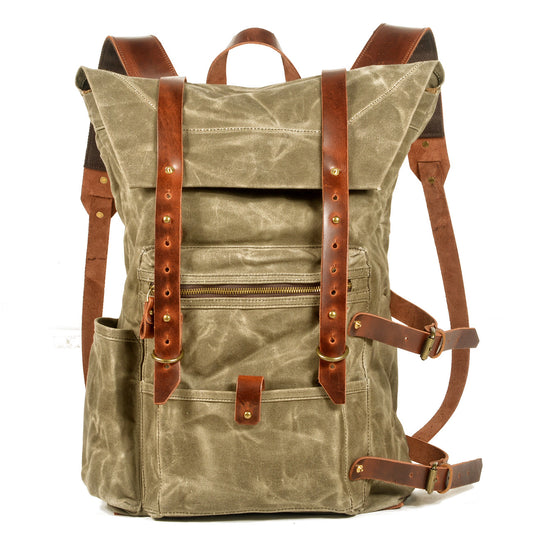
Si plusieurs de ces points décrivent votre routine quotidienne, parcourez une sélection dédiée de sacs à dos en cuir véritable qui offrent l'ergonomie d'un sac à dos sans sacrifier l'esthétique vintage — panneaux en cuir pleine fleur, quincaillerie en laiton antique, et silhouettes qui s'intègrent aussi bien dans un studio de design que dans une salle de conférence.
Face à face : Sacs bandoulière en cuir vintage vs sacs à dos
Voici comment les deux formats se comparent selon les critères qui intéressent le plus les navetteurs :
- Vitesse d'accès : Sacoche — instantanée, d'une seule main, sans retirer le sac. Sac à dos — nécessite de le retirer ou un mouvement de balancier maladroit d'une seule épaule.
- Répartition du poids : Sac à dos — charge équilibrée, sur deux épaules. Sacoche — sur une seule épaule, idéalement moins de 6-7 kg.
- Style professionnel : Sacoche — considérée comme appropriée pour les affaires presque partout. Sac à dos — de plus en plus accepté, mais toujours moins formel dans les industries traditionnelles comme le droit et la finance.
- Protection de l'ordinateur portable : Égalité — les deux formats offrent des compartiments rembourrés de 13 à 17 pouces dans des constructions de qualité ; le cuir ajoute une absorption naturelle des chocs.
- Stabilité à vélo : Le sac à dos gagne, sauf si la sacoche a une sangle stabilisatrice.
- Conscience de la sécurité : Sacoche — le rabat est contre votre corps et se tourne vers l'avant dans la foule, un réel avantage contre les pickpockets dans le métro de Barcelone ou à la gare Termini de Rome.
- Capacité maximale : Sac à dos — 20-35 litres typiques. Sacoche — 10-15 litres typiques.
- Vieillir avec élégance : Sacoche en cuir vintage — développe une patine et du caractère. Sac à dos technique — la fatigue du tissu et l'usure de la fermeture éclair montrent mal l'âge ; les sacs à dos en cuir vieillissent aussi bien que les sacoches.
Comment choisir une sacoche en cuir vintage pour les trajets quotidiens
Si le format de la sacoche correspond à votre trajet, la tâche suivante consiste à séparer les sacoches en cuir vintage véritablement bien faites des imitations de mode qui se fissurent en un an. Évaluez cinq choses.
1. Qualité et épaisseur du cuir
Le cuir pleine fleur — la couche la plus externe de la peau avec le grain intact — est la référence. Il résiste à l'abrasion, développe une patine et peut durer des décennies. Le cuir pleine fleur rectifié est acceptable ; tout ce qui est étiqueté "cuir véritable" au sens technique (cuir refendu avec une surface enduite), "cuir reconstitué" ou "cuir PU" ne survivra pas aux trajets quotidiens. Recherchez une épaisseur de 1,6 à 2,2 mm : assez épais pour protéger un ordinateur portable, assez souple pour épouser la forme de votre corps. Le cuir Crazy Horse — pleine fleur traité avec des cires qui créent un effet vieilli bicolore lorsqu'il est rayé — est particulièrement populaire pour le look vintage car chaque éraflure se fond dans le caractère plutôt que d'apparaître comme un dommage.
2. Conception de la sangle
La sangle supporte tout, alors inspectez-la en premier. Vous voulez une largeur d'au moins 4 cm (les sangles étroites s'enfoncent dans votre épaule), un coussin d'épaule dense, des ferrures de réglage en métal — jamais en plastique — et des points d'ancrage cousus et rivetés. Lors d'un trajet quotidien, la jonction de la sangle subit des milliers de cycles de charge par an ; c'est là que les sacs bon marché échouent.
3. Vérification du compartiment pour ordinateur portable
Mesurez votre ordinateur portable réel et comparez-le aux dimensions internes de la pochette, et non aux dimensions externes du sac. Un "sac de 15 pouces" avec un rabat incliné peut ne laisser que 14 pouces de pochette utilisable. La pochette doit être rembourrée des deux côtés et suspendue légèrement au-dessus de la base du sac afin que l'ordinateur portable ne subisse jamais un coup direct lorsque vous posez le sac sur le quai d'une gare.
4. Quincaillerie et fermetures
Les boucles en laiton antique ou en bronze vieilli conviennent à un sac vintage, mais vérifiez la présence de boutons-pression magnétiques cachés ou de fermoirs à dégagement rapide derrière les boucles décoratives. Les fermetures à boucle uniquement sont magnifiques et vous coûtent trente secondes à chaque ouverture — un véritable point de friction six fois par jour. Les meilleures sacoches pour les navetteurs allient un look traditionnel à une vitesse moderne.
5. Organisation sans encombrement
À l'intérieur, vous voulez une pochette rembourrée, une poche zippée pour les câbles et les chargeurs, deux fentes pour stylos et une poche frontale sous le rabat pour les cartes de transport et les billets. Plus de poches que cela ajoutent des coutures, du poids et des points de défaillance sans ajouter d'utilité.
Cultures du trajet quotidien : Comment la région façonne le choix
L'endroit où vous faites la navette change le calcul, et un sac qui fonctionne dans une ville peut vous frustrer dans une autre.
Europe : Trains, tramways et pavés
Les trajets européens sont denses en transports en commun et riches en marche. À Londres, Paris, Milan et Berlin, l'accès rapide de la sacoche brille aux portiques de billetterie et aux arrêts de café, et son profil mince se glisse entre les passagers debout dans le métro ou le U-Bahn. Les codes vestimentaires professionnels en Europe continentale penchent encore vers le formel, ce qui favorise le cuir par rapport aux tissus techniques. Attention à la pluie en Europe du Nord : les cuirs cirés et huilés résistent aux bruines, mais prévoyez une housse de pluie pour les véritables averses.
Asie : Densité et étiquette
À Tokyo, Séoul, Hong Kong (Chine) et Singapour, la densité extrême des transports récompense les sacs minces portés à l'avant. La sacoche pivote naturellement vers l'avant, s'accordant à l'étiquette locale du métro. L'humidité estivale en Asie du Sud-Est plaide pour des constructions plus légères — une sacoche plus petite ou une bandoulière compacte en cuir — car un grand sac contre votre dos devient rapidement inconfortable par 33 degrés Celsius.
Les Amériques : Voiture-parking-bureau et pistes cyclables
Les trajets nord-américains mélangent souvent la conduite et de courts trajets en transport en commun, ce qui neutralise l'avantage longue distance du sac à dos et favorise la nature « saisir-et-partir » de la sacoche — elle tient debout sur un siège passager et se soulève en un seul mouvement. Dans les villes axées sur le vélo comme Portland, Montréal et Bogota, cependant, la question de la stabilité à vélo revient, alors recherchez des sacoches avec des sangles stabilisatrices ou choisissez un sac à dos pour les jours de vélo.
Styliser les sacs bandoulière en cuir vintage avec les garde-robes de travail modernes
La sacoche vintage flatte presque tous les registres de tenues de travail actuels. Avec un costume bleu marine, une sacoche marron foncé ou cognac ajoute de la chaleur sans rompre la formalité — alignez vos cuirs de sorte que le sac, la ceinture et les chaussures partagent une famille tonale. Avec un pantalon chino et un tricot élégants et décontractés, une sacoche en cuir Crazy Horse vieilli ajoute de la texture et donne à une tenue même simple un aspect réfléchi. Avec des tenues techniques ou streetwear, une sacoche en cuir noir mince garde la silhouette nette tout en évitant le look de drone d'entreprise d'une mallette en nylon noir.
Une règle de style prime avant tout : l'échelle. Une sacoche de 13 pouces sur une grande silhouette large ressemble à une petite sacoche ; un sac de 17 pouces sur une silhouette plus petite est trop grand. Adaptez l'empreinte du sac à votre torse, pas seulement à votre ordinateur portable.
Prendre soin d'un sac bandoulière en cuir que vous utilisez tous les jours
Le cuir utilisé quotidiennement nécessite des soins modestes mais réguliers. Essuyez la poussière de la route avec un chiffon légèrement humide chaque semaine. Conditionnez avec un baume neutre pour cuir tous les deux ou trois mois — plus souvent en hiver sec ou dans les climats climatisés, car l'air de la CVC extrait l'humidité du cuir. Gardez le sac hors du plancher des trains et des bus où le gravier abrase la base, et remplissez-le de papier pendant la nuit s'il a absorbé la pluie afin qu'il sèche en forme. Ne séchez jamais le cuir sur un radiateur ; un séchage rapide provoque des fissures. Dix minutes de soins par mois vous offrent des décennies de service.
Chargements réels des navetteurs : Ce qui entre réellement dans le sac
Les chiffres de capacité abstraits deviennent concrets lorsque vous inventoriez un véritable transport quotidien. Voici trois chargements de navetteurs et comment chacun se comporte dans une sacoche en cuir vintage de 13 à 15 litres, basée sur l'équipement que les employés de bureau, les consultants et les travailleurs hybrides transportent réellement en 2026.
Le minimaliste (3–4 kg au total)
- Ordinateur portable 13 pouces et chargeur mince
- Écouteurs sans fil, téléphone, portefeuille compact
- Carnet et un stylo
- Parapluie pliable
Cette charge disparaît dans n'importe quelle sacoche de 13 pouces et se porte toute la journée sans fatigue de l'épaule. Si c'est votre cas, privilégiez un sac plus fin — transporter une sacoche de 15 pouces à moitié vide ajoute du volume sans avantage, et une silhouette plus petite a l'air plus élégante avec des vêtements ajustés.
Le travailleur hybride (5–6 kg au total)
- Ordinateur portable 14 ou 15 pouces, chargeur et souris compacte
- Pochette pour câbles avec batterie externe et adaptateurs
- Boîte à lunch et bouteille d'eau de 500 ml
- Couche tricotée légère pour les bureaux trop climatisés
- Lunettes de lecture, portefeuille, clés, carte de transport
C'est la charge pour laquelle la plupart des sacoches de 15 pouces sont conçues, et elle se situe juste au plafond confortable pour un port à l'épaule. Les détails commencent à compter ici : une bandoulière plus large, une base structurée qui empêche le sac de s'affaisser en forme de banane, et une poche extérieure adaptée aux bouteilles pour qu'une gourde qui fuit ne rencontre jamais vos appareils électroniques.
Le tout-en-un (7 kg et plus)
Ajoutez un kit de sport, un appareil photo reflex numérique, un deuxième appareil ou des documents client et vous dépassez ce que n'importe quelle sacoche peut transporter confortablement jour après jour. Ce navetteur devrait soit partager la charge — sacoche pour les essentiels du travail, sac fourre-tout séparé pour la salle de sport — soit passer entièrement à un format à deux bretelles. Forcer 9 kg dans une sacoche est la façon dont les bons sacs acquièrent de mauvaises réputations et les bonnes épaules obtiennent des rendez-vous en physiothérapie.
La liste de contrôle de l'acheteur pour les navetteurs : 10 points à vérifier avant de payer
Utilisez cette liste de contrôle en magasin ou par rapport à une page de produit. Une sacoche en cuir vintage de qualité pour les navetteurs devrait cocher au moins neuf des dix points suivants :
- Cuir pleine fleur ou cuir Crazy Horse, 1,6 à 2,2 mm d'épaisseur — pas de cuir refendu ou de cuir PU
- Sangle d'au moins 4 cm de large avec un coussin d'épaule dense et repositionnable
- Quincaillerie de réglage en métal et ancrages de sangle rivetés ou cousus en boîte
- Pochette rembourrée pour ordinateur portable, suspendue à la base du sac, vérifiée par rapport aux dimensions réelles de votre appareil
- Fermeture rapide — boutons-pression magnétiques ou clips derrière les boucles décoratives
- Poche frontale sous le rabat, dimensionnée pour une carte de transport et un téléphone
- Poche intérieure zippée pour les chargeurs et les petits objets de valeur
- Coutures en coton ou en polyester à 6-8 points par pouce, sans points sautés aux coins de tension
- Une base qui permet au sac de tenir debout, ou au moins qui garde le cuir hors du sol humide grâce à des pieds ou un panneau renforcé
- Finition de la quincaillerie (laiton antique, bronze canon) cohérente sur les boucles, les anneaux en D et les tirettes de fermeture éclair
Tout sac ne réussissant pas les tests de la sangle ou de la qualité du cuir doit être rejeté d'emblée, quel que soit le prix. Ces deux éléments déterminent si le sac dure trois ans ou trente.
Budget : Ce que les navetteurs devraient s'attendre à payer en 2026
Les sacoches en cuir de style vintage se regroupent en trois gammes de prix, et la gamme moyenne est celle où la valeur culmine pour les navetteurs quotidiens. En dessous d'environ 80 USD, vous avez presque toujours affaire à du cuir refendu ou du PU avec des coutures décoratives — acceptable pour une utilisation occasionnelle, peu susceptible de survivre un an de trajets quotidiens en train. La gamme 90-200 USD est le point idéal pour les navetteurs : cuir pleine fleur ou Crazy Horse véritable, quincaillerie métallique et construction honnête de fabricants directs aux consommateurs qui évitent les marges de détail. Au-dessus de 400 USD, vous payez de plus en plus pour l'héritage de la marque et la finition à la main — de merveilleuses choses, mais pas plus de litres de capacité ou d'années de service par dollar. Quelle que soit la gamme, appliquez la liste de contrôle en dix points ci-dessus ; le prix et la qualité sont suffisamment corrélés pour que la vérification l'emporte toujours sur l'hypothèse.

Questions fréquemment posées
Les sacoches sont-elles mauvaises pour le dos ?
Pas intrinsèquement. Les problèmes surviennent d'une surcharge, pas du format lui-même. Gardez le poids total transporté sous environ 10 % de votre poids corporel, portez la sangle en travers de votre corps plutôt que sur une seule épaule, alternez les côtés chaque semaine, et raccourcissez la sangle pour que le sac repose sur votre hanche plutôt que de balancer sur votre cuisse. Pour des charges constamment supérieures à 7 kg, passez à un sac à dos.
Une sacoche en cuir vintage peut-elle contenir un ordinateur portable de 16 pouces ?
Oui, mais vérifiez les dimensions internes de la pochette plutôt que de vous fier au nom du produit. Un MacBook Pro de 16 pouces mesure 35,6 cm de large ; vous voulez une pochette d'au moins 37 cm de large avec un rembourrage sur les deux faces. Les plus grands modèles de sacoches de 17 pouces gèrent cela confortablement.
Une sacoche est-elle suffisamment professionnelle pour les réunions clients ?
Dans la plupart des industries, absolument — une sacoche en cuir de qualité est plus raffinée que n'importe quel sac à dos technique. Dans les environnements les plus conservateurs (tribunaux, banque privée), une mallette structurée la surpasse encore. Si c'est votre monde, une mallette en cuir mince ou une sacoche avec un panneau de base rigide couvre les deux registres.
Sacoche ou sac à dos pour les trajets à vélo ?
Pour les trajets de moins de vingt minutes avec des charges légères, une sacoche avec une sangle stabilisatrice transversale fonctionne bien et permet un accès rapide à votre destination. Pour les trajets plus longs, les charges plus lourdes ou les vélos à cintre bas avec une inclinaison agressive, la stabilité et la charge symétrique du sac à dos l'emportent.
Combien de temps doit durer une bonne sacoche en cuir ?
Avec du cuir pleine fleur, des ancrages de sangle rivetés et un entretien de base, quinze à trente ans de trajets quotidiens sont réalistes. De nombreux propriétaires signalent que leurs sacs ont duré plus longtemps que trois ou quatre ordinateurs portables. Cette longévité rend un prix initial plus élevé rationnel : un sac de 20 ans coûte moins cher par an qu'un sac bon marché remplacé tous les 18 mois.
Le verdict : Lequel les navetteurs devraient-ils acheter en 2026 ?
Choisissez les sacs bandoulière en cuir vintage si votre trajet est basé sur les transports en commun, si votre charge quotidienne reste inférieure à environ 7 kg, si vous appréciez un accès rapide aux portillons et aux quais, et si votre lieu de travail récompense une apparence soignée. Choisissez un sac à dos si vous faites de longues distances à vélo, marchez beaucoup, ou transportez régulièrement votre équipement de sport avec votre ordinateur portable. Beaucoup de navetteurs expérimentés finissent par posséder les deux et adaptent le sac à la journée — mais si vous achetez votre premier sac de travail sérieux en 2026, le sac bandoulière en cuir vintage reste le choix unique le plus polyvalent : suffisamment professionnel pour la salle de réunion, suffisamment robuste pour la piste cyclable, et suffisamment beau pour s'améliorer avec chaque année de service.
Découvrez la gamme complète de sacs bandoulière en toile et cuir vintage pour trouver un sac prêt pour le trajet qui racontera encore votre histoire dans dix ans.