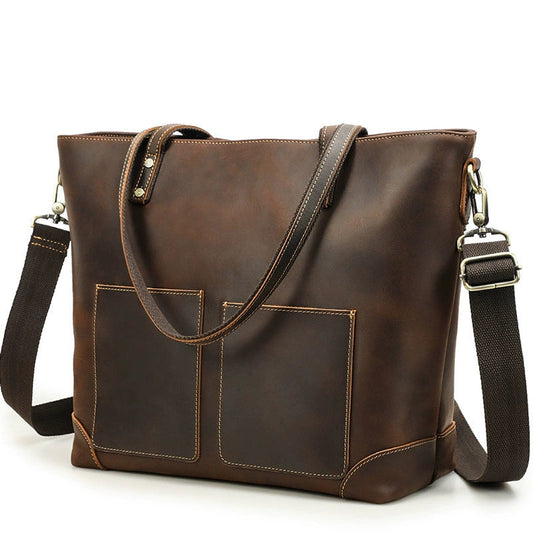
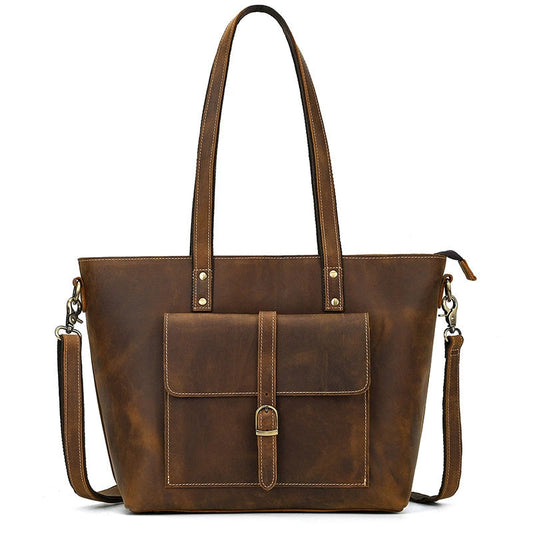
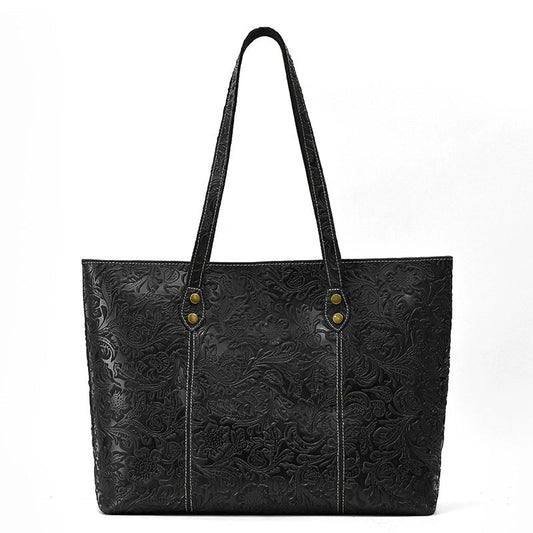
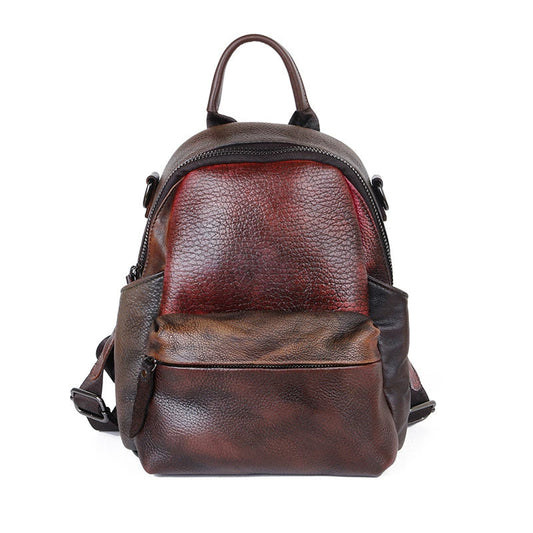

Porte-documents en cuir pleine fleur ou en cuir fleur corrigée : comment identifier une véritable qualité en 2026

Pourquoi la qualité du cuir définit un bon porte-documents en cuir
Lorsque les professionnels achètent un porte-documents en cuir en 2026, ils se concentrent généralement sur le style, la marque et le prix. Mais le facteur le plus important – celui qui détermine si votre porte-documents est plus beau après trois ans ou se désagrège après un an – est la qualité du cuir lui-même. Le cuir pleine fleur, le cuir fleur corrigée et le cuir reconstitué ont un aspect similaire sur une vignette de site Web, mais se comportent complètement différemment après des années d'utilisation quotidienne. Ce guide explique comment identifier la véritable qualité du cuir, ce que chaque grade signifie pour la durabilité et l'apparence, et comment entretenir un porte-documents en cuir afin qu'il devienne un investissement pour toute une carrière.
Les professionnels modernes transportent leur porte-documents dans les aéroports, lors de réunions avec des clients et sur les quais de gare de Londres, New York, Singapour et au-delà. C'est la pièce de tenue de travail que vous touchez plus que toute autre. Comprendre les qualités de cuir vous aide à acheter un porte-documents qui communique la compétence, protège votre ordinateur portable et vos documents, et s'améliore avec l'âge – au lieu d'un qui se décolle et se fissure en quelques mois.
Les grades de cuir expliqués : pleine fleur, fleur corrigée et au-delà
Le cuir est classé selon la couche de la peau utilisée et le degré de traitement. Le grade détermine la durabilité, l'apparence et la façon dont le cuir vieillit. Voici ce que chaque terme signifie réellement.
Cuir pleine fleur : La référence
Le cuir pleine fleur utilise toute l'épaisseur de la peau, avec le grain naturel (la surface extérieure avec toute sa texture et ses marques) laissé intact. Rien n'est poncé, de sorte que le cuir conserve toute sa force et développe une riche patine avec le temps. Le cuir pleine fleur est le plus durable et le plus beau avec l'âge, mais il est aussi le plus cher et présente un caractère naturel – petites cicatrices, variations de grain et plis qui font partie de la peau.
Cuir fleur corrigée : Poli et pratique
Le cuir fleur corrigée est le deuxième grade le plus élevé. La couche supérieure de la peau est poncée pour éliminer les imperfections, puis souvent gaufrée avec un grain artificiel. Cela rend la surface plus uniforme et résistante aux taches, au prix d'une certaine perte de durabilité et de développement de patine. Le cuir fleur corrigée est un excellent choix pour un porte-documents professionnel qui sera bien entretenu – il a un aspect net et résiste aux marques que le cuir pleine fleur affiche fièrement.
Cuir véritable et cuir reconstitué : Le piège marketing
C'est ici que les acheteurs se trompent. Le terme cuir véritable n'est pas un grade de qualité – c'est une étiquette légalement floue qui indique souvent un cuir de faible qualité fabriqué à partir des couches inférieures de la peau. Le cuir reconstitué est encore plus bas : il est fabriqué à partir de chutes de cuir broyées et collées avec du polyuréthane. Les deux pèleront et se fissureront en quelques années d'utilisation quotidienne. Un bon porte-documents en cuir ne devrait jamais être fabriqué à partir de cuir véritable ou reconstitué, quelle que soit la conviction du prix.
| Grade de cuir | Durabilité | Patine | Prix | Idéal pour |
|---|---|---|---|---|
| Pleine Fleur | Excellent — des décennies | Riche, se développe magnifiquement | Le plus élevé | Pièces d'héritage, usage quotidien |
| Fleur Corrigée | Bon — des années | Minime | Modéré | Look professionnel soigné |
| Véritable | Mauvais — se fissure | Aucune | Bas | À éviter pour un usage professionnel quotidien |
| Reconstitué | Très mauvais — se décolle | Aucune | Très bas | À éviter entièrement |
Pour un professionnel qui veut un porte-documents en cuir qui dure, le cuir pleine fleur est le grand gagnant. Parcourez notre collection de porte-documents en cuir véritable pour découvrir des options en cuir pleine fleur conçues pour des années d'utilisation quotidienne.

Cuir tanné végétal vs cuir tanné au chrome : Ce que cela signifie pour votre porte-documents
Au-delà du grade, la méthode de tannage façonne l'apparence et le vieillissement de votre porte-documents en cuir. Le tannage végétal utilise des tanins naturels provenant d'écorces d'arbres et d'autres sources végétales pendant des semaines ou des mois. Il produit un cuir rigide et dense avec une couleur chaude et naturelle qui s'intensifie considérablement pour former une riche patine. Le tannage au chrome est un processus industriel plus rapide utilisant des sels de chrome, produisant un cuir plus doux et plus souple qui résiste à l'eau mais développe moins de patine.
Pour un porte-documents professionnel, le cuir pleine fleur tanné végétal est le choix haut de gamme. Il conserve sa structure, acquiert une belle patine au fil des ans et peut être entretenu et reconditionné à plusieurs reprises. Le cuir tanné au chrome est plus indulgent et résistant à l'eau, mais ne vieillit pas avec le même caractère. De nombreux porte-documents haut de gamme utilisent un hybride – un corps tanné végétal avec des accents tannés au chrome pour la flexibilité aux points de tension. Sachez lequel vous achetez en vérifiant la description du produit ou en demandant au fabricant.
Qualité de construction : Coutures, quincaillerie et structure
La qualité du cuir ne signifie rien si le porte-documents est mal construit. Lors de l'évaluation d'un porte-documents en cuir, examinez ces détails de construction :
- Coutures : Recherchez des coutures denses, régulières et verrouillées (point sellier ou point de chaînette) aux points de tension. Le fil doit être serré sans boucles lâches. Comparez-les aux coins du sac, où la défaillance commence le plus souvent.
- Quincaillerie : La quincaillerie en laiton massif ou en acier inoxydable vieillit avec grâce et résiste à la corrosion. Un plaquage nickel bon marché s'écaille en quelques mois. Les fermetures éclair doivent être YKK ou une marque de qualité équivalente et fonctionner en douceur.
- Structure : Un porte-documents professionnel a besoin d'une base structurée et de coins renforcés pour qu'il tienne debout lorsque vous le posez et protège un ordinateur portable. Appuyez sur les côtés – un porte-documents de qualité conserve sa forme plutôt que de s'affaisser.
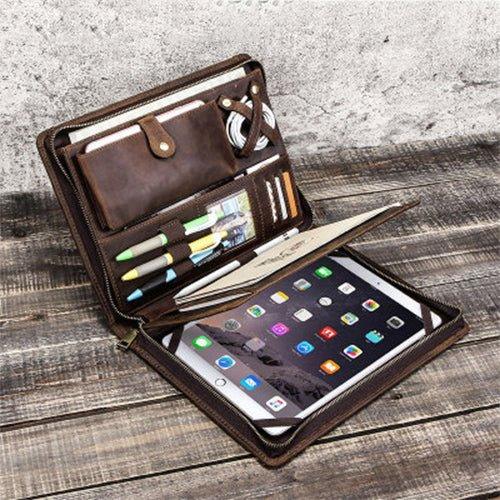
- Doublure et séparateurs : Une doublure robuste (toile, sergé ou daim) protège vos documents et cache le revers rugueux du cuir. Des séparateurs rembourrés pour un ordinateur portable et une tablette sont essentiels pour les professionnels modernes.
- Bandoulière et poignées : Les points de fixation des poignées renforcés et rivetés préviennent la défaillance la plus courante. Si le porte-documents a une bandoulière, elle doit être épaisse, rembourrée et solidement attachée.
Ces détails distinguent un porte-documents en cuir qui survit à cinq ans de trajets quotidiens de celui qui doit être remplacé tous les dix-huit mois. Pour une option structurée avec une construction renforcée, explorez notre collection de porte-documents.
Styles de porte-documents en cuir pour les professionnels modernes
Le porte-documents à rabat classique
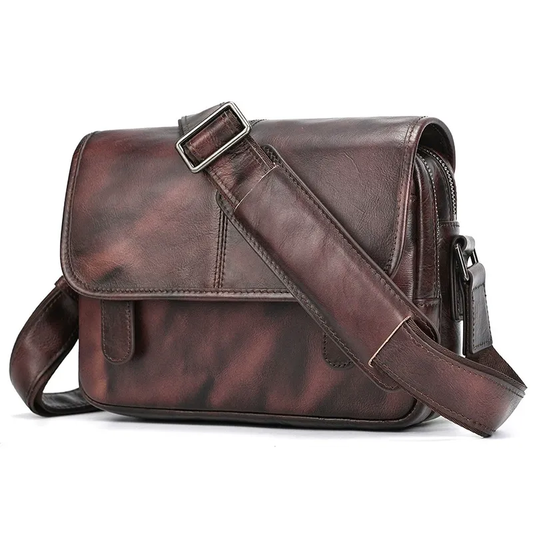
Le porte-documents traditionnel à rabat supérieur, porté à la main ou à l'épaule, est la silhouette la plus reconnaissable. Il offre un espace généreux, souvent avec des soufflets extensibles, et dégage une image intemporelle de professionnalisme. Il convient aux avocats, aux consultants et aux cadres qui apprécient une présence classique et autoritaire dans la salle de conférence.
Le porte-documents à fermeture éclair supérieure
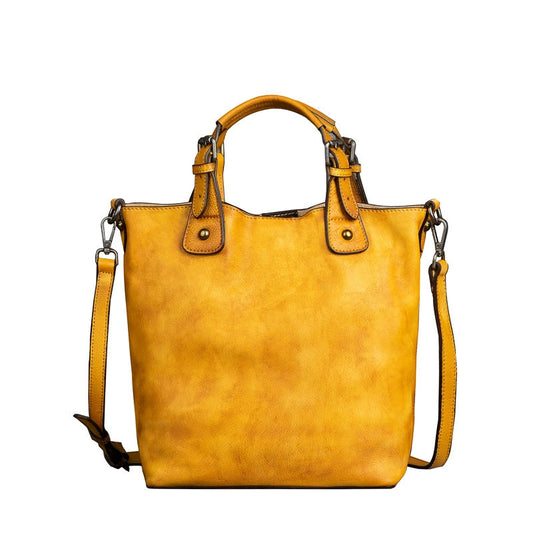
Un porte-documents à fermeture éclair supérieure avec deux poignées combine la structure d'un porte-documents avec une sensation plus décontractée et contemporaine. Il est plus facile d'accès qu'un modèle à rabat, peut contenir un ordinateur portable et des fichiers en toute sécurité, et passe facilement du bureau au week-end. Un favori des professionnels créatifs et des entrepreneurs.
Le porte-documents fin pour ordinateur portable
Pour les professionnels qui voyagent léger – un ordinateur portable, une tablette et quelques documents – le porte-documents en cuir fin est idéal. Il conserve un profil bas dans les rames de métro bondées et les compartiments supérieurs, et il s'associe à un portefeuille en cuir pour un ensemble professionnel cohérent. De nombreux porte-documents fins fonctionnent également comme un hybride de sac à dos en cuir lorsque vous avez besoin de libérer vos mains.
Contexte de style régional pour les porte-documents en cuir
Europe : Formalité et savoir-faire
Les professionnels européens des centres financiers comme Londres, Zurich et Francfort ont tendance à privilégier les porte-documents en cuir structurés et classiques en marron foncé, beige ou noir. L'accent est mis sur un savoir-faire discret. À Paris et Milan, un porte-documents en cuir pleine fleur bien fait est autant une déclaration de style qu'un sac de travail. Pour les voyages en train transfrontaliers via l'Eurostar ou le TGV, un porte-documents mince qui se glisse sous un siège et a l'air élégant dans un wagon de première classe est la norme.
Asie : Compact et connecté
Dans les systèmes de transport denses de Tokyo, Singapour et Hong Kong, les professionnels ont besoin de porte-documents compacts, sécurisés et organisés. Un porte-documents en cuir fin avec des compartiments dédiés pour un ordinateur portable, une tablette et un téléphone correspond à la fois à l'image professionnelle et aux exigences pratiques des trajets quotidiens bondés. Dans les climats humides, optez pour du cuir tanné au chrome ou bien entretenu qui résiste à l'humidité. Un portefeuille en cuir assorti avec protection RFID est un complément courant pour les voyageurs qui traversent des centres très fréquentés.
Amériques : Polyvalent et durable
Les professionnels nord-américains concilient souvent les journées de bureau avec les voyages et les réunions avec les clients. Ils privilégient donc les porte-documents en cuir polyvalents qui passent de la salle de conférence à l'aéroport. Un porte-documents en cuir pleine fleur avec un compartiment pour ordinateur portable et un passant pour trolley est idéal pour les consultants qui voyagent en avion chaque semaine. En Amérique latine, où la culture d'entreprise valorise une apparence soignée, un porte-documents classique à fermeture éclair supérieure ou à rabat de couleur riche, comme le marron ou le cognac, est un signe de professionnalisme et de fiabilité.
Comment entretenir un porte-documents en cuir : Nettoyage et réparation
Un porte-documents en cuir pleine fleur est un investissement qui rapporte sur une décennie ou plus – mais seulement si vous en prenez soin. Un entretien approprié garde le cuir souple, prévient les craquelures et préserve son apparence.
Erreurs courantes à éviter lors de l'achat d'un porte-documents en cuir
Même les acheteurs expérimentés tombent dans quelques pièges prévisibles lors de l'achat d'un porte-documents professionnel. Connaître ces erreurs à l'avance vous fait économiser de l'argent et de la déception.
- Courir après le prix le plus bas pour du "cuir" : Si un porte-documents en cuir pleine fleur est au prix d'un en nylon, il s'agit presque certainement de cuir véritable ou reconstitué. Le cuir pleine fleur de qualité a un certain coût. Un porte-documents "en cuir" d'un prix suspect est non pas une bonne affaire, mais un futur déchet.
- Juger uniquement d'après la photo du site web : L'éclairage masque les imperfections du cuir et la différence entre les grades. Lisez les spécifications du matériau, pas seulement la description. Si la page produit ne mentionne que "cuir véritable" sans préciser le grade, soyez méfiant.
- Ignorer l'intérieur : Un bel extérieur en cuir avec une doublure en polyester fragile et sans protection pour ordinateur portable est une déception. Inspectez l'organisation intérieure et le rembourrage avant d'acheter, car l'extérieur vend le sac mais l'intérieur est ce que vous utilisez tous les jours.
- Acheter trop petit pour votre transport réel : Un porte-documents fin est superbe jusqu'à ce que vous ne puissiez pas y ranger votre ordinateur portable, votre chargeur et vos documents. Mesurez vos affaires quotidiennes – ordinateur portable, tablette, chargeurs, carnet, bouteille d'eau – et assurez-vous que le porte-documents les accueille avec de l'espace supplémentaire.
- Ignorer la politique de retour : Un porte-documents en cuir est un achat tactile. Achetez auprès d'un vendeur avec une fenêtre de retour raisonnable afin de pouvoir inspecter le cuir, les fermetures éclair et les coutures en personne avant de vous engager à le conserver.
En évitant ces erreurs, vous orienterez votre budget vers un porte-documents qui vous servira réellement pendant des années plutôt que vers un produit similaire qui vous décevra en quelques mois.
- Conditionnez régulièrement : Appliquez un après-shampoing pour cuir de qualité tous les 3 à 6 mois, plus souvent dans les climats secs et moins dans les climats humides. Cela reconstitue les huiles naturelles qui maintiennent le cuir souple.
- Nettoyez délicatement : Essuyez avec un chiffon doux légèrement humide pour enlever la poussière et la saleté. Évitez le savon de sellerie agressif pour le nettoyage de routine – il élimine les huiles. Pour les taches, tamponnez (ne frottez jamais) avec un chiffon sec.
- Protégez de l'eau : Bien que le cuir pleine fleur soit résistant à l'eau, un trempage prolongé est dommageable. Si le sac est mouillé, laissez-le sécher à l'air libre à température ambiante, à l'abri de la chaleur directe, puis conditionnez-le.
- Rangez correctement : Lorsqu'il n'est pas utilisé, rembourrez légèrement le porte-documents pour qu'il conserve sa forme et rangez-le dans un sac de protection contre la poussière, dans un endroit frais et sec, à l'abri de la lumière directe du soleil qui peut décolorer le cuir.
- Réparez tôt : Traitez les coutures lâches ou la quincaillerie usée avant que cela ne devienne une défaillance structurelle. Un réparateur de cuir professionnel peut souvent réparer de petits problèmes à peu de frais, prolongeant la durée de vie de votre porte-documents de plusieurs années.
Que transporter dans un porte-documents en cuir : Construire votre kit professionnel quotidien
Un porte-documents en cuir de qualité n'est utile que par ce que vous y mettez. La constitution d'un kit quotidien réfléchi vous garde préparé, organisé et professionnel, quelle que soit la journée de travail. Voici une liste pratique de ce que vous pouvez transporter pour un professionnel moderne :
- Ordinateur portable et chargeur : Votre appareil principal dans une pochette rembourrée, plus un chargeur compact ou une batterie externe dans une poche dédiée.
- Tablette ou carnet : Un appareil secondaire pour les notes et les croquis, ou un carnet de qualité relié en cuir pour les réunions.
- Documents et cartes : Un porte-documents mince pour les contrats et les imprimés, plus un portefeuille en cuir avec protection RFID pour votre carte d'identité, vos cartes et votre argent.
- Instruments d'écriture : Un stylo fiable et un de rechange, rangés dans des fentes pour stylos afin de protéger la doublure intérieure de l'encre.
- Kit de petits essentiels : Écouteurs, câbles de charge, un porte-cartes et des cartes de visite dans une poche intérieure organisée.
- Articles personnels : Une bouteille d'eau dans une poche latérale, une couche légère et tout médicament ou article d'hygiène de base dont vous avez besoin pour les longues journées.
Organisez votre kit de manière à ce que les articles que vous utilisez le plus souvent – téléphone, clés, cartes – se trouvent dans des poches à accès rapide, tandis que les articles rarement utilisés sont plus profonds. Un porte-documents à plusieurs compartiments garde votre kit rangé et protège les articles fragiles des déplacements. Pour un transport professionnel coordonné, associez votre porte-documents à un portefeuille en cuir fin de notre collection pour compléter votre look et garder vos essentiels en sécurité lors de vos déplacements.
FAQ : Porte-documents en cuir pour les professionnels modernes
Quelle est la différence entre le cuir pleine fleur et le cuir fleur corrigée pour un porte-documents ?
Le cuir pleine fleur utilise la peau entière avec sa surface naturelle intacte, ce qui en fait l'option la plus durable et qui vieillit le mieux – il développe une riche patine avec le temps. Le cuir fleur corrigée est poncé pour obtenir une surface plus lisse et uniforme, ce qui le rend plus résistant aux taches mais moins durable et avec une patine minimale. Pour un porte-documents professionnel destiné à durer, le cuir pleine fleur est le meilleur investissement.
Combien devrais-je dépenser pour un porte-documents en cuir de qualité ?
Un porte-documents en cuir pleine fleur de qualité qui durera une décennie coûte généralement entre 200 et 600 USD. En dessous de 100 USD, vous achetez presque certainement du cuir véritable ou reconstitué qui pèlera en quelques années. La fourchette de 250 à 400 USD est le point d'équilibre qualité-prix pour un porte-documents pleine fleur bien construit d'un fabricant réputé. Au-dessus de 600 USD, vous payez de plus en plus pour le prestige de la marque plutôt que pour des matériaux proportionnellement meilleurs.
Un porte-documents en cuir peut-il contenir un ordinateur portable ?
Oui. La plupart des porte-documents en cuir modernes incluent une pochette rembourrée dédiée pour ordinateur portable. Choisissez un porte-documents avec une pochette adaptée à la taille de votre ordinateur portable (13, 14, 15 ou 16 pouces). Certains porte-documents minces sont uniquement conçus pour ordinateur portable, tandis que les modèles plus grands à rabat ou à fermeture éclair supérieure peuvent accueillir un ordinateur portable, une tablette, des documents et des chargeurs. Vérifiez toujours les dimensions intérieures par rapport à votre appareil avant d'acheter.
Un porte-documents en cuir est-il professionnel pour un entretien d'embauche ou une réunion client ?
Absolument. Un porte-documents en cuir pleine fleur bien entretenu est largement considéré comme l'option la plus professionnelle pour les entretiens et le travail en contact avec la clientèle. Il communique la compétence, la fiabilité et l'attention aux détails d'une manière que les sacs à dos en nylon ou les classeurs en plastique ne peuvent pas. Pour un impact maximal, associez-le à un portefeuille en cuir fin et entretenez le cuir pour qu'il présente bien.

Conclusion : Investissez dans un porte-documents en cuir conçu pour durer
Un porte-documents en cuir n'est pas seulement un sac – c'est un compagnon quotidien, une déclaration professionnelle et un investissement. La clé d'un bon achat est de comprendre le cuir lui-même. Choisissez le cuir pleine fleur plutôt que le cuir fleur corrigée lorsque vous le pouvez, évitez entièrement le cuir véritable et le cuir reconstitué, et inspectez la construction – les coutures, la quincaillerie et la structure – avant de vous engager. Adaptez le style à votre vie professionnelle, qu'il s'agisse d'un porte-documents classique à rabat pour la salle de conférence ou d'un porte-documents fin pour ordinateur portable pour les trajets rapides en ville.
Prenez soin de votre porte-documents avec un conditionnement régulier et des réparations rapides, et il vous servira pendant une décennie ou plus, développant une patine qui racontera l'histoire de votre carrière. Le bon porte-documents en cuir est l'un des rares achats professionnels qui s'améliore avec le temps – et cela vaut l'investissement.