

Guide de rangement du sac à dos polochon hybride : comment remplir un sac convertible pour voyager léger en 2026

Un bon sac de voyage hybride sac à dos/sac de sport est ce qui se rapproche le plus d'un métamorphe pour la plupart des voyageurs. Il se porte sur l'épaule comme un sac de sport dans un hall d'hôtel, puis se transforme en sac à dos dès que vous rencontrez un escalier, une ruelle pavée ou une marche de dix minutes jusqu'à la gare. Mais la magie n'opère que si vous le rangez correctement. Si vous le chargez comme un sac de sport ordinaire, le poids s'éloigne de votre colonne verté'brale ; si vous le chargez comme un sac de randonnée, la coque souple se déforme aux mauvais endroits. Ce guide vous montre exactement comment ranger un sac de voyage hybride sac à dos/sac de sport pour un véritable voyage avec un seul bagage en 2026, avec un ordre de chargement reproductible, une vérification de la réalité régionale et un exemple de kit de trois jours qui tient dans une seule coque.
Nous avons testé des dizaines d'hybrides lors de vrais voyages, des escapades citadines d'un week-end à Lisbonne aux boucles de deux semaines en sac à dos à travers l'Asie du Sud-Est, et la leçon est toujours la même : le sac n'est que la moitié du système. L'autre moitié est la façon dont vous le chargez. Si l'ordre de chargement est correct, un modeste hybride de 30 litres se porte comme un rêve ; si vous vous trompez, même un modèle premium de 40 litres ressemble à un sac de briques. Lisez la suite pour découvrir la méthode que nous utilisons chaque fois que nous voyageons.
Ce qui rend un sac de voyage hybride sac à dos/sac de sport différent
La plupart des sacs sont conçus pour une seule tâche. Un sac de sport est un tube souple que l'on porte par les poignées ou une bandoulière ; un sac à dos transfère le poids à une ceinture rembourrée et un panneau dorsal ventilé. Un sac de voyage hybride sac à dos/sac de sport combine les deux idées en une seule coque, généralement avec des bretelles escamotables, une poignée de transport à chaque extrémité et une large ouverture en U ou à clapet. Le résultat est un seul sac qui fonctionne comme bagage enregistré, sac de sport, sac de voyage pour le week-end et sac de banlieue sans que vous ayez à posséder quatre pièces distinctes.
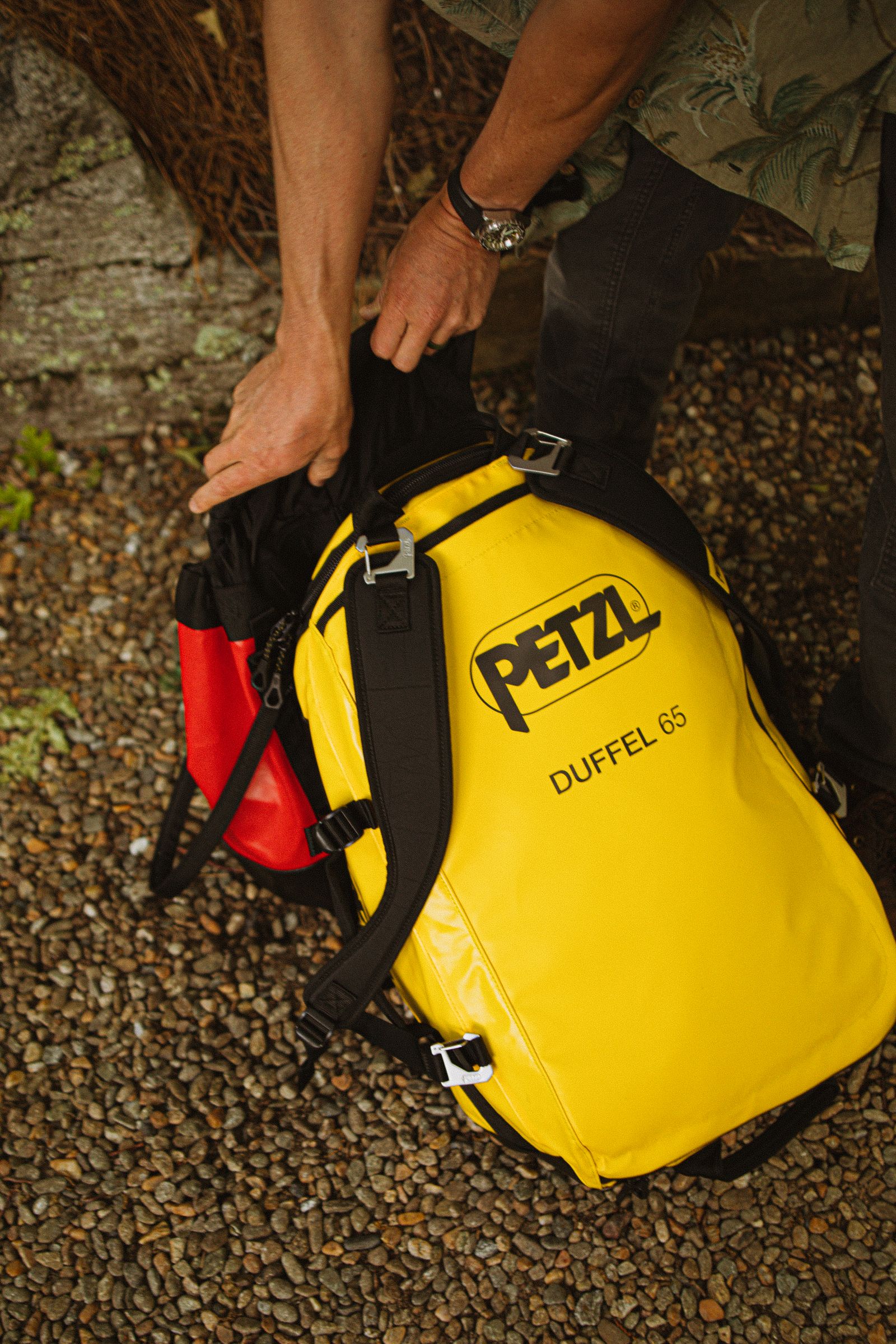
Le piège est que l'hybride hérite des faiblesses des deux parents si vous ignorez sa conception. Les côtés souples qui le rendent léger permettent également au contenu de se déplacer, et les sangles convertibles qui le rendent polyvalent peuvent s'emmêler si elles sont laissées pendantes. La discipline de l'emballage est ce qui transforme ces compromis en avantages, et le reste de ce guide est cette discipline écrite.
Sac de voyage hybride sac à dos/sac de sport vs deux sacs séparés
Avant de faire vos bagages, il est utile de savoir quand un hybride l'emporte sur un sac à dos et un sac de sport. Le tableau ci-dessous est le raccourci de décision que nous utilisons lorsque nous conseillons les voyageurs, et il explique pourquoi tant de gens finissent par vendre leur deuxième sac.
| Facteur | Un hybride | Sac à dos + Sac de sport |
|---|---|---|
| Poids total transporté | Plus léger (une coque) | Plus lourd (deux coques) |
| Flexibilité par voyage | Changement de mode à la volée | Choisir le bon sac à chaque étape |
| Discipline de l'emballage nécessaire | Élevée (les côtés souples se déplacent) | Moyenne |
| Coût | Un achat | Deux achats |
| Idéal pour | Voyageurs avec un seul bagage, courts séjours | Longs séjours, gym + voyage séparés |
Si vous faites principalement des voyages de deux à quatre jours, voyagez avec un seul sac, ou détestez gérer plusieurs pièces, l'hybride gagne en commodité et en coût par voyage. Si vous avez besoin d'un sac de trekking dédié de 40 litres et d'un sac de sport séparé de 60 litres pour transporter du matériel, deux sacs ont toujours du sens. Pour tous les autres, l'hybride est le choix par défaut le plus intelligent.
Comment choisir la bonne capacité
La capacité détermine l'effort nécessaire pour la méthode d'emballage. Adaptez la coque à votre voyage typique avant de vous soucier de l'ordre de chargement.
| Taille | Meilleure utilisation | Autorisé en cabine ? |
|---|---|---|
| 25-30 L | Week-end, 1-3 jours | Généralement oui |
| 30-40 L | 3-5 jours, voyage avec un seul bagage | Souvent oui (objet personnel) |
| 40-50 L | 5-7 jours, beaucoup de matériel | Rarement en cabine |
Pour un véritable voyage avec un seul bagage, 30 à 40 litres sont l'idéal. Il contient une garde-robe de trois jours plus des appareils électroniques et se glisse quand même sous un siège dans la plupart des compagnies aériennes lorsqu'il est emballé à plat. Tout ce qui est plus grand vous incite à trop remplir et finit généralement par être enregistré.
Les matériaux comptent — Hybrides en toile, nylon et cuir
Le tissu de la coque modifie la façon dont vous emballez, et pas seulement l'apparence du sac. La toile cirée est élégante et résistante à la pluie, mais lourde une fois mouillée ; elle épouse également votre charge, ce qui aide un hybride souple à conserver sa forme. Le nylon est plus léger et sèche rapidement, idéal pour les régions humides, mais il montre les éraflures. Les hybrides garnis de cuir ont un aspect haut de gamme et vieillissent magnifiquement, mais nécessitent un entretien et ajoutent du poids. Choisissez la toile pour la ville et le style, le nylon pour les voyages actifs, et les accents de cuir si vous voulez un sac qui fait aussi office de sac de travail.
L'ordre de chargement — Où chaque article doit se trouver
Un hybride récompense un ordre de chargement constant. Suivez cette séquence à chaque fois et le sac se comportera de la même manière à chaque voyage, ce qui signifie que vous n'aurez plus à réapprendre à faire vos bagages à chaque fois que vous quittez la maison.
Commencez par le cœur lourd et encombrant
Placez les chaussures, une trousse de toilette et vos vêtements roulés les plus lourds au centre du compartiment principal, serrés contre le panneau arrière. Comme les bretelles du sac à dos se trouvent derrière ce panneau, le fait de garder la masse au centre empêche le sac de tirer vers l'arrière lorsqu'il est porté comme un sac à dos. Deux paires de chaussures côte à côte à la base, talons vers l'extérieur, constituent la fondation la plus stable que nous ayons trouvée, et cela crée une plateforme plate pour tout ce qui se trouve au-dessus.
Enroulez les articles souples autour du cœur
Superposez des t-shirts, des tricots et un cube de rangement de sous-vêtements autour du cœur lourd. Les articles souples agissent comme un coussin qui empêche la coque de se bomber et protège tout ce qui est fragile. Réservez un cube pour les "compressibles" que vous pouvez glisser dans les poches latérales pour affiner la forme. C'est aussi là qu'un sweat à capuche plié prend sa place : il rembourre l'ordinateur portable et remplit l'espace vide en même temps.
Utilisez les cubes de rangement comme ossature
Les cubes de rangement ne sont pas seulement destinés à l'ordre. Dans un hybride souple, ce sont des éléments structurels. Un cube rigide le long du panneau arrière maintient la charge à plat contre votre colonne vertébrale ; des cubes plus petits empilés devant empêchent la coque de s'affaisser vers l'intérieur. Choisissez des cubes légèrement rigides et vous remarquerez que le sac tient debout tout seul en mode sac de sport, ce qui facilite grandement le rangement à l'hôtel.
Utilisez le rabat et les poches d'extrémité pour les essentiels de transit
La poche à accès rapide et les extrémités sont destinées aux articles dont vous avez besoin sans ouvrir la coque principale : chargeur, passeport, écouteurs, tote bag plié et une collation. Gardez-les légers afin que le sac reste équilibré lorsqu'il est porté sur une épaule en mode sac de sport. Tout ce dont vous pourriez avoir besoin à la sécurité y va afin de ne pas déballer le cœur dans une file d'attente.
Mode sac à dos vs mode sac de sport — Quand utiliser chacun
L'intérêt de l'hybride est de choisir le mode de transport du moment. Utilisez cette antisèche, et vous ne vous battrez plus avec le sac.
| Scénario | Utilisation | Pourquoi |
|---|---|---|
| Terminal d'aéroport, longues marches | Sac à dos | La ceinture de hanche soulage vos épaules |
| Hall d'hôtel, court transport | Sac de sport | Prise rapide, aspect élégant |
| Rues pavées, escaliers | Sac à dos | Stabilité et mains libres |
| De la salle de sport au bureau | Sac de sport | Facile à porter à l'épaule |
| Transport en commun bondé | Sac à dos, sangles serrées | Moins d'accrocs, plus difficile à arracher |
Rangez les sangles inutilisées. La plupart des hybrides ont un panneau zippé ou auto-agrippant qui cache le harnais du sac à dos ; le fait de le ranger empêche les sangles de s'accrocher aux rails des tapis roulants et maintient la silhouette épurée du sac de sport lorsque vous voulez ressembler à un voyageur plutôt qu'à un randonneur.
Convertissez les modes en dix secondes
Nouvelle arrivee
- Prix habituel
- $ 186.99
- Prix habituel
-
- Prix soldé
- $ 186.99
- Prix habituel
- $ 191.99
- Prix habituel
-
- Prix soldé
- $ 191.99
- Prix habituel
- $ 191.99
- Prix habituel
-
- Prix soldé
- $ 191.99
- Prix habituel
- $ 158.99
- Prix habituel
-
- Prix soldé
- $ 158.99
- Prix habituel
- $ 174.99
- Prix habituel
-
- Prix soldé
- $ 174.99
- Prix habituel
- $ 168.99
- Prix habituel
-
- Prix soldé
- $ 168.99
- Prix habituel
- $ 167.99
- Prix habituel
-
- Prix soldé
- $ 167.99
- Prix habituel
- $ 161.99
- Prix habituel
-
- Prix soldé
- $ 161.99
- Prix habituel
- $ 157.99
- Prix habituel
-
- Prix soldé
- $ 157.99
- Prix habituel
- $ 84.99
- Prix habituel
-
- Prix soldé
- $ 84.99
Meilleures ventes
- Prix habituel
- $ 134.74
- Prix habituel
-
$ 141.06 - Prix soldé
- $ 134.74
- Prix habituel
- $ 145.90
- Prix habituel
-
$ 147.49 - Prix soldé
- $ 145.90
- Prix habituel
- Du $ 122.72
- Prix habituel
-
$ 147.49 - Prix soldé
- Du $ 122.72
- Prix habituel
- $ 103.67
- Prix habituel
-
- Prix soldé
- $ 103.67

- Prix habituel
- $ 133.58
- Prix habituel
-
- Prix soldé
- $ 133.58
- Prix habituel
- $ 170.57
- Prix habituel
-
$ 185.10 - Prix soldé
- $ 170.57
- Prix habituel
- $ 172.14
- Prix habituel
-
- Prix soldé
- $ 172.14
- Prix habituel
- $ 225.09
- Prix habituel
-
- Prix soldé
- $ 225.09
- Prix habituel
- $ 110.52
- Prix habituel
-
- Prix soldé
- $ 110.52
- Prix habituel
- $ 152.64
- Prix habituel
-
- Prix soldé
- $ 152.64
Modifier l'option
Prévenez-moi
Trending
Popular Products
- Prix habituel
- $ 186.99
- Prix habituel
-
- Prix soldé
- $ 186.99
- Prix habituel
- $ 191.99
- Prix habituel
-
- Prix soldé
- $ 191.99
- Prix habituel
- $ 191.99
- Prix habituel
-
- Prix soldé
- $ 191.99
- Prix habituel
- $ 158.99
- Prix habituel
-
- Prix soldé
- $ 158.99
- Le choix d'une sélection entraîne l'actualisation de la page entière.