
Die Top 10 Lederrucksäcke für jeden Lebensstil 2026: Arbeit, Reisen und Alltag

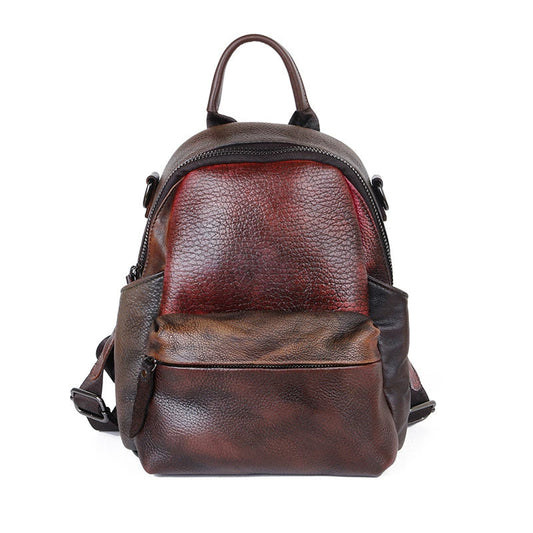
Der Lederrucksack hat sich von einem Nischenaccessoire zu einem unverzichtbaren Mainstream-Produkt entwickelt. Im Jahr 2026 ist er die bevorzugte Tasche für Berufstätige, die Stil wünschen, ohne auf Praktikabilität zu verzichten, für Reisende, die Langlebigkeit mit Eleganz verbinden möchten, und für alle, die ein Objekt schätzen, das mit dem Alter besser wird, anstatt zu verfallen.
Dieser Leitfaden behandelt die besten Lederrucksack-Stile für jeden Lebensstil – vom täglichen Pendler bis zum Wochenendabenteurer, vom Minimalisten bis zum Maximalisten – sowie worauf bei Qualitätsleder zu achten ist, wie man in seine Investition pflegt und wie man den richtigen Rucksack für seine spezifischen Bedürfnisse auswählt.
Warum einen Lederrucksack im Jahr 2026 wählen?
Bevor wir spezifische Stile erkunden, wollen wir uns ansehen, warum ein Lederrucksack die Investition im Vergleich zu synthetischen Alternativen wert ist:
- Langlebigkeit: Ein Vollnarbenlederrucksack kann bei grundlegender Pflege problemlos 20–30 Jahre halten. Die meisten Synthetik-Rucksäcke halten 3–7 Jahre, bevor Reißverschlüsse versagen, Stoff reißt oder Beschichtungen abblättern.
- Patina: Leder altert nicht nur – es verbessert sich. Die Oberfläche entwickelt in Bereichen häufigen Kontakts eine reiche, glänzende Patina, wodurch eine einzigartig persönliche Tasche entsteht, die Ihre Geschichte erzählt.
- Nachhaltigkeit: Obwohl die Lederproduktion Umweltauswirkungen hat, ersetzt eine Tasche, die Jahrzehnte hält, Dutzende von Wegwerfalternativen. Über die Lebensdauer hinweg ist der Fußabdruck von Leder pro Jahr geringer als der von Kunststoffen.
- Stilvielfalt: Ein hochwertiger Lederrucksack passt sich nahtlos vom Büro über den Flughafen bis zum Wochenmarkt an, ohne in irgendeiner Umgebung fehl am Platz zu wirken.
- Reparierbarkeit: Leder kann unbegrenzt nachgenäht, aufgearbeitet und repariert werden – im Gegensatz zu synthetischen Stoffen, die nach Beschädigung praktisch Einwegprodukte sind.
Durchstöbern Sie unsere Kollektion an echten Lederrucksäcken, um die Vielfalt der verfügbaren Stile zu sehen.
Lederqualitäten: Was wirklich zählt
Das Verständnis von Lederqualitäten ist entscheidend bei der Auswahl eines Lederrucksacks. Die Branche verwendet verwirrende Begriffe, aber hier ist, was wirklich zählt:
| Qualität | Güte | Eigenschaften | Lebensdauer |
|---|---|---|---|
| Vollnarbenleder | Höchste | Natürliche Oberfläche intakt, sichtbare Narbung, entwickelt Patina, am haltbarsten | 20–30+ Jahre |
| Top-Grain-Leder | Hoch | Geschliffen, um Unebenheiten zu entfernen, gleichmäßigeres Aussehen, etwas weniger haltbar | 15–25 Jahre |
| Echtes Leder | Niedrig–Mittel | Geteilte Schicht verbunden und bearbeitet; „echt“ ist eine Qualitätsstufe, keine Garantie für Qualität | 3–10 Jahre |
| Spaltleder (Bonded Leather) | Niedrigste | Lederreste mit Polyurethan verklebt; im Wesentlichen Leder-Spanplatte | 1–3 Jahre |
Die goldene Regel: Wenn ein Rucksack einfach als „echtes Leder“ beworben wird, ohne Vollnarben- oder Top-Grain-Leder anzugeben, gehen Sie davon aus, dass es sich um die niedrigste akzeptable Qualität handelt. Achten Sie auf Transparenz bezüglich der Gerberei, der Lederherkunft und der spezifischen Qualität. Qualitätshersteller sind stolz darauf, diese Details zu teilen.
Top Lederrucksack-Stile für jeden Lebensstil

1. Der professionelle Pendler
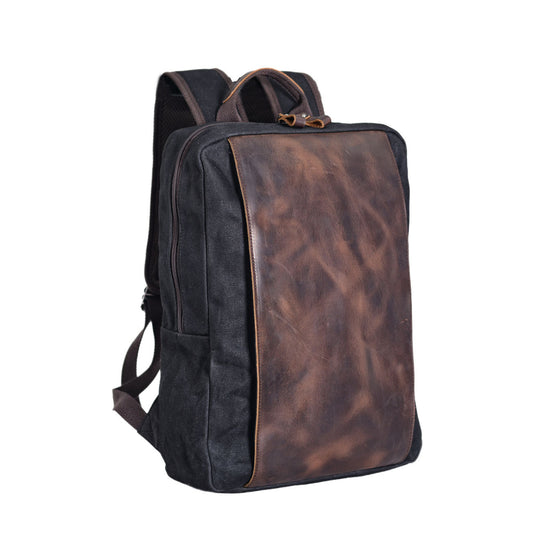
Für den Büro- bis-überall-Profi ist ein eleganter Lederrucksack mit einem speziellen Laptopfach (15–17 Zoll), minimalistischem Design und gepolsterten Schultergurten unerlässlich. Achten Sie auf vegetabil gegerbtes Vollnarbenleder in Dunkelbraun, Schwarz oder Cognac. Interne Organisation (Stiftfächer, Handytasche, Dokumentenfach) trennt Arbeitsutensilien von persönlichen Gegenständen.
Am besten geeignet für: Tägliche Pendler, Geschäftsreisende, Berater, Anwälte, Kreative in beruflichen Umgebungen.
2. Der Vintage-Abenteurer
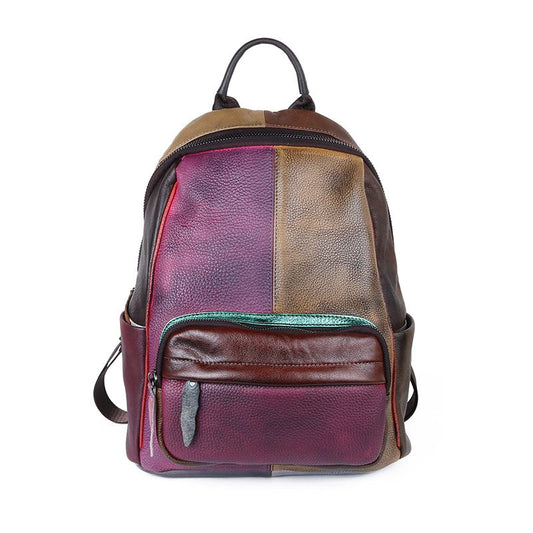
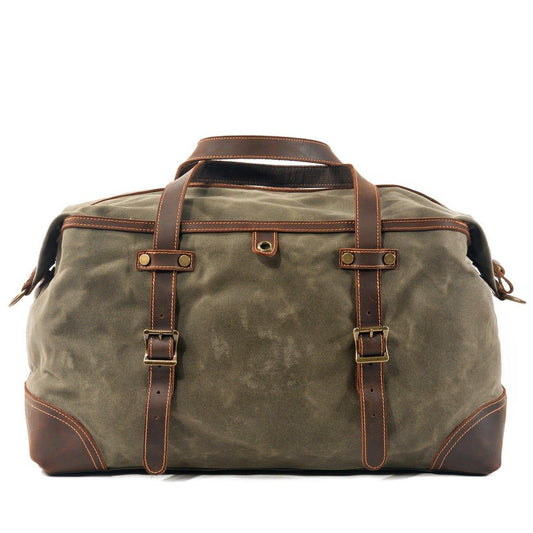
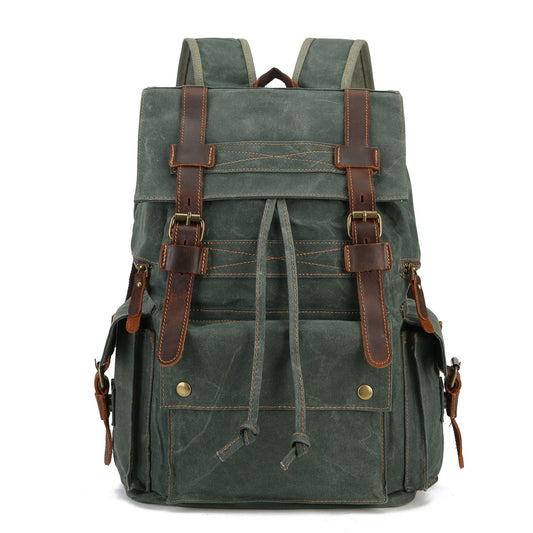
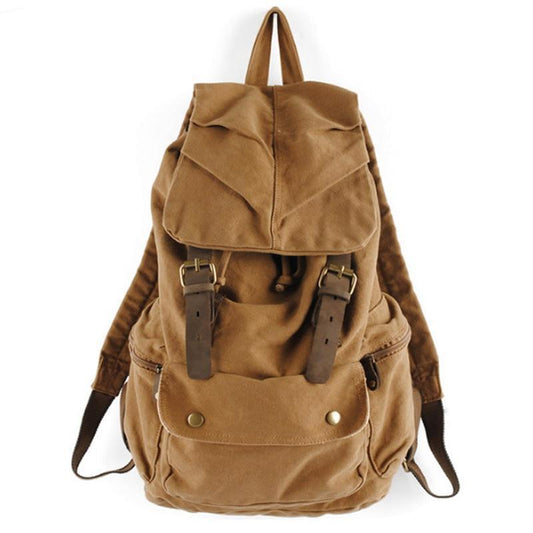
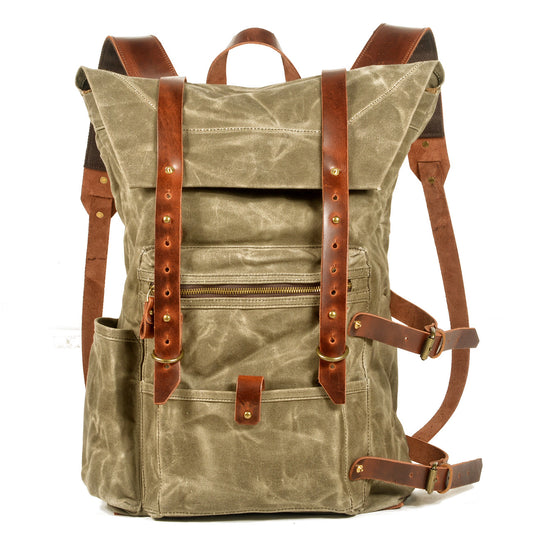
Robust, charakterreich und für Erkundungen gebaut – der Vintage-Abenteurer-Stil umarmt die natürlichen Unvollkommenheiten des Leders. Kordelzugverschlüsse unter Schnallenklappen, Messingbeschläge und unstrukturierte Silhouetten erinnern an klassische Rucksäcke. Diese Rucksäcke sehen mit jedem Kratzer und jeder Schramme besser aus.
Am besten geeignet für: Wochenendreisende, kreative Berufe, Fotografen, alle, die Charakter über Perfektion bevorzugen.
3. Der minimalistische Tagesrucksack
Klare Linien, reduzierte Hardware und leichte Konstruktion definieren den minimalistischen Lederrucksack. Diese Taschen haben typischerweise ein Volumen von 15–22 Litern – genug für einen Laptop, Notizbuch, Wasserflasche und eine leichte Schicht, aber nicht mehr. Der Fokus liegt auf Einfachheit und Materialqualität.
Am besten geeignet für: Studenten, Stadterkunder, Minimalisten, alle, die leichtes Gepäck tragen.
4. Das Reise-Arbeitstier
Größere Kapazität (25–35 Liter), Klappöffnung für einfaches Packen, Durchschiebeschlaufe für Gepäck und mehrere Fächer für Organisation. Das Reise-Arbeitstier schließt die Lücke zwischen Tagesrucksack und Handgepäckkoffer, erfüllt oft die Abmessungen für persönliche Gegenstände von Fluggesellschaften und bietet gleichzeitig genügend Platz für einen Wochenendausflug.
Am besten geeignet für: Vielreisende, One-Bag-Reisende, digitale Nomaden, lange Wochenendausflüge.
5. Das konvertible Hybridmodell
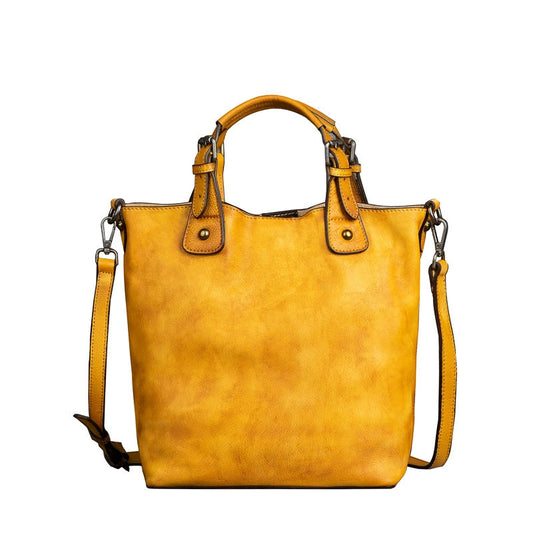
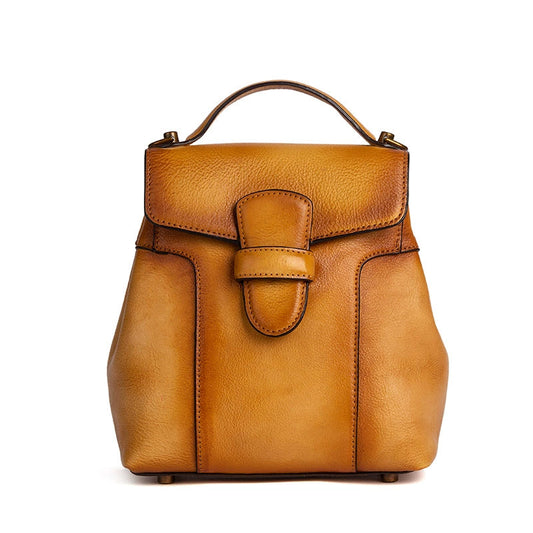
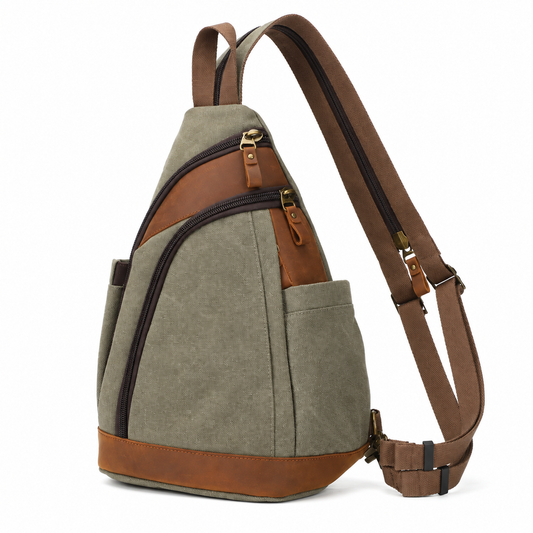
Convertible Designs, die sich von einem Rucksack zu einer Aktentasche umwandeln lassen, bieten maximale Vielseitigkeit. Versteckte Gurte lassen sich verstauen, wenn Sie ihn als Aktentasche tragen möchten; bei Bedarf für freihändige Mobilität ausklappen. Dieser Stil eignet sich hervorragend für Geschäftsreisen, bei denen Sie direkt vom Flughafen zu einem Meeting gehen könnten.
Am besten geeignet für: Geschäftsreisende, Vertriebsprofis, Konferenzteilnehmer.
So wählen Sie den richtigen Lederrucksack aus
Bei der Auswahl eines Lederrucksacks bewerten Sie diese Faktoren in der Reihenfolge ihrer Wichtigkeit:
- Lederqualität: Nur Vollnarben- oder Top-Grain-Leder. Fragen Sie nach der Gerberei und der Gerbmethode (vegetabil gegerbt ist der Goldstandard für schönes Altern).
- Beschläge: YKK- oder Riri-Reißverschlüsse sind unverzichtbar. Schnallen und D-Ringe aus Messing oder Edelstahl. Vermeiden Sie Kunststoffbeschläge – sie sind eine Schwachstelle, die versagen wird.
- Nähte: Gleichmäßig, fest und konsistent. Lose Fäden oder ungleichmäßige Nähte weisen auf schlechte Qualitätskontrolle hin.
- Komfort: Gepolsterte, verstellbare Schultergurte. Ein gepolstertes Rückenteil für Luftzirkulation. Die Tasche sollte sich im beladenen Zustand ausgewogen anfühlen.
- Kapazität: Passen Sie die Größe Ihren Bedürfnissen an. 15–22 L für tägliche Essentials, 25–35 L für Reisen und schwere Lasten.
- Organisation: Laptopfach (gepolstert), Innentaschen, äußeres Schnellzugriffsfach, Wasserflaschenhalter.
Entdecken Sie unsere Hybridrucksäcke aus Canvas und Leder für das Beste aus beiden Materialien.
Pflegeanleitung für Lederrucksäcke
Die richtige Pflege verwandelt einen Lederrucksack von einem 5-Jahres-Kauf in ein 30-Jahres-Erbstück:
- Alle 3–6 Monate pflegen: Verwenden Sie eine hochwertige Lederpflege (keinen Reiniger – Pflegeprodukte nähren das Leder). Sparsam mit einem weichen Tuch in kreisenden Bewegungen auftragen.
- Sanft reinigen: Für leichten Schmutz mit einem leicht feuchten Tuch abwischen. Für eine tiefere Reinigung Sattelseife verwenden, die speziell für Leder formuliert ist.
- Vor Wasser schützen: Obwohl Leder eine gewisse natürliche Wasserbeständigkeit aufweist, führt längere Exposition zu Schäden. Bei Regen sofort trockenwischen und nach dem vollständigen Trocknen pflegen.
- Hitze vermeiden: Leder niemals mit einem Föhn, Heizkörper oder direkter Sonneneinstrahlung trocknen. Hitze führt dazu, dass Leder Risse bekommt und schrumpft.
- Richtig lagern: In einem Staubbeutel, an einem kühlen, trockenen Ort. Mit säurefreiem Papier ausstopfen, um die Form zu erhalten. Niemals in Plastik lagern – Leder muss atmen.
Häufig gestellte Fragen
Ist ein Lederrucksack zu schwer für den täglichen Gebrauch?
Vollnarben-Lederrucksäcke wiegen leer typischerweise 1,5–2,5 kg. Das ist schwerer als Nylon (0,5–1 kg), aber das Gewicht verteilt sich auf beide Schultern, wodurch er bequemer ist als eine Umhängetasche mit gleichem Gewicht. Für die meisten Menschen ist der Unterschied im Komfort bei täglichem Gebrauch vernachlässigbar, und die Vorteile in Haltbarkeit und Stil überwiegen das zusätzliche Gewicht bei weitem.
Kann ich einen Lederrucksack als persönlichen Gegenstand auf Flügen verwenden?
Ja – die meisten Lederrucksäcke unter 25 Litern erfüllen die Anforderungen an die Größe von persönlichen Gegenständen für US-Fluggesellschaften (typischerweise 18" x 14" x 8"). Für europäische Billigfluggesellschaften mit strengeren Limits (40 x 30 x 20 cm für Ryanair) wählen Sie einen kleineren 15–18 L Rucksack. Weiche Lederrucksäcke lassen sich leichter komprimieren, um in die Größenmessgeräte zu passen, als starre Taschen.
Wie erkenne ich, ob Leder wirklich Vollnarbenleder ist?
Vollnarbenleder weist sichtbare natürliche Narbenmuster, leichte Farbvariationen und manchmal kleine Narben oder Insektenstiche auf – dies sind Zeichen der Echtheit, keine Mängel. Die Oberfläche sollte sich geschmeidig und leicht griffig anfühlen, nicht plastisch oder gleichmäßig glatt. Wenn das Leder perfekt gleichmäßig aussieht ohne natürliche Markierungen, ist es wahrscheinlich Top-Grain-Leder (geschliffen) oder korrigiertes Narbenleder (stark bearbeitet).
Welche Farbe für einen Lederrucksack ist am vielseitigsten?
Dunkelbraun (Cognac, Kastanie oder Tabak) ist die vielseitigste Farbe – sie passt zu Schwarz, Marineblau, Grau und Erdtönen und wechselt nahtlos von legeren zu professionellen Anlässen. Schwarz ist die formellste Option. Hellbraun/Tan ist lässiger und entwickelt im Laufe der Zeit die sichtbarste Patina.
Fazit: Der Lederrucksack ist eine Investition in sich selbst
Ein hochwertiger Lederrucksack ist einer der wenigen Käufe, die mit der Zeit wirklich besser werden. Im Gegensatz zu einem Telefon, das in drei Jahren veraltet ist, oder einem Auto, das im Moment der Abfahrt vom Hof an Wert verliert, wird ein gut gemachter Lederrucksack mit jedem Jahr wertvoller – für Sie. Er dokumentiert Ihre Reisen, passt sich Ihrem Körper an und entwickelt einen Charakter, den keine fabrikneue Tasche replizieren kann. Wählen Sie sorgfältig, pflegen Sie ihn, und er wird Sie Jahrzehnte lang begleiten.