

Sling Bag vs. Crossbody Bag: Welcher Alltagsbegleiter gewinnt 2026?

Die Frage nach der Sling Bag vs. Crossbody Bag taucht ständig auf, und die Verwirrung ist verständlich: Beide werden diagonal über den Oberkörper getragen, beide fassen ungefähr das gleiche Volumen, und Händler verwenden die Begriffe fast synonym. Aber es sind tatsächlich unterschiedliche Objekte mit unterschiedlicher Designlogik, und die Wahl des falschen Modells bedeutet entweder eine Tasche, die bei jedem Schritt gegen die Rippen schwingt, oder eine Tasche, die man jedes Mal abnehmen muss, wenn man das Handy braucht.
Dieser Leitfaden trennt die beiden richtig – wie sie konstruiert sind, wie sie getragen werden, wofür jede einzelne wirklich gut ist – und gibt Ihnen einen klaren Rahmen für die Auswahl. Am Ende sollten Sie wissen, welche Form in Ihre Rotation gehört und ob Sie vernünftigerweise beide wollen könnten.
Sling Bag vs. Crossbody Bag: Der Kernunterschied
Der Unterschied liegt nicht darin, dass der Riemen über den Körper geht. Das tun beide. Der Unterschied liegt darin, wo die Tasche sitzen soll und wie sie sich bewegen soll.
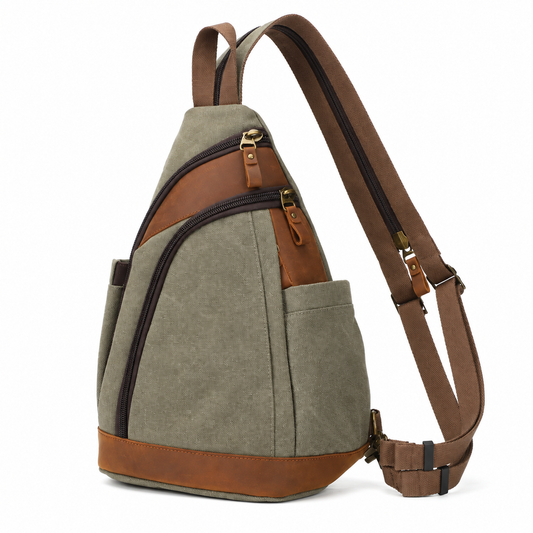
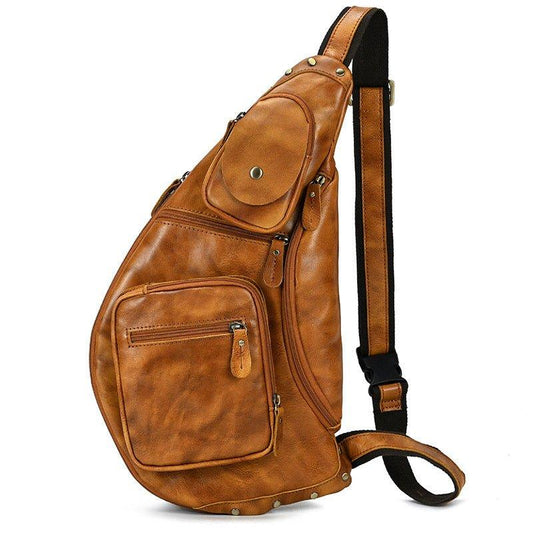
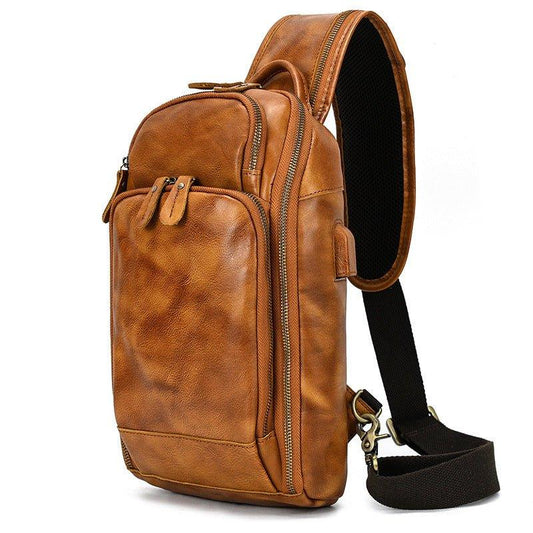
Eine Sling Bag ist ein Einriemenrucksack, der hoch und eng am Rücken oder an der Brust getragen wird. Der Riemen ist meist breit, gepolstert und mit einer Schnellverschluss-Schnalle verstellbar, und der Taschenkorpus ist so geformt, dass er sich dem Oberkörper anschmiegt. Entscheidend ist, dass eine Sling Bag zum Rotieren konzipiert ist: Man schwingt sie in einer Bewegung vom Rücken nach vorne, öffnet sie, nimmt, was man braucht, und schwingt sie zurück – alles ohne den Schritt zu unterbrechen. Stellen Sie sie sich als einen Rucksack vor, der einen Riemen für Geschwindigkeit geopfert hat.
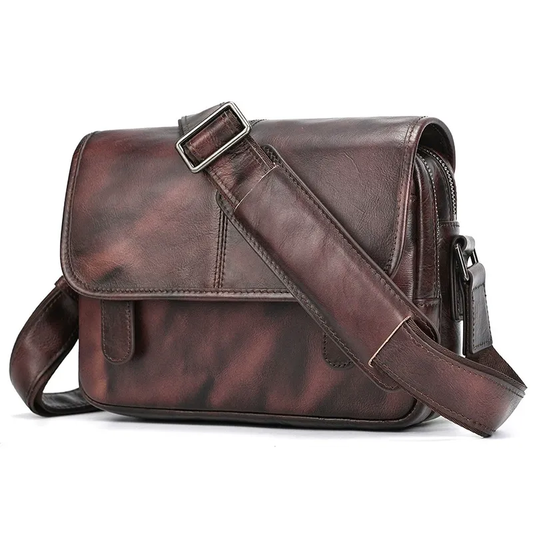
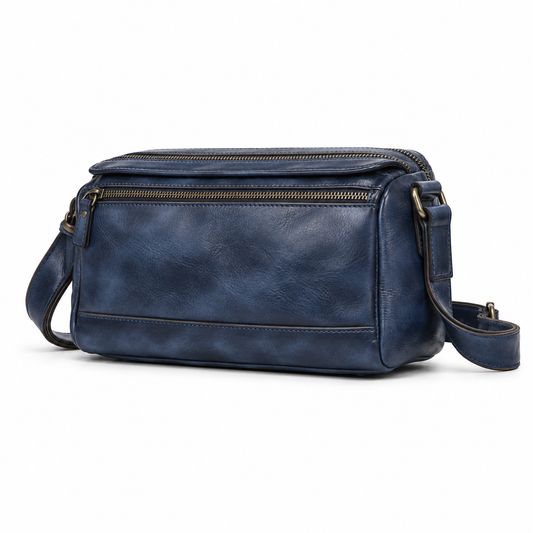
Eine Crossbody Bag ist eine Umhängetasche mit langem Riemen. Sie hängt locker auf Hüft- oder Taillenhöhe und ist dazu bestimmt, an Ort und Stelle zu bleiben, anstatt zu rotieren. Der Riemen ist typischerweise dünner – oft aus Leder oder Gurtband – und der Taschenkorpus ist flach oder leicht strukturiert, anstatt dem Körper angepasst zu sein. Man greift hinein, wo sie hängt. Stellen Sie sie sich als Handtasche oder kleine Messenger Bag vor, die beide Hände freigemacht hat.
Schnellvergleich
- Trageposition – Sling: hoch am Rücken oder an der Brust, über der Taille. Crossbody: tief auf Hüft- oder Taillenhöhe.
- Riemen – Sling: breit (5-8cm), gepolstert, schnell verstellbar. Crossbody: schmal (1,5-4cm), oft ungepolstertes Leder oder Gurtband.
- Zugriffsmethode – Sling: nach vorne drehen, dann öffnen. Crossbody: hineingreifen, wo sie hängt.
- Körperform – Sling: konturiert, oft tropfenförmig oder gebogen, um dem Oberkörper zu folgen. Crossbody: flach, rechteckig, strukturiert.
- Typisches Volumen – Sling: 3-12L. Crossbody: 2-8L.
- Komfortable Last – Sling: bis ca. 5kg. Crossbody: bis ca. 2,5kg.
- Bewegung – Sling: bleibt beim schnellen Gehen oder Radfahren am Körper fixiert. Crossbody: schwingt und wackelt bei zügiger Bewegung.
- Stil – Sling: aktiv, lässig, technisch. Crossbody: smart-casual bis formell, je nach Material.
Wann eine Sling Bag die richtige Wahl ist
Sling Bags brillieren überall dort, wo Sie sich zielstrebig bewegen und Dinge schnell benötigen.
Reisetage und Transit
Das Navigieren auf einem Flughafen, einem Bahnhof oder in einem unbekannten U-Bahn-System erfordert wiederholtes Herauskramen von Reisepass, Bordkarte, Telefon und Ticket, oft während man größeres Gepäck verwaltet. Eine Sling Bag bewahrt all das in einem Fach auf, das man in einer Sekunde an die Brust drehen kann, und da sie hoch und eng sitzt, behindert sie keinen Rollkoffer oder Rucksack, den man auf dem Rücken trägt.
Es gibt auch eine Sicherheitsdimension. Vorne in einem überfüllten Waggon getragen, ist eine Sling Bag in Ihrem direkten Blickfeld, und Ihre Hand ruht natürlich über dem Reißverschluss. Das ist ein wesentlich schwierigeres Ziel als eine Tasche, die an Ihrer Hüfte hinter Ihrem Ellbogen hängt.
Radfahren, Rollerfahren und zügiges Gehen
Hier wird der Unterschied offensichtlich und nicht nur theoretisch. Eine Umhängetasche schwingt beim Fahrradfahren bei jeder Abfahrt nach vorne und dreht sich um den Körper, wenn man sich in eine Kurve lehnt. Eine Sling Bag, eng und hoch am Rücken getragen, bleibt an Ort und Stelle. Wenn Sie mit dem Fahrrad zur Arbeit fahren oder einen Roller oder ein Motorrad in Städten wie Ho-Chi-Minh-Stadt, Amsterdam oder Taipeh benutzen, ist die Sling Bag keine Präferenz – sie ist die funktionale Antwort.
Wandern und Tageswanderungen
Für kürzere Wanderungen, bei denen ein voller Rucksack übertrieben wäre, trägt eine Sling Bag Wasser, eine Jacke, Snacks und ein Telefon, ohne die Hitzestauung eines Zweiriemenrucksacks am Rücken. Viele Wanderer nutzen eine Sling Bag als Gipfeltasche oder Stadttasche auf Mehrtageswanderungen und lassen den Hauptrucksack in der Unterkunft.
Fotografie und einhändige Arbeit
Eine auf der Brust getragene Sling Bag wird zur Arbeitsfläche. Fotografen, Videografen und alle, die kleine Gegenstände wiederholt wechseln müssen, profitieren vom „drehen und öffnen“-Workflow weitaus mehr als von einer Tasche, in der sie blind herumkramen müssen.

Wann eine Crossbody Bag die richtige Wahl ist
Crossbody Bags überzeugen durch Eleganz, Komfort bei geringem Gewicht und soziale Vielseitigkeit.
Alltägliches urbanes Tragen
Wenn Ihre tägliche Last ein Telefon, eine Brieftasche, Schlüssel, eine Sonnenbrille, ein Notizbuch und vielleicht eine kompakte Wasserflasche sind, ist eine Crossbody Bag leichter, kühler und weniger sperrig als eine Sling Bag. Sie ist auch aus dem Weg, wenn Sie in einem Café oder in öffentlichen Verkehrsmitteln sitzen, während eine auf der Brust getragene Sling Bag etwas ist, das Sie dazu neigen, ganz abzulegen.
Smart-Casual und berufliche Umgebungen
Eine Leder-Crossbody-Bag wirkt durchdacht. Eine gepolsterte technische Sling Bag wirkt sportlich. Im Büro, beim Abendessen, bei einer Galerieeröffnung oder in jedem Kontext, in dem eine sichtbare Outdoor-Ausrüstungsästhetik unpassend wirkt, ist die Crossbody Bag der angemessene Stil. Dies ist ein echter funktionaler Unterschied, nicht nur eine Frage des Geschmacks – die Tasche, die man überall tragen kann, ist die Tasche, die man tatsächlich trägt.
Kleine, strukturierte Lasten
Crossbody-Taschen sind typischerweise flach und unterteilt, was Dokumenten, einem Tablet, einem schlanken Notizbuch oder einer Passmappe weitaus besser entgegenkommt als das runde, höhlenartige Hauptfach der meisten Sling Bags. Wenn Ihr Gepäck eher papierförmig als klumpig ist, organisiert eine Crossbody-Tasche es besser.
Warme Klimazonen
Eine auf dem Rücken getragene Sling Bag staut die Wärme auf einer großen Kontaktfläche. Eine Crossbody Bag hängt vom Oberkörper weg mit minimalem Kontakt. Bei feuchten Bedingungen – Singapur, der Golf, die brasilianische Küste im Sommer – ist dieser Unterschied innerhalb einer Stunde spürbar.
Kapazität, Komfort und die Gewichtsgrenze
Die nützlichste Zahl in diesem Vergleich ist die Belastung, bei der jeder Stil unbequem wird.
Eine Crossbody Bag mit einem 2-3 cm breiten Riemen wird ab etwa 2,5 kg unbequem. Der schmale Riemen konzentriert den Druck auf einen kleinen Bereich des Trapezmuskels, und da die Tasche tief hängt, wirkt die Last auf einen langen Hebelarm von der Schulter aus. Über diesem Gewicht beginnt man unbewusst, eine Schulter hochzuziehen, um sie zu stabilisieren, wodurch Menschen nach einem Sightseeing-Tag Nackenverspannungen bekommen.
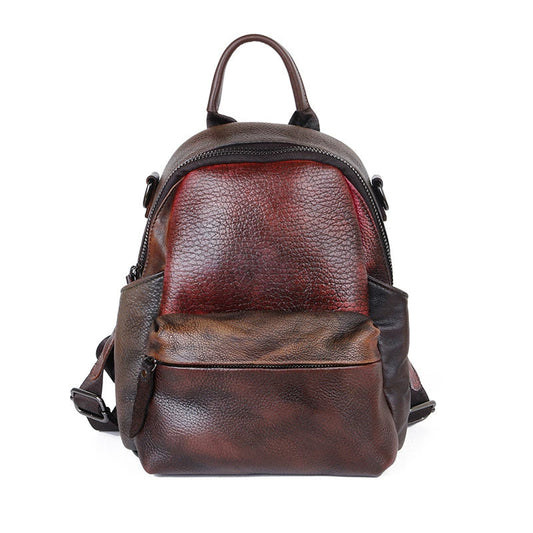
Eine Sling Bag mit einem 6 cm breiten, gepolsterten Riemen, hoch und eng getragen, bleibt bis etwa 5 kg bequem – also ungefähr doppelt so lange. Der breitere Riemen verteilt die Last, und die hohe, körpernahe Position hält das Gewicht nahe am Körperschwerpunkt. Über 5 kg wird das Tragen mit einem Riemen jedoch für längere Zeit zu einer schlechten Idee, und Sie sollten zu zwei Riemen wechseln. Wenn Ihre tägliche Last dies regelmäßig überschreitet, ist die ehrliche Antwort, dass keiner der beiden Stile richtig ist und Sie stattdessen einen kompakten Rucksack benötigen – unsere Echtleder-Rucksäcke decken den gleichen ästhetischen Bereich mit der richtigen Lastverteilung auf zwei Riemen ab.
Das Asymmetrie-Problem
Beide Stile belasten eine Schulter. Über Jahre des täglichen Gebrauchs ist diese Asymmetrie zu berücksichtigen. Zwei praktische Gewohnheiten helfen: Wechseln Sie alle paar Tage die Seiten und halten Sie den Riemen kurz genug, sodass die Tasche eng am Körper sitzt, statt zu baumeln. Eine locker an der Hüfte getragene Tasche erzeugt weitaus mehr Drehmoment auf die Wirbelsäule als dieselbe Tasche, die eng an den Rippen getragen wird.
Materialien und wie sie die Gleichung verändern
Das Material beeinflusst beide Stile unterschiedlich, da sie die Belastung an verschiedenen Stellen verteilen.
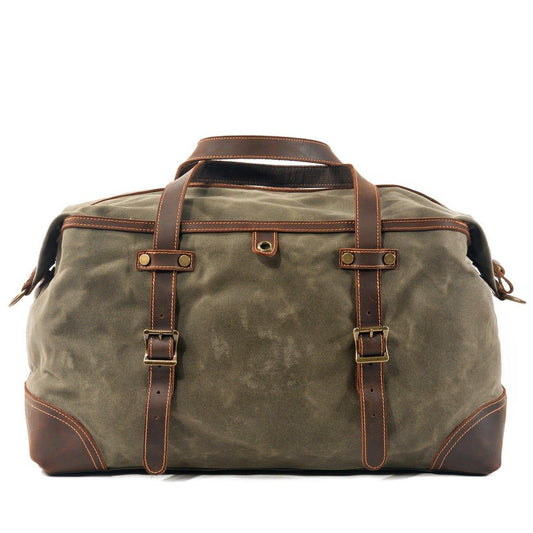
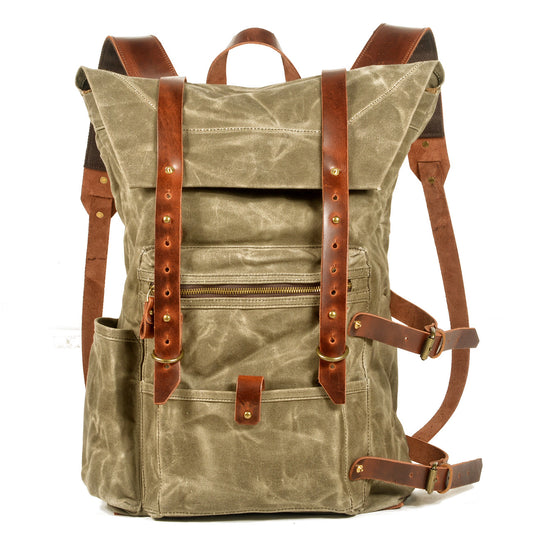
- Gewachstes Canvas – Ausgezeichnet für Sling Bags. Es ist abriebfest, wasserabweisend, wird mit der Zeit weicher und verträgt es, wenn es an einem Zugabteil zerdrückt wird. Die Wachsoberfläche sorgt dafür, dass Spuren eher herauspoliert als Flecken hinterlassen werden. Etwas schwerer als Nylon, aber an den Belastungspunkten weitaus haltbarer.
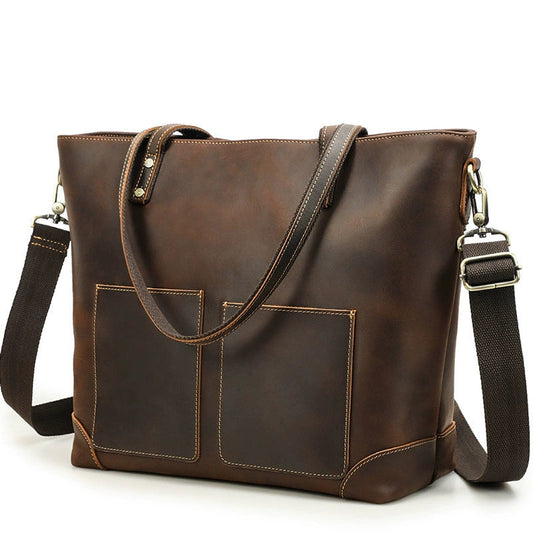
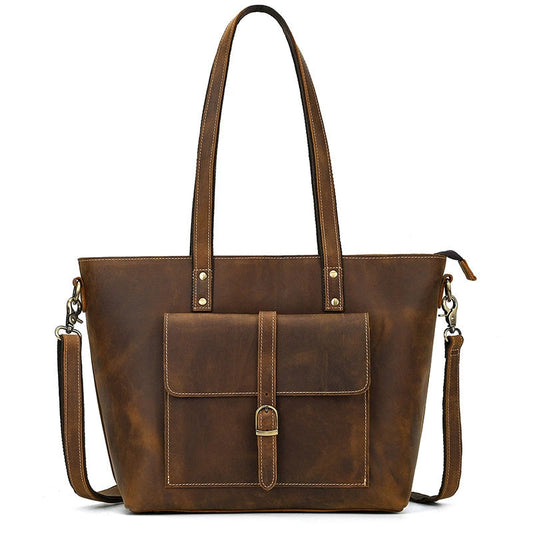
- Vollnarbenleder – Ausgezeichnet für Crossbody Bags. Es behält die Form, entwickelt Patina und trägt den Smart-Casual-Stil, der eine Crossbody Bag vielseitig macht. Schwerer als Canvas, daher am besten für kleinere Kapazitäten geeignet.
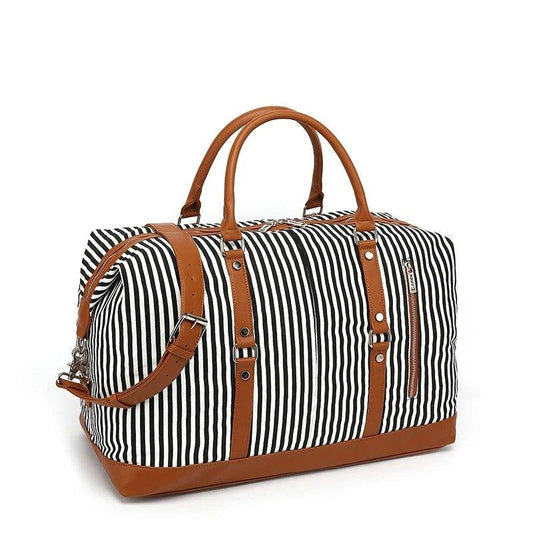
- Kombination aus Canvas und Leder – Ein Canvas-Korpus mit Lederboden, -riemen und -verzierungen bietet Ihnen die Abriebfestigkeit von Canvas genau dort, wo es wichtig ist, mit Leder an den Verschleißpunkten. Dies ist die haltbarste Konstruktion für beide Stile.
- Beschichtetes Nylon – Am leichtesten und wetterbeständigsten, aber das technische Aussehen begrenzt die Einsatzmöglichkeiten, und die Beschichtung verschlechtert sich nach einigen Jahren.
Die Beschläge sind wichtiger, als man bei Einriementaschen erwartet, da die gesamte Last über zwei oder drei Befestigungspunkte geleitet wird. Achten Sie auf massive Metall-D-Ringe und Schnallen statt Kunststoff, Riegelstiche an jeder Riemenbefestigung und einen Riemen, der genietet oder kastenvernäht ist, anstatt einfach nur mit einer einzigen Linie genäht.

Regionale Hinweise für Reisende
Europa
Taschendiebstahl in touristischen Hochburgen von Barcelona, Rom, Paris und Prag macht das Tragen vor dem Körper wirklich wertvoll. Eine auf die Brust gedrehte Sling Bag in einer belebten U-Bahn ist eine der effektivsten, mühelosen Diebstahlpräventionsmaßnahmen. Abschließbare Reißverschlüsse und eine Tasche ohne offene Außentaschen bieten eine zusätzliche Sicherheitsebene.
Asien
Hitze und Feuchtigkeit sprechen für die Crossbody Bag beim ganztägigen Stadtgebrauch, während die Dichte des Roller- und Motorradverkehrs in Südostasien die Sling Bag für alle, die fahren, bevorzugt. In Japan passen kleinere Crossbody Bags gut zur lokalen Norm; übergroße Rucksäcke können in überfüllten Zügen aufdringlich wirken, wo die Etikette erwartet, dass man Taschen vor sich hält oder zu Füßen legt.
Die Amerikas
Mehr Autofahrten bedeuten, dass die Tasche Zeit auf dem Beifahrersitz statt am Körper verbringt. Strukturierte Umhängetaschen kommen damit besser zurecht als weiche Sling Bags, die zusammenfallen und verschütten. Für Wanderreisen in den Rockies, Patagonien oder dem Pazifischen Nordwesten ist die Sling Bag eindeutig das bessere Werkzeug.
Interne Organisation: Das Detail, das den täglichen Gebrauch entscheidet
Zwei Taschen mit identischem Fassungsvermögen können sich je nach Innenaufteilung völlig unterschiedlich anfühlen, und hier unterscheiden sich die beiden Stile erneut.
Sling Bags tendieren zu einem einzigen großen Hauptfach mit ein oder zwei Einschubtaschen. Das funktioniert gut für sperrige, unregelmäßige Gegenstände – eine Wasserflasche, eine gerollte Jacke, eine Kompaktkamera – aber kleine Gegenstände sinken auf den Boden. Achten Sie bei einer Sling Bag auf mindestens eine interne Reißverschlusstasche, die sich oben im Fach befindet, damit Schlüssel und Karten erreichbar bleiben, wenn die Tasche nach vorne gedreht wird. Eine schnell zugängliche Tasche an der Außenseite, passend für ein Telefon, ist das nützlichste Merkmal jeder Sling Bag, und es ist überraschend, wie viele Designs darauf verzichten.
Crossbody Bags sind in der Regel standardmäßig besser organisiert, da ihr flaches Profil sich gut für geschichtete Trennwände eignet. Eine typische Anordnung bietet ein hinteres Einschubfach am Körper für Pass oder Handy, ein Hauptfach für ein Notizbuch oder Tablet und ein Vorderfach für kleine Gegenstände. Der Kompromiss ist, dass eine gut unterteilte Crossbody Bag weniger nutzbares Volumen hat, als ihre Abmessungen vermuten lassen – Trennwände verbrauchen Platz.
Eine praktische Regel: Wenn das, was Sie tragen, meist flach ist, wählen Sie die Crossbody Bag und nutzen Sie die Trennwände. Wenn das, was Sie tragen, meist klumpig ist, wählen Sie die Sling Bag und fügen Sie einen kleinen Beutel für die kleinen Dinge hinzu.
Pflege und Langlebigkeit
Einriementaschen versagen an vorhersehbaren Stellen, und das Wissen darüber hilft Ihnen, gut einzukaufen und Ihr Eigentum zu pflegen.
- Riemenbefestigungen – Der am stärksten beanspruchte Punkt bei beiden Stilen. Überprüfen Sie die Nähte alle paar Monate. Riegelstich- oder genietete Befestigungen halten wesentlich länger als eine einfache Naht.
- Der Hauptreißverschluss – Sling Bags werden dutzende Male am Tag geöffnet und geschlossen. Ein YKK- oder vergleichbarer Reißverschluss mit Metallschieber hält Jahre länger als ein billiger Spiralreißverschluss.
- Der Boden – Crossbody Bags stehen ständig auf Cafétischen und Böden. Ein Boden aus Leder oder verstärktem Material verhindert den Abrieb, der Canvas schließlich durchscheuert.
- Schnallenbeschläge – Seitliche Kunststoffschnallen an Sling Bags werden nach einigen Jahren UV-Exposition spröde. Metallbeschläge sind schwerer, aber praktisch dauerhaft.
Für die Pflege muss gewachstes Canvas alle zwölf bis achtzehn Monate mit einem Wachsstab und sanfter Wärme nachimprägniert werden. Leder muss zwei- bis dreimal im Jahr konditioniert werden, in trockenen Klimazonen öfter. Beides dauert nicht länger als eine halbe Stunde und verdoppelt die Lebensdauer der Tasche.
Häufig gestellte Fragen
Was ist der Unterschied zwischen einer Sling Bag und einer Crossbody Bag?
Eine Sling Bag ist ein Einriemenrucksack mit einem breiten, gepolsterten Riemen, der hoch und eng am Rücken oder an der Brust getragen wird und zum schnellen Zugriff nach vorne gedreht werden kann. Eine Crossbody Bag ist eine Umhängetasche mit einem längeren, schmaleren Riemen, die auf Hüfthöhe hängt und an Ort und Stelle bleibt, während man hineingreift. Sling Bags priorisieren Geschwindigkeit und Stabilität bei Bewegung; Crossbody Bags priorisieren Komfort bei leichten Lasten und ein raffinierteres Aussehen.
Ist eine Sling Bag besser als eine Crossbody Bag auf Reisen?
Für Transit-Tage ja – der Zugriff durch Drehen nach vorne und der Sicherheitsvorteil beim Tragen vorne machen Sling Bags besser für Flughäfen, Bahnhöfe und überfüllte Transportmittel. Für Abende, Restaurants und Smart-Casual-Anlässe während derselben Reise ist eine Crossbody Bag angemessener. Viele Vielreisende tragen eine Sling Bag für den Transit und eine kleine Leder-Crossbody Bag für alles andere.
Wie viel kann eine Sling Bag fassen?
Die meisten Sling Bags fassen zwischen 3L und 12L. Eine 5-8L Sling Bag nimmt bequem eine Wasserflasche, eine leichte Jacke, ein Tablet oder eine kleine Kamera, eine Brieftasche, Schlüssel und ein Telefon auf. Über 12L handelt es sich praktisch um einen Einriemenrucksack, der bei längerem Tragen unbequem wird.
Kann man eine Sling Bag auf der Brust tragen?
Ja, und das ist einer der Hauptvorteile des Designs. Das Tragen vorne verbessert die Sicherheit an belebten Orten, hält den Inhalt in Sichtweite und verwandelt die Tasche in eine Arbeitsfläche für Kamera oder Handy. Die meisten hochwertigen Sling Bags haben einen umkehrbaren oder beidhändig bedienbaren Riemen, sodass man sie auf jeder Schulter tragen kann.
Sind Sling Bags schlecht für den Rücken?
Jede Einriementasche erzeugt eine asymmetrische Belastung. Das Risiko ist beherrschbar, wenn Sie die Last unter etwa 5 kg halten, den Riemen kurz genug tragen, sodass die Tasche eng am Körper sitzt, und regelmäßig die Schultern wechseln. Für schwerere tägliche Lasten ist ein Zweiriemenrucksack die gesündere Wahl.
Welche ist sicherer gegen Taschendiebe?
Eine auf der Brust getragene Sling Bag ist die sicherere Option, da die Öffnung Ihnen zugewandt ist und Ihre Hand natürlich in der Nähe des Reißverschlusses ruht. Eine an der Hüfte und leicht hinter dem Ellbogen getragene Crossbody Bag ist die anfälligste Konfiguration. Wenn Sie in einem Hochrisikogebiet eine Crossbody Bag tragen, drehen Sie sie nach vorne und halten Sie in Menschenmengen eine Hand darauf.

Wie wählt man aus: Ein Drei-Fragen-Test
- Bewegen Sie sich schnell – Radfahren, zum Zug rennen, stundenlang zügig gehen? Wenn ja, wählen Sie eine Sling Bag. Stabilität in Bewegung ist der entscheidende Vorteil der Sling Bag und die deutlichste Schwäche der Crossbody Bag.
- Muss die Tasche in Smart-Casual-Umgebungen funktionieren? Wenn ja, wählen Sie eine Leder-Crossbody Bag. Eine technische Sling Bag schränkt ein, wo Sie sie tragen können, ohne fehl am Platz zu wirken. Beträgt Ihre tägliche Last über 3 kg? Wenn ja, wählen Sie eine Sling Bag wegen des breiteren gepolsterten Riemens. Wenn sie über 5 kg liegt, wählen Sie stattdessen einen Rucksack.
Wenn Ihre Antworten in verschiedene Richtungen gehen – und bei den meisten Menschen ist das so – ist das ein legitimer Grund, beide zu besitzen. Eine gewachste Canvas-Sling Bag für Reisen und aktive Tage plus eine kompakte Leder-Crossbody Bag für das Stadtleben deckt im Wesentlichen jedes Szenario ab, und keine davon ist eine teure Kategorie.
Abschließende Gedanken
Die Entscheidung zwischen Sling Bag und Crossbody Bag geht nicht darum, welche objektiv besser ist. Es geht darum, die Designlogik der Tasche an Ihre Bewegungsweise anzupassen. Sling Bags sind auf Geschwindigkeit, Stabilität und schwerere Einriemenlasten ausgelegt; Crossbody Bags sind für leichte, strukturierte Trageweisen mit einem eleganteren Auftreten gemacht. Verstehen Sie diesen Unterschied, und die Wahl wird in etwa dreißig Sekunden offensichtlich.
Um zu sehen, wie sich diese Formen in der Praxis unterscheiden, stöbern Sie in unserer Sling Bag Kollektion für Modelle aus gewachstem Canvas und Leder mit einem Riemen, oder erkunden Sie die Auswahl an Vintage Canvas Messenger Bags, wenn Sie eine flachere, strukturiertere Crossbody-Silhouette mit Platz für Dokumente und ein Tablet wünschen.